
Reliable temperature control for industrial control cabinets
Switchboard cooling
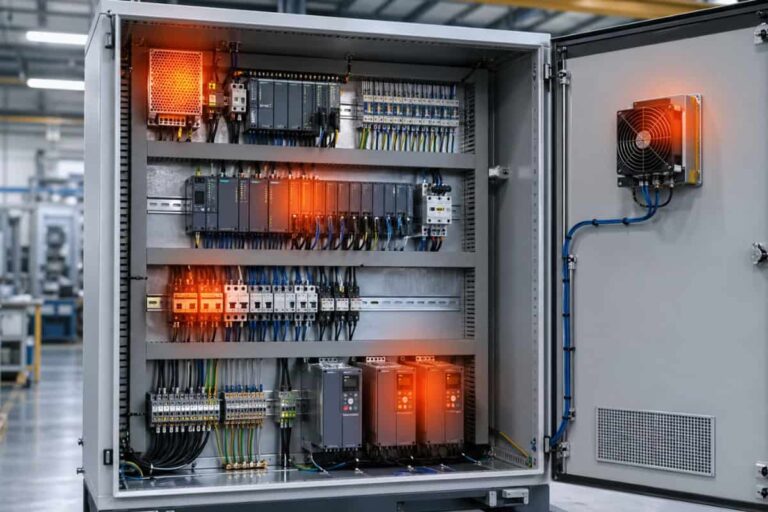
In control cabinets containing PLCs, power supplies, variable speed drives and other electrical components, heat can lead to malfunctions, shortened service life and machine or line downtime. Proper cooling starts with a technically sound cabinet design.
OPEN CALCULATION
Transparent cost structure and control of your project.
OFFER IN 5 DAYS
Quick technical assessment and clear planning.
DURABLE CONSTRUCTION
Lower Total Cost of Ownership.
UL/CSA IN-HOUSE
Directly compliant for international markets.
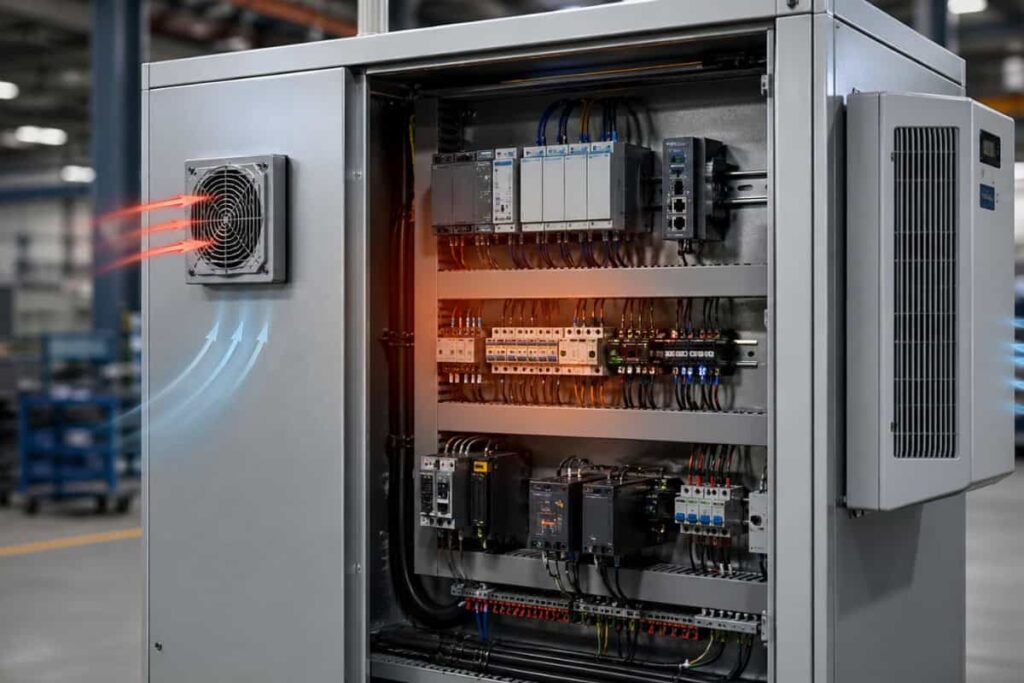
When and why cooling is applied
Control cabinet cooling is used to keep the temperature in a control or switchgear cabinet within safe limits. Components such as power supplies, PLCs, variable speed drives, relays, digital displays and controls produce heat during operation. When that heat is not properly dissipated, the interior temperature of the cabinet rises.
Depending on the application, passive heat removal may be sufficient. Other situations require ventilation, a heat exchanger, air conditioning or a cooling unit. The right choice depends on the heat load, ambient temperature, cabinet design, IP class, dust, moisture and the desired operational reliability.
Kwadrant IA designs and realizes cooling solutions as part of panel building and industrial automation. In doing so, we look not only at the control cabinet itself, but at the complete installation, the environment in which the cabinet is placed and the reliability required by the process.
Panel Building Pioneers for Mechanical Engineering
With the precision of a watchmaker and the agility of an acrobat, Kwadrant IA is committed to creating custom electrical panels for mechanical engineering. As a resilient player in panel building, we move quickly without sacrificing quality or durability. Step into our world of innovation and discover how we can take your mechanical engineering projects to the next level.
Our solutions for control cabinet cooling
Depending on the heat load, environment and IP class, there are several ways to cool a switchgear cabinet. From simple ventilation to active cooling with a cooling unit.
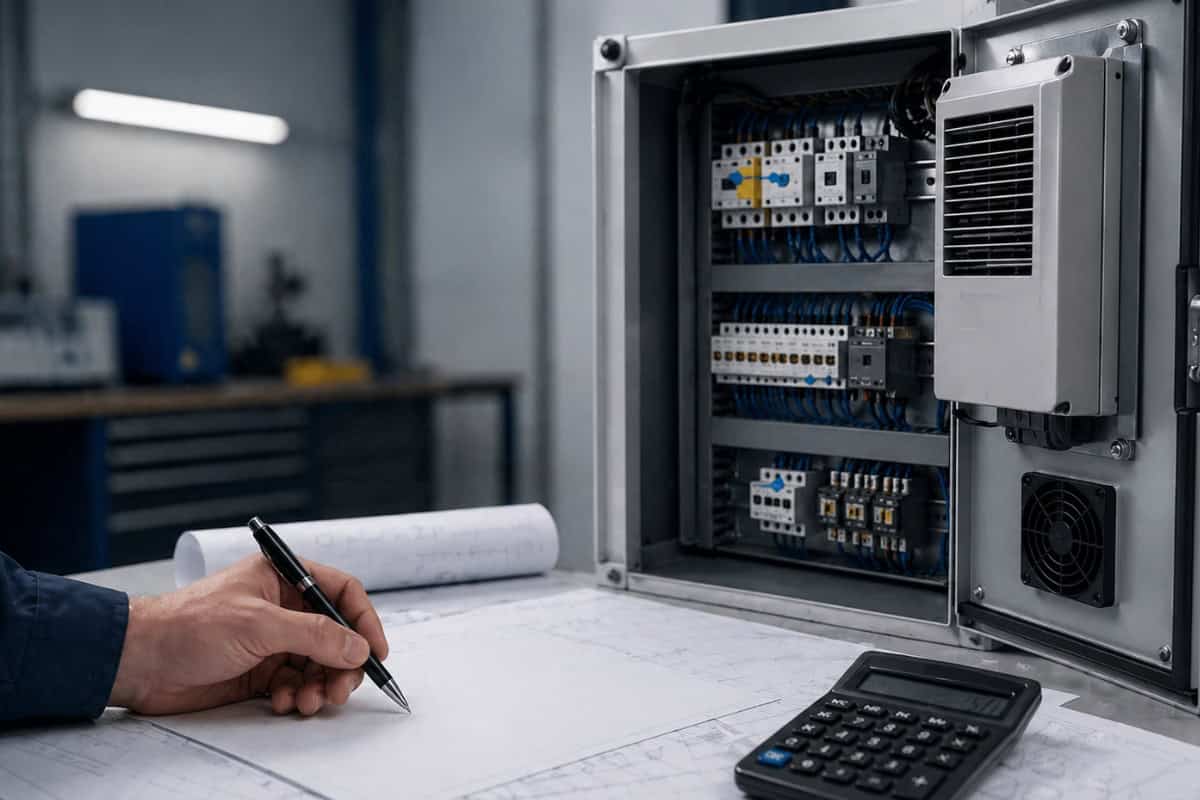
Control cabinet cooling calculation
Determine what cooling capacity is needed based on dissipated power, cabinet area, ambient temperature and desired indoor temperature.
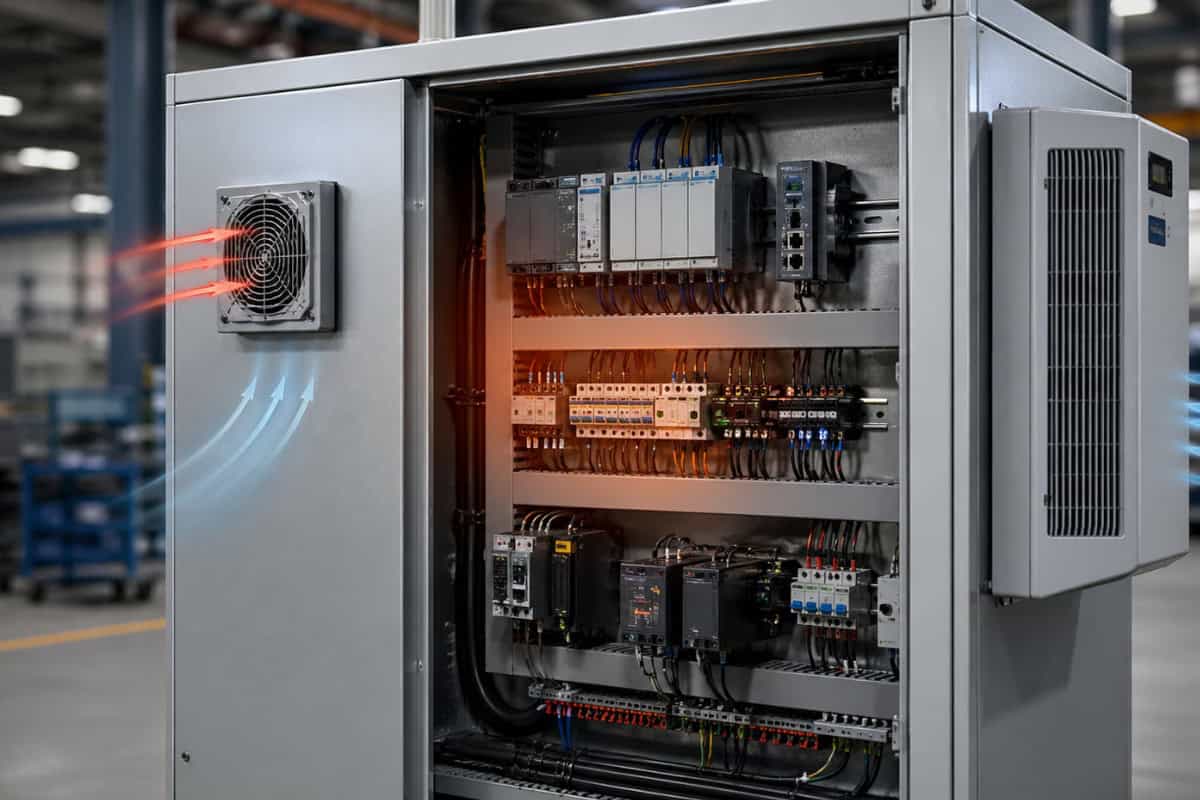
Air conditioning vs ventilation control cabinet
Ventilation is not always sufficient. Learn when a fan is appropriate and when air conditioning or a cooling unit becomes necessary.
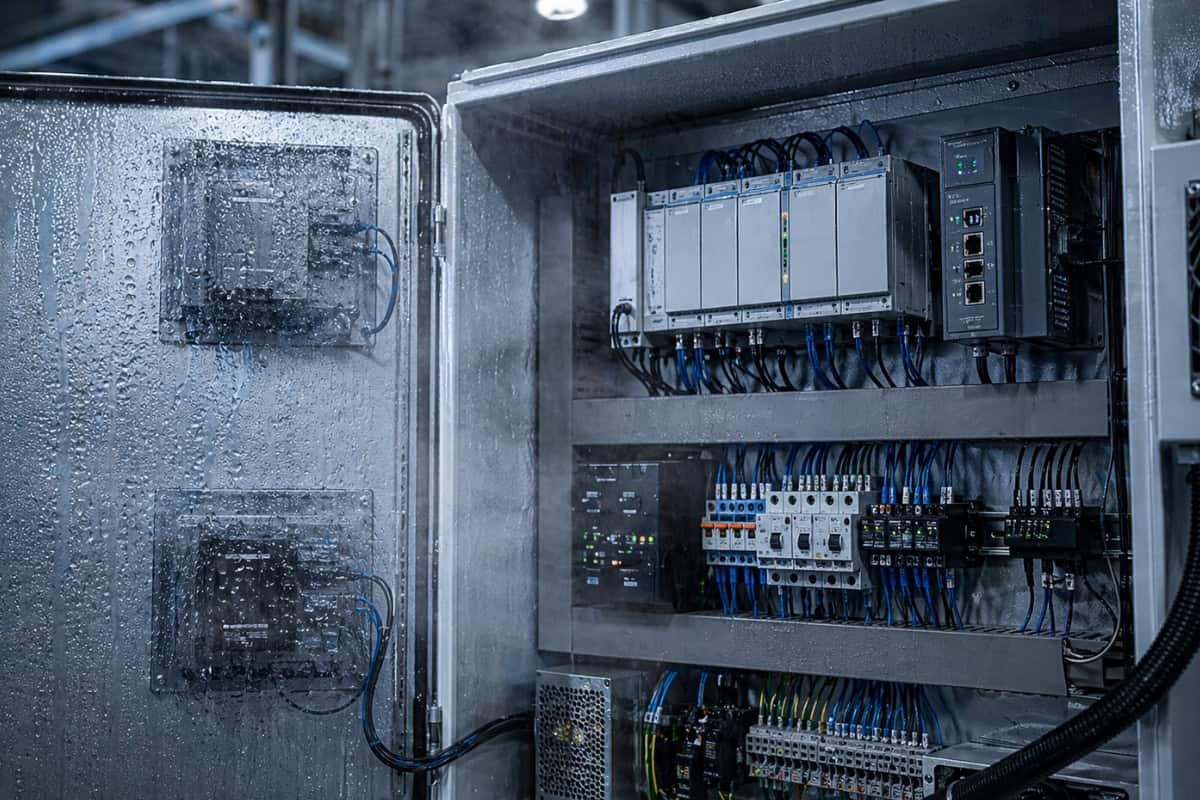
Preventing condensation in control cabinet
Moisture and temperature differences can cause condensation. Learn how to prevent condensation in electrical cabinets.
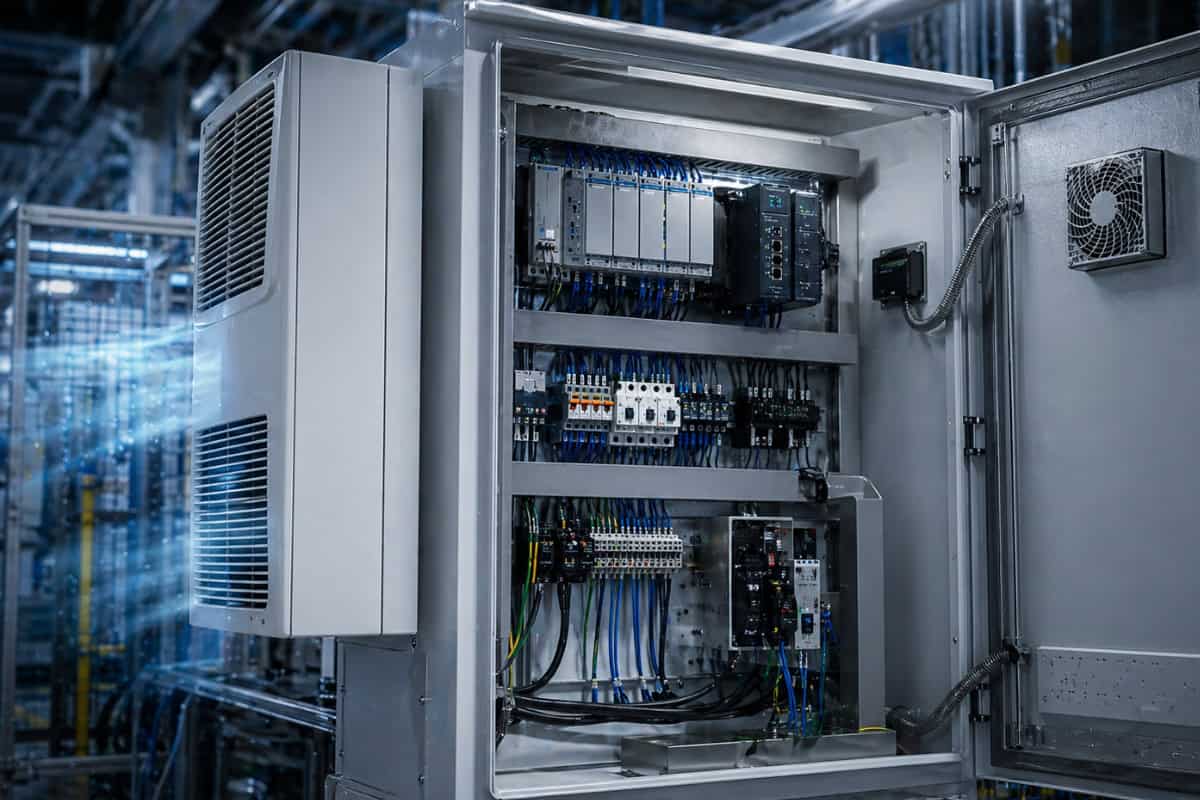
Cooling unit panel
For applications requiring active cooling with an air conditioner, cooling unit or closed cooling loop.
Complete automation solutions
We realize control systems from design to delivery. By integrating engineering, panel construction, cabling and commissioning, we ensure quality, efficiency and international deployment.
Which cooling solution fits your control cabinet?
The right choice depends not only on the temperature inside the cabinet. The environment, component load, IP class and maintainability also determine which cooling solution is technically sound.
Important considerations include:
- heat generation from components such as PLCs, power supplies and variable speed drives;
- desired indoor temperature and maximum ambient temperature;
- dust, dirt, moisture or salty air in the environment;
- IP rating and seal retention;
- available space for mounting, add-on, or superstructure;
- maintainability of filters, fans and cooling units;
- energy consumption and energy efficiency;
- risk of machine or line downtime.
In practice, this is rarely a standard choice. Therefore, cooling solutions at Kwadrant IA are technically based and tailored to the application, load and environment of the control cabinet.
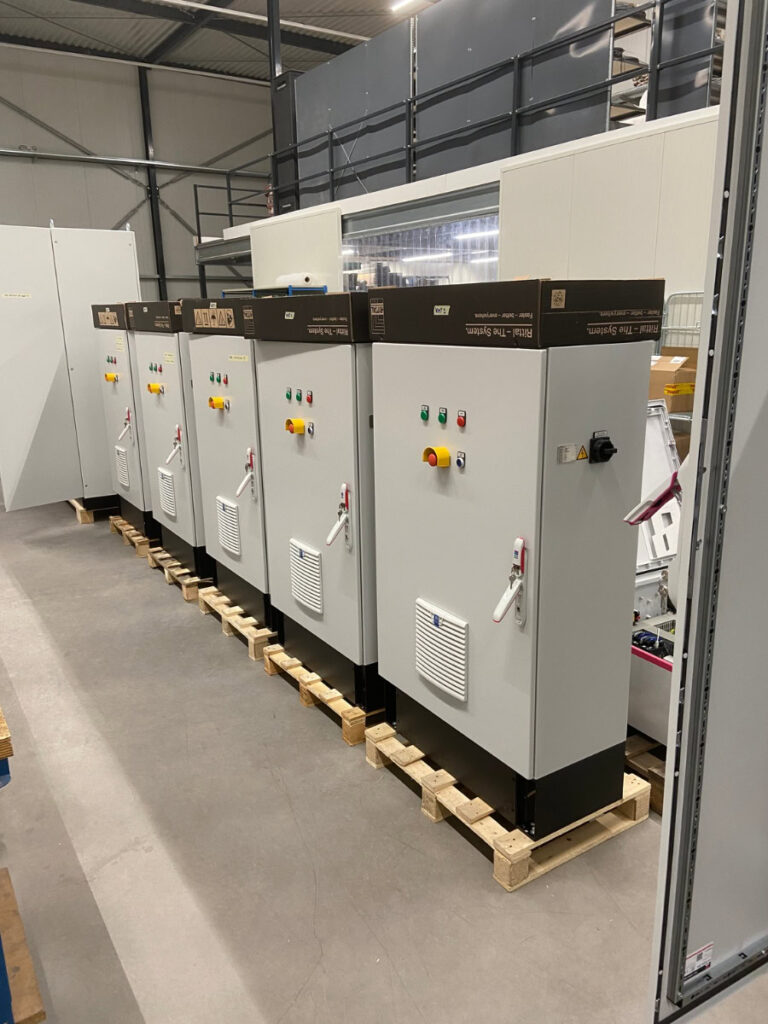
Technology and application of switchgear cooling
Heat generation and temperature in switchgear cabinets
In industrial automation, temperature plays an important role in the reliability of a control cabinet. Electrical and electronic components produce heat during operation. Consider power supplies, variable speed drives, programmable controllers, digital displays, controls and circuit breakers.
When heat is not adequately dissipated, the temperature inside the cabinet rises. This can lead to malfunctions, accelerated wear or failure of components. Also, the life of electronics can decrease when components operate above their recommended temperature range for long periods of time.
Switchboard cooling does not automatically mean the need for an air conditioner. In some situations, passive heat dissipation through the cabinet surface is sufficient. In other situations, ventilation with a filter fan can be used. When the outside air is too hot, too humid or too polluted, a heat exchanger or active cooling with a cooling unit may be necessary.
Application in industrial environments
The right cooling solution depends greatly on the environment in which the switch cabinet is placed. A cabinet in a clean technical room requires a different approach than a stainless steel switch cabinet in a humid, dusty or aggressive production environment.
In factory halls and production areas, dust and dirt can clog filters or foul components. In humid environments, condensation can occur due to temperature differences. In outdoor applications, sun exposure, rain, frost and temperature fluctuations come into play. In marine environments or salt air, corrosion and material selection must additionally be considered.
The IP rating is also important. A closed cabinet protects better against dust and moisture, but does not dissipate heat as easily. Ventilation can dissipate heat, but at the same time can bring in dust, moisture or contaminated air. Therefore, the cooling solution must always be matched to the environment, the protection required and the maintenance that is practicable.
Design and engineering of cooling solutions
Designing control cabinet cooling requires an integrated approach. Factors involved include heat load, cabinet size, cabinet area, desired interior temperature, maximum ambient temperature and component placement.
In addition, air circulation in the cabinet must be taken into account. Hot and cold air flows must be routed logically so that heat-producing components can dissipate their heat and sensitive electronics are not unnecessarily stressed. The mounting position of fans, roof fans, heat exchangers or cooling units is also important here.
At Kwadrant IA, we include these factors in hardware engineering and panel construction. We look at component layout, cable routing, IP class, connection voltage, maintainability, energy consumption and available space for mounting or attachment. Whenever possible, we choose an energy-efficient and low-maintenance solution without compromising reliability.
A well-designed cooling solution prevents failures, extends the life of components and keeps the switchgear functioning reliably within the application for which it was built.
Start your project with a technical consultation
We like to think with you from the initial design phase to realization and commissioning.
Related articles
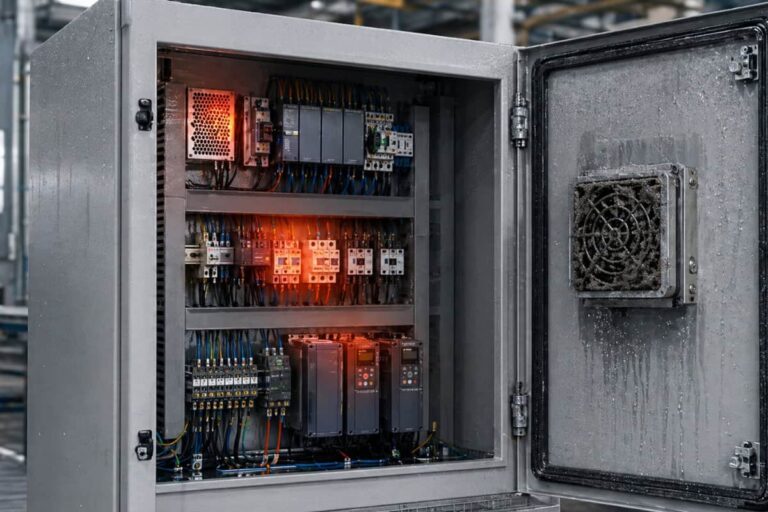
IP65 ventilation problem in control cabinets
An IP65 control cabinet is chosen to protect components from dust and water. This is important in industrial environments, production
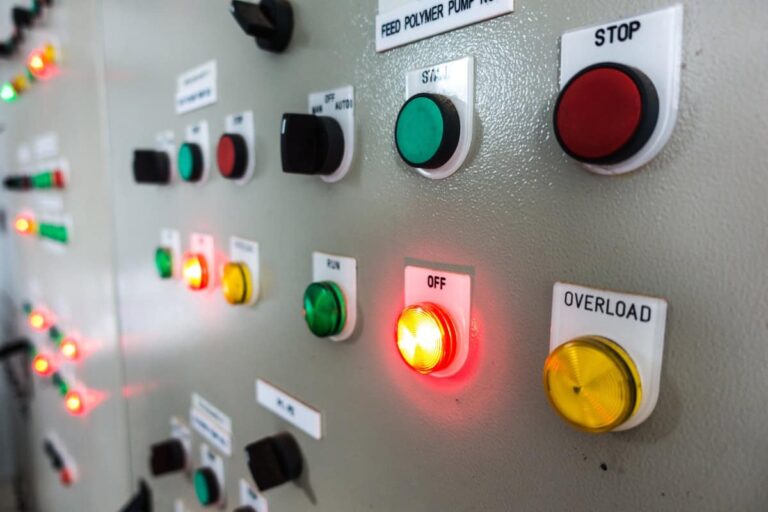
When do you need cooling in a control cabinet?
A control cabinet always develops heat. That happens from components such as power supplies, PLCs, variable speed drives, relays, contactors,
5 causes of overheating in electrical cabinets
A control cabinet that gets too hot has usually been giving signals for some time. An inverter occasionally fails. A
Frequently asked questions about Switchboard cooling
When does a switchgear cabinet need cooling?
A control cabinet needs cooling when heat generation exceeds what the cabinet can dissipate through passive heat dissipation or ventilation. This plays out especially with high component loads, compact cabinet designs, high ambient temperatures or enclosures that are closed.
Is ventilation always sufficient for a control cabinet?
No. Ventilation works only when the outside air is cooler and clean enough. Dust, moisture, high IP requirements or high ambient temperatures may require a heat exchanger, air conditioner or cooling unit.
What is the difference between ventilation and active cooling?
Ventilation moves air and dissipates heat with ambient air. Active cooling lowers the cabinet temperature with a cooling unit, air conditioner or cooling unit.
How do you calculate control cabinet cooling?
The cooling requirement is determined based on the dissipated power, cabinet area, ambient temperature, desired indoor temperature, cabinet arrangement and IP class.
Can an IP65 control cabinet be ventilated?
This is only possible if the ventilation components and mounting fit the required IP rating. In many situations, closed cooling or a cooling unit makes more sense to maintain sealing.
