
SERVICES
Industrial Automation: From Engineering to Commissioning
Control systems for machine builders and OEMs—from engineering to commissioning—all under one roof.
OPEN CALCULATION
Transparent cost structure and control of your project.
OFFER IN 5 DAYS
Quick technical assessment and clear planning.
DURABLE CONSTRUCTION
Lower Total Cost of Ownership.
UL/CSA IN-HOUSE
Directly compliant for international markets.
Industrial automation involves controlling and monitoring machines and production processes using control technology: sensors, PLCs, variable-frequency drives, and HMI/SCADA software, all integrated into a control panel. Kwadrant IA handles the entire process—from hardware and software engineering and panel building to installation and commissioning—all under one roof.
Machine builders and OEMs turn to us when a standard solution isn’t enough: a machine that’s sold internationally, a process subject to strict standards, or a control system that must work seamlessly across multiple disciplines.
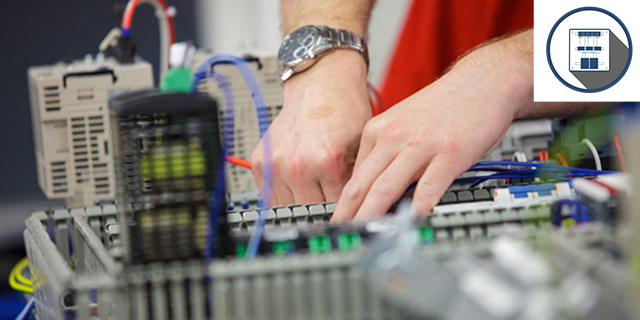
Panel Building
Custom control and distribution panels, built in accordance with NEN-EN 61439 and, where necessary, UL 508A. From single-unit prototypes to mass production.
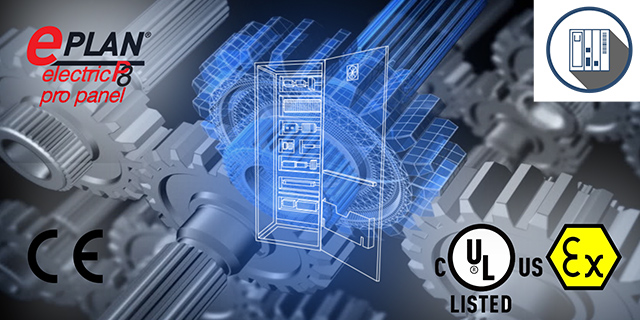
Hardware Engineering
The electrical design for the cabinet: functional specifications, component selection, schematics in EPLAN P8, and a design that is ready for production.
Software Engineering
PLC programming and HMI/SCADA visualization that enable machines, installations, and higher-level systems to work together. Interfaces via OPC UA, Profinet, and EtherCAT.
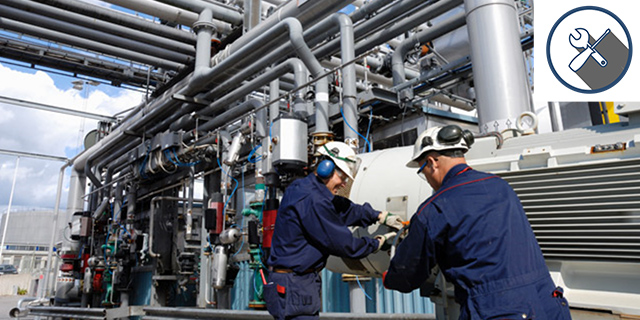
Installation & Cabling
Integration of the control system into the existing infrastructure: field cabling, grounding, and shielding in accordance with EMC guidelines.
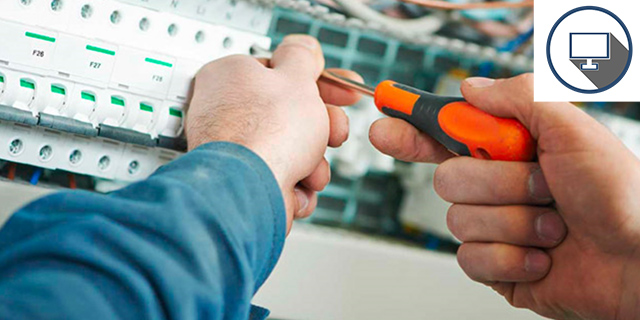
Commissioning
FAT and SAT, as well as on-site commissioning, including documentation and handover to your maintenance team.
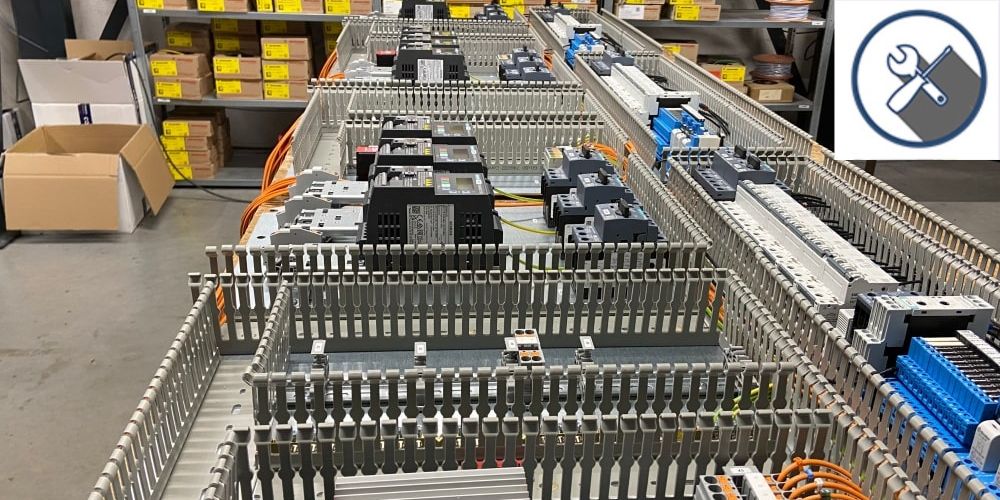
Electrical Components
Supply of high-quality components on attractive terms, selected based on service life and availability rather than on purchase price alone.
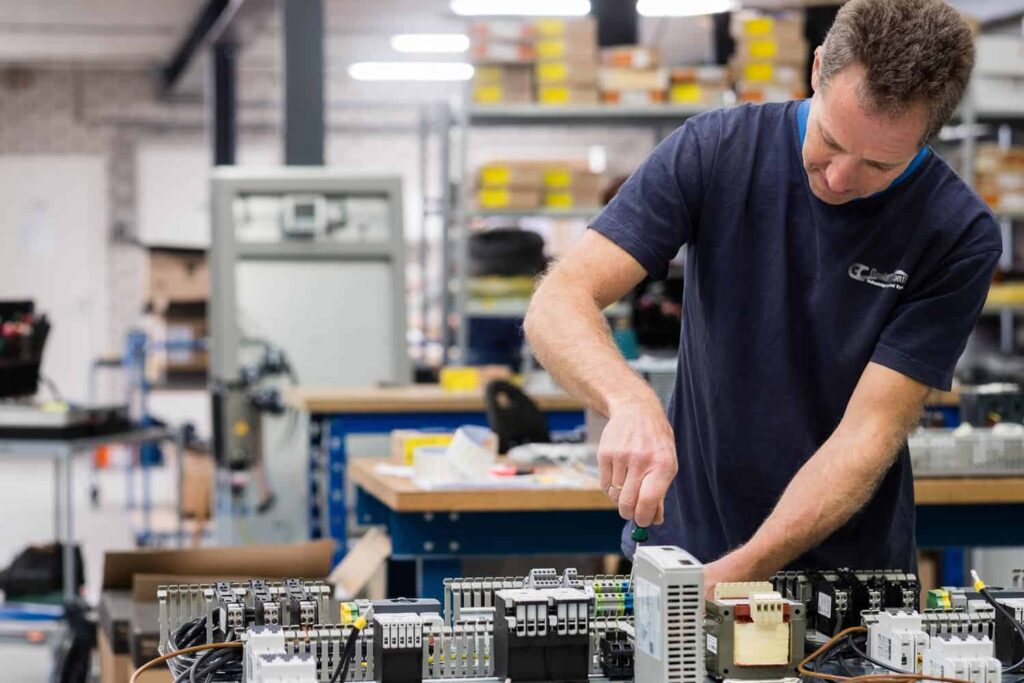
From engineering to commissioning.
Why Machine Builders Choose Kwadrant IA
- Open estimate. You can see where the costs lie: components, engineering hours, and assembly. This allows you to focus on design choices rather than on a final price.
- Quote within 5 days. A technical assessment and a detailed schedule within a week, so that your own bidding process doesn’t come to a standstill.
- Durable design, lower TCO. Generously sized components, a well-thought-out thermal design, and accessible wiring. While this costs a little more upfront, it pays off significantly over the product’s lifespan.
- UL/CSA in-house. We conduct UL 508A testing ourselves, without any intermediaries. For exports to North America, this means shorter communication channels and fewer surprises during inspections.
Standards and International Deployability
NEN-EN 61439
Low-voltage distribution panels: verification, heating, and short-circuit withstand capability.
CE mark
Every panel that enters the EU is delivered complete with documentation.
Here's how the process works
Technical consultation
Your functional requirements, applicable standards and target market.
Design and calculation
Specification, component selection and open calculation. Quotation within 5 days.
Commissioning
Installation, SAT and handover to your maintenance team.
Years of experience in the field of industrial automation
Real-World Applications
Our control systems are used in a wide range of applications, from light machinery to heavy-duty industrial environments. In corrosive environments, we use 316 stainless steel control cabinets rated for corrosion class C5, and when data needs to be transmitted to higher-level systems, we use MQTT Sparkplug B and SCADA.
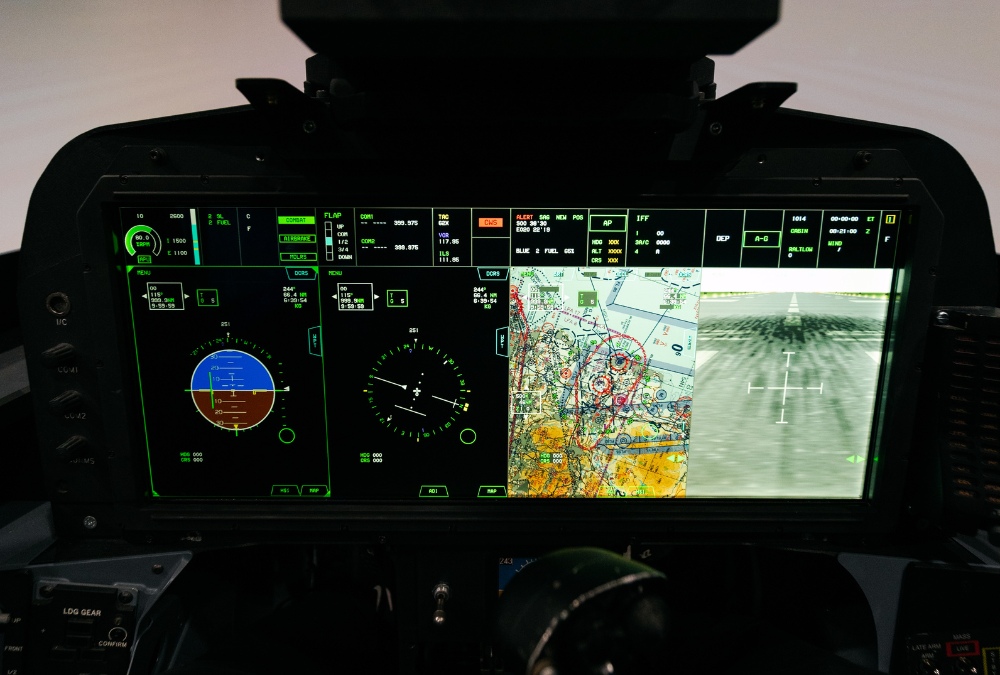
Simulator control systems
Real-time control, maximum precision Modular system, easily expandable Full integration with your simulator environment Quote

Industrial robot control systems
Seamless integration into your production line Real-time control and maximum precision Secure, scalable and low
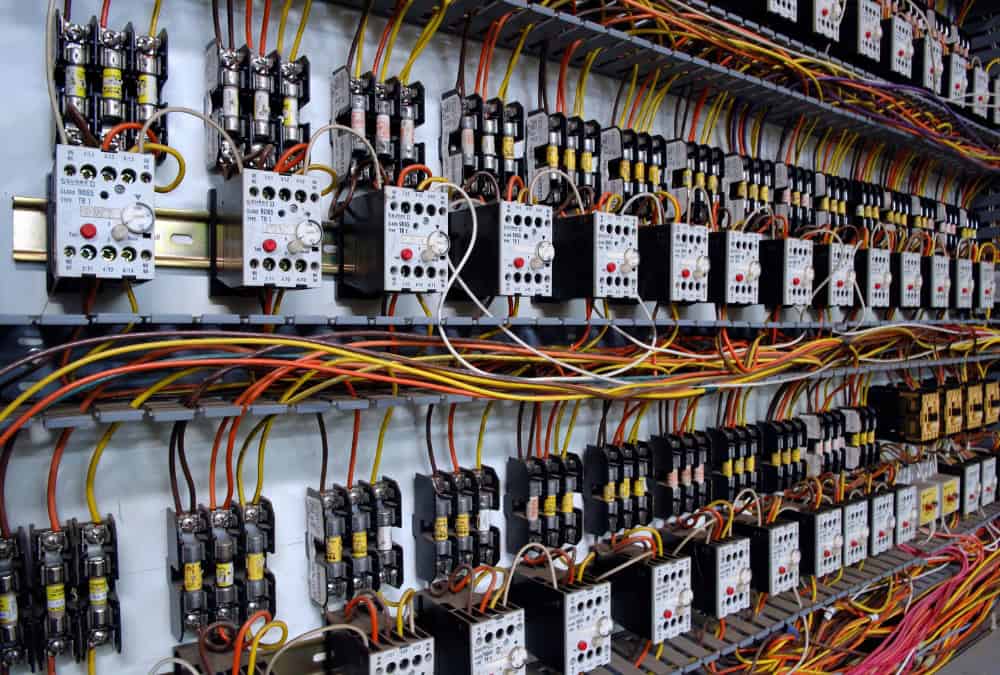
Electrical panels for smart infrastructure
Reliable control of critical facilities Seamless integration into network structures Suitable for demanding environments Quote
Active in various industrial sectors
Our panel building and automation solutions are used within a variety of industries. In each industry, we ensure standardization, scalability and long-term reliability.
Contact
Start your project with a technical consultation
Do you have an issue around panel building or industrial automation? We like to think with you from the initial design phase to realization and commissioning. Get in touch and discuss your project with one of our specialists.
Technical consultation
Direct contact with a specialist.
Quick follow-up
A substantive response within a short time.
Clear approach
From inventory to technical development.
Frequently Asked Questions
What is industrial automation?
Industrial automation involves controlling and monitoring machines and production processes using control technology: sensors, PLCs, variable-frequency drives, and HMI/SCADA software, all integrated into a control panel. The goal is a process that runs reliably, safely, and consistently, with insight into what is happening and why.
How much does an operating system for a machine cost?
That depends on the number of drives, the safety level, and the target market. We use transparent pricing: you’ll see the costs for each component, engineering hours, and installation listed separately, so you can make informed design decisions. You’ll receive a detailed quote within five business days.
How long does an automation project take?
For a single control panel, we typically estimate a few weeks from the time the functional design is approved. This timeframe may increase if there are multiple cabinets, UL certification, or an extensive SCADA layer. The schedule is specified in the quote.
Can you retrofit or modernize an existing machine?
Yes. Retrofitting outdated control systems is a substantial part of our work: replacing PLCs, variable-frequency drives, or HMIs while retaining the mechanical system. We begin by conducting a survey of the existing system and documentation.
What is the difference between a PLC and a SCADA system?
The PLC directly controls the process and processes sensor signals in real time. The SCADA system operates at a higher level: it visualizes, monitors, and collects data across multiple installations. Learn more about this on the software engineering page.
