






Machine-as-a-Service (MaaS): designing panels for flexible business models
There is a clear trend in today’s machinery industry: from traditional product sales to service-oriented contracts. The Machine-as-a-Service (MaaS) concept

Response within 24h
Get immediate response
Navigate to
Hardware Engineering
From functional requirements to a feasible electrical design, including the regulatory framework, component selection, and schematics in EPLAN P8.
Transparent cost structure and control of your project.
Quick technical assessment and clear planning.
Lower Total Cost of Ownership.
Directly compliant for international markets.
Hardware engineering is the electrical design of a control system: translating functional requirements into component selection, electrical schematics, a set of drawings, and an enclosure layout that can be built, tested, and maintained. It is the first step in any electrical engineering project and the step in which the costs, lead time, and reliability of your installation are determined.
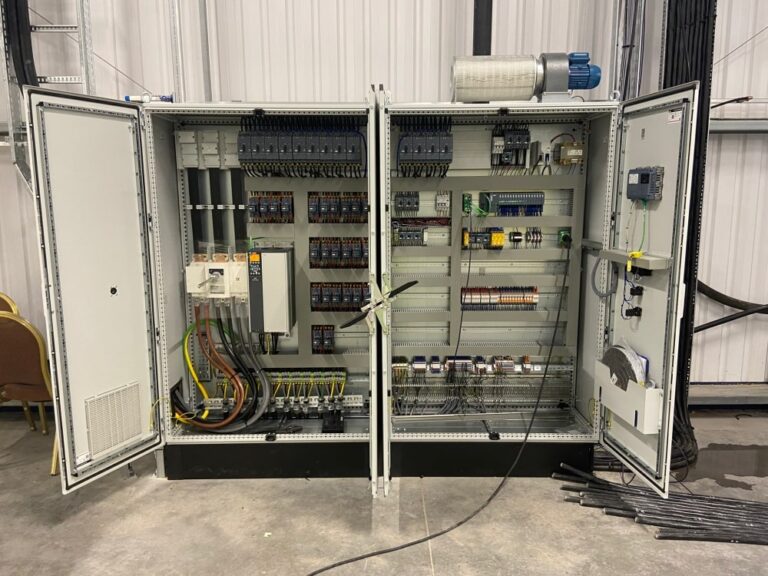
Using EPLAN P8 and Pro Panel, we deliver clear schematics, a detailed set of drawings, and a consistent system architecture that is ready for panel building, installation, wiring, and commissioning. Because these steps are all handled within the same organization, design decisions are immediately evaluated against what needs to be done in the workshop and on-site.
Machine builders and OEMs turn to us when the design needs to go beyond a standard enclosure: a machine sold internationally, a process subject to strict standards, or a control system that must work seamlessly across multiple disciplines. We collaborate with you starting from the functional specification, using the requirements of your market as our starting point.
Electrical engineering is the backbone of every control system. Below, you can see how our hardware engineering is applied in a wide range of projects, from industrial robotics to smart infrastructure.
An electrical installation begins with a well-thought-out design. At Kwadrant IA, hardware engineering forms the bridge between functional requirements and a technically feasible solution. Our engineers translate customer requirements into electrotechnical diagrams, cabinet layouts and drawing packages that comply with current standards and are practically feasible in panel construction, cabling and commissioning. This creates a grip on the quality, reproducibility and maintainability of the installation from the very first moment.
A hardware engineering project begins with gathering and organizing technical requirements. Together with the customer, functional requirements, component selections, and standards are established. These include guidelines such as NEN 1010, NEN-EN-IEC 61439, or the Machinery Directive 60204-1. This phase results in a comprehensive functional overview and clear guidelines for design and construction.
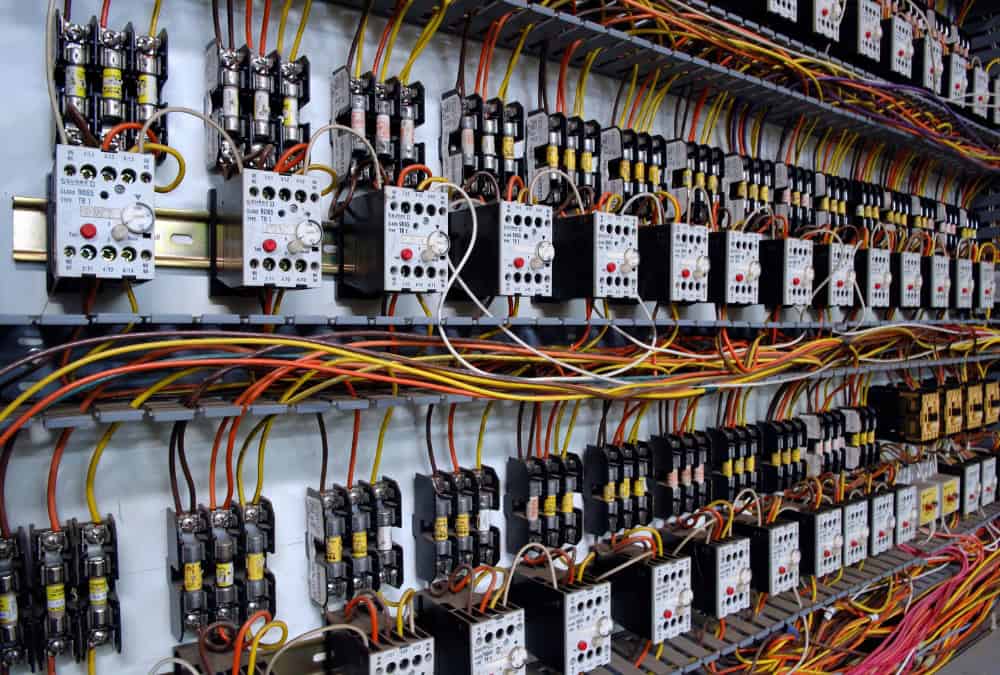
Based on the initial consultation, electrical schematics are created in EPLAN P8. These include, among other things, current flow diagrams, terminal lists, cable definitions, and enclosure layouts. Where necessary, this is supplemented with 3D visualizations in Pro Panel. Through standardization and the use of libraries, we can design efficiently, minimize errors, and ensure compatibility with other project phases.
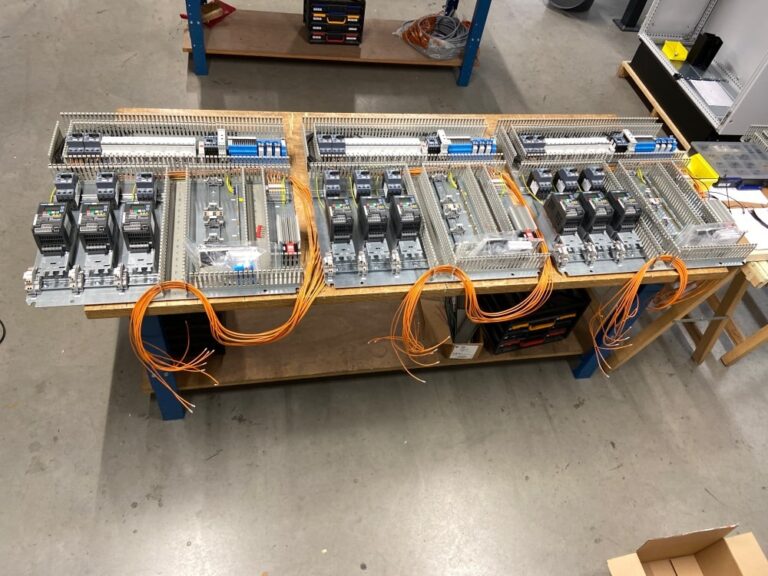
The results of hardware engineering serve as direct input for panel fabrication and installation work. Thanks to clear labeling, straightforward wiring diagrams, and consistent layouts, the panel-building team can work efficiently. The design also ensures clarity, safety, and reliability during on-site wiring and commissioning. As a result, hardware engineering is the key to a structured and reproducible implementation.
To ensure the enclosure’s short-circuit resistance, we perform the SCCR calculation at this stage, and we define the grounding and shielding in accordance with the EMC guidelines.
Most machine builders have their own engineers. Nevertheless, electrical design work often ends up with us, usually for one of these three reasons.
An order is at its peak, and your in-house engineers are fully occupied. We can take over the entire electrical engineering portion—or just the drafting—and deliver the results in your own EPLAN structure.
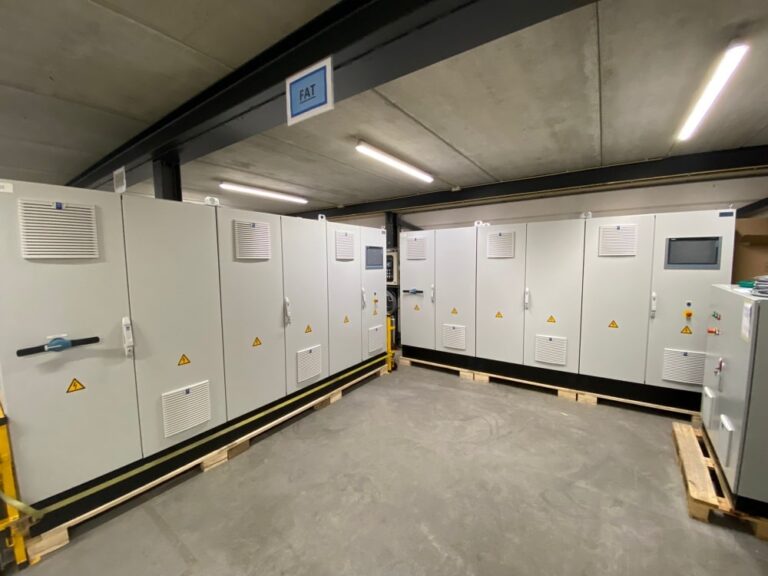
When design and construction are handled by different parties, it leads to disagreements as soon as something doesn’t fit. With us, both are handled in one place, including the FAT and commissioning.
Do you have an issue around panel building or industrial automation? We like to think with you from the initial design phase to realization and commissioning. Get in touch and discuss your project with one of our specialists.
Direct contact with a specialist.
A substantive response within a short time.
From inventory to technical development.
Industrial automation requires more than just a correctly constructed panel. We start with the architecture of the system and make conscious choices in component selection, standardization and scalability. By fully mastering engineering, panel construction and integration, we realize control systems that perform reliably in demanding industrial environments. From modular construction to international compliance, every detail is focused on quality, longevity and manageable Total Cost of Ownership.
We do not build standard solutions, but technically sound systems that match the complexity of modern mechanical engineering.
Most machine builders have their own engineers. Nevertheless, electrical design work often ends up with us—usually because an order is at its peak and their own capacity is fully utilized, or because the machine is intended for a market where the applicable standards aren’t used on a daily basis. We design directly in compliance with UL 508A, NFPA 79, or ATEX, rather than having to make corrections afterward.
You remain in control: we can deliver within your own EPLAN structure, or take over the entire process through panel fabrication, FAT, and commissioning. Because we handle both design and fabrication in-house, there’s no one to point the finger at when something doesn’t fit.

There is a clear trend in today’s machinery industry: from traditional product sales to service-oriented contracts. The Machine-as-a-Service (MaaS) concept


In the manufacturing industry, the pressure on design engineers and project managers is increasing. Shorter delivery times, higher quality standards

At Kwadrant IA, we find that customers have ever-increasing demands for speed, reliability and data processing in their production processes.
A hardware engineer designs the electrical portion of an installation. This includes preparing electrical schematics, cabinet layout, component selection and cable specifications. At Kwadrant IA, this constitutes the first step toward panel construction and installation.
Kwadrant IA works with EPLAN P8 for electrical schematics and with EPLAN Pro Panel for 3D panel layouts. These tools ensure consistency, standardization and reproducibility in design.
Yes, the designs are prepared according to NEN 1010, NEN-EN-IEC 61439 and the Machinery Directive 60204-1, among others. UL 508A designs for export to North America are also possible.
Upon delivery, you will receive a complete drawing package, including power flow diagrams, terminal lists, cabinet layout, bill of materials and cable overviews. These are generated from EPLAN and are suitable for production and assembly.
No, hardware engineering is used for both new installations and expansions or modernization of existing systems. We take into account existing infrastructure, connection points and compatibility.
Electrical design is the direct basis for panel construction. Clear schematics, cabinet layout and coding allow panels to be constructed, tested and commissioned efficiently.
Yes. We provide a complete set of drawings in EPLAN P8, in your own project structure and with your own macro library if desired, so that your panel builder can get started right away.
We use transparent pricing: engineering hours, components, and assembly are itemized separately, so you can see the cost of a design choice before you make it. For a single control cabinet, we typically estimate one to several weeks from the time the functional design is approved. You’ll receive a quote within five business days.