
EN-ISO 13849-1 and Performance Level in control.
- Performance Level determined and demonstrably achieved
- From category and architecture to secure control cabinet
- In accordance with EN-ISO 13849-1 and the Machinery Directive
What is a Safety Instrumented System?
EN-ISO 13849-1 is the standard that describes how to determine and realize the reliability of a safety function in the control of a machine. That reliability is expressed in a Performance Level (PL), from PLa to PLe: the higher the risk, the higher the required PL. The required Performance Level follows from the risk assessment, and is determined by the chosen category (control architecture), MTTFd (mean time to dangerous error), diagnostic coverage and protection against common errors. PLd and PLe are the highest levels and apply to machines where failure can lead to serious injury.
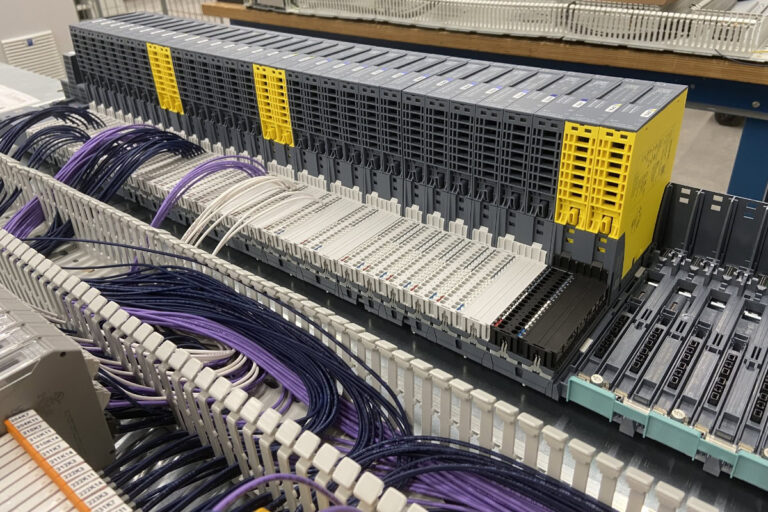
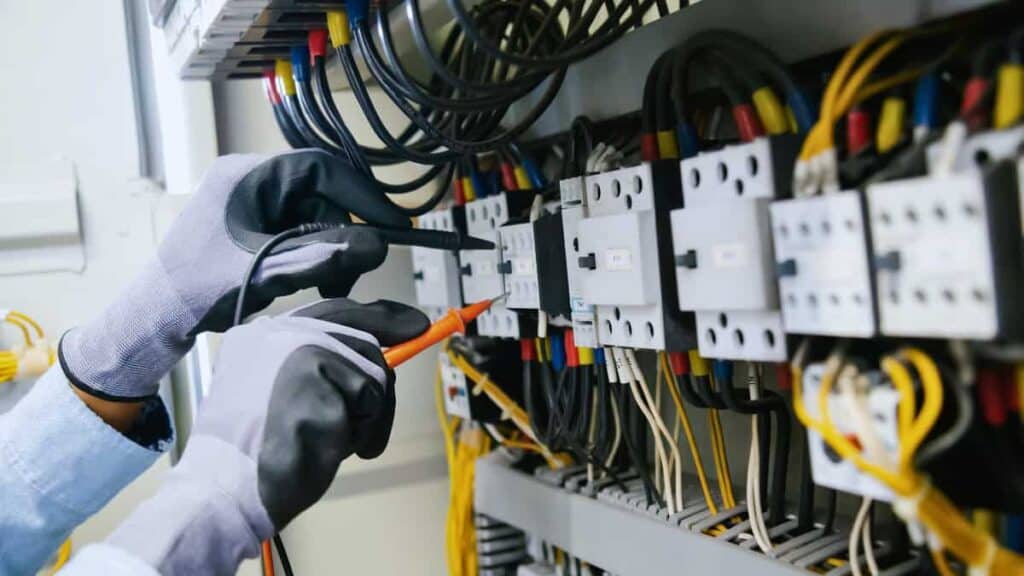
The distinguishing point is in the execution: in the control cabinet, the safety functions come together physically. Emergency stop circuits, door monitoring and safety relays are brought together here into a single controllable and documented safety chain and executed in a technically correct manner. A properly designed control cabinet thus supports safe operation, clear fault detection and predictable operation of machines and plants.
This standard falls within the broader framework of machine safety. Revised as EN-ISO 13849-1:2023, the standard aligns with Machinery Regulation 2023/1230, which succeeds the Machinery Directive.
Panel Building Pioneers for Mechanical Engineering
With the precision of a watchmaker and the agility of an acrobat, Kwadrant IA is committed to creating custom electrical panels for mechanical engineering. As a resilient player in panel building, we move quickly without sacrificing quality or durability. Step into our world of innovation and discover how we can take your mechanical engineering projects to the next level.
How do you determine the required Performance Level?
The required Performance Level is derived from the riskograph of EN-ISO 13849-1, based on three factors.
- Severity (S): The severity of possible injury, mild or severe and irreversible.
- Frequency (F): How often and for how long a person is exposed to the hazard.
- Possibility (P): The ability to avoid the hazard.
These three lead through the riskograph to the required PL (PLr). Then the realized PL is substantiated by the category, MTTFd, diagnostic coverage (DC), B10d value of components and PFHd. Tools such as SISTEMA are used to calculate and record this.
Categories and control architecture
The category describes how the safety chain is structured and how it handles errors. Together with the reliability of safety-related parts of control systems (SRP/CS), the category determines the achievable Performance Level.
- Category B and 1: basic reliability through suitable components, without fault detection.
- Category 2: the safety function is periodically tested.
- Category 3: a single fault does not lead to loss of safety function (single fault tolerance).
- Category 4: faults are detected and function is maintained even when accumulated. Required for the highest PLs.
Design also involves fault exclusion (the reasoned exclusion of certain failure modes) and common cause protection. These choices are recorded in the justification of the realized PL.
Performance Level (PL) or Safety Integrity Level (SIL)?
For functional safety, two standards frameworks exist and are used side by side.
EN-ISO 13849-1 (Performance Level) is the most widely used standard in mechanical engineering and suitable for all technologies, including hydraulics and pneumatics. EN-IEC 62061 (Safety Integrity Level) is also applicable and aligns with the process industry approach according to IEC 61511. For most machines, a PL assessment is sufficient; for complex or process-related installations, a SIL approach may be more appropriate.
In a nutshell: PL and EN-ISO 13849-1 belong to machine safety, while Safety Integrity Level (SIL) and IEC 61511 belong to the process industry.
CONTACT US
Years of experience in the field of industrial automation
Industrial automation with international standards
Industrial automation requires more than just a correctly constructed panel. We start with the architecture of the system and make conscious choices in component selection, standardization and scalability. By fully mastering engineering, panel construction and integration, we realize control systems that perform reliably in demanding industrial environments. From modular construction to international compliance, every detail is focused on quality, longevity and manageable Total Cost of Ownership.
We do not build standard solutions, but technically sound systems that match the complexity of modern mechanical engineering.
From Performance Level to a safely executed control cabinet
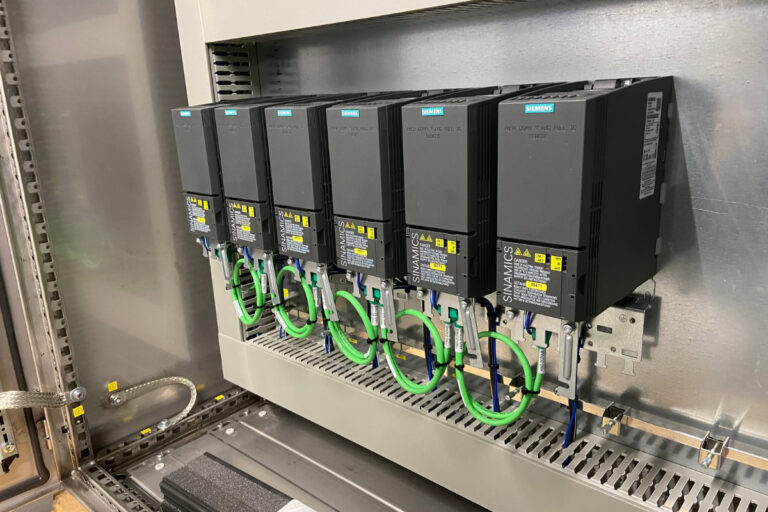
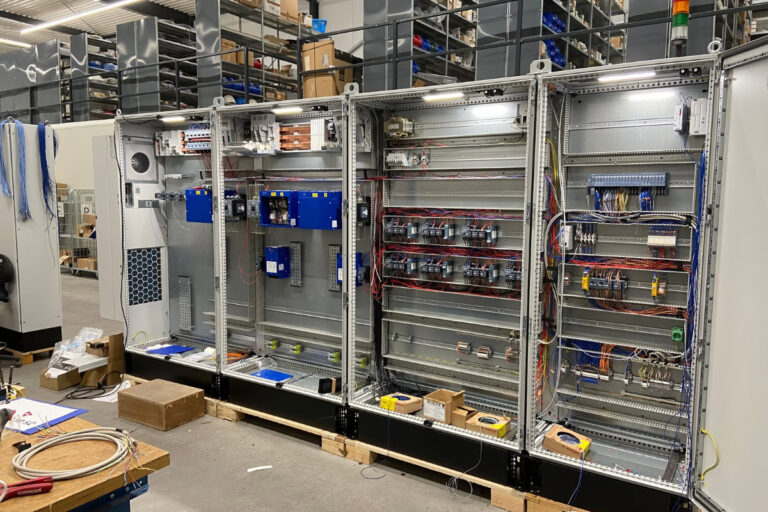
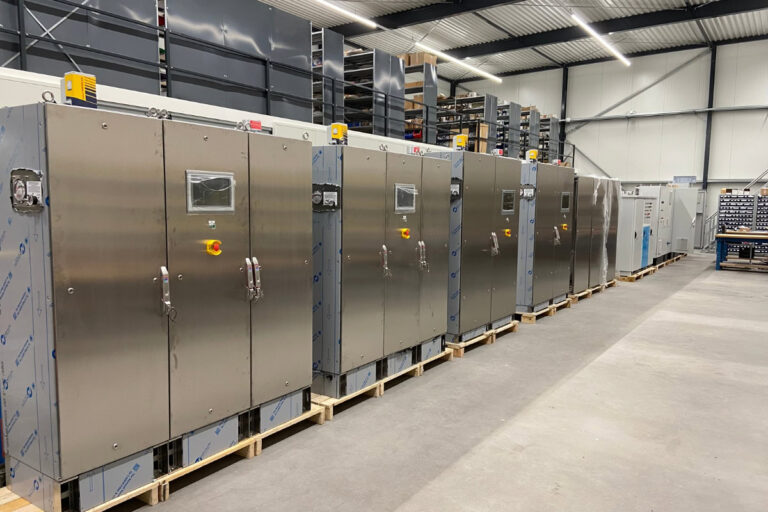
A Performance Level on paper is only worth as much as the execution in the cabinet. In the control cabinet the safety functions come together physically: safety relays or a safety PLC, emergency stop circuits, door monitoring and the associated wiring. Kwadrant IA realizes these according to EN-ISO 13849-1 and NEN-EN-IEC 60204-1, and builds the cabinet itself according to NEN-EN 61439. Upon delivery, the operation is validated with a Factory Acceptance Test and Site Acceptance Test.
Because engineering, panel construction and software are in-house, implementation matches the calculated architecture, with open calculation, a quote within five working days and UL/CSA in-house.
Frequently asked questions about EN-ISO 13849-1 and Performance Level
What is EN-ISO 13849-1?
EN-ISO 13849-1 is the standard for safety-related components of control systems. It describes how to determine the required Performance Level of a safety function and how to achieve it with the appropriate category and reliability.
What is a Performance Level (PL)?
The Performance Level expresses how reliable a safety function is, from PLa (lowest) to PLe (highest). The required level follows from the risk assessment based on severity of injury, frequency of exposure and ability to avoid the hazard.
When is PLd or PLe required?
PLd and PLe apply to high-risk machines, where failure could lead to serious or irreversible injury. PLe with category 4 is the highest level and is required in many robotic applications, among others.
What is the difference between Performance Level and SIL?
Performance Level belongs to EN-ISO 13849-1 (machine safety), SIL to EN-IEC 62061 and IEC 61511 (fellow process industry). Both express the reliability of a safety function within its own standards framework.
How is a Performance Level calculated?
The realized PL is substantiated by the category (architecture), the MTTFd, the diagnostic coverage and the PFHd, often using the tool SISTEMA, which records the calculation.
