
Safety relays in the control system
- Applied in accordance with EN-ISO 13849 and the required Performance Level
- For emergency stop, door monitoring and light curtains
- Part of an integrated, safe control design
OPEN CALCULATION
Transparent cost structure and control of your project.
OFFER IN 5 DAYS
Quick technical assessment and clear planning.
DURABLE CONSTRUCTION
Lower Total Cost of Ownership.
UL/CSA IN-HOUSE
Directly compliant for international markets.
Safety relay as a link between safety function and machine
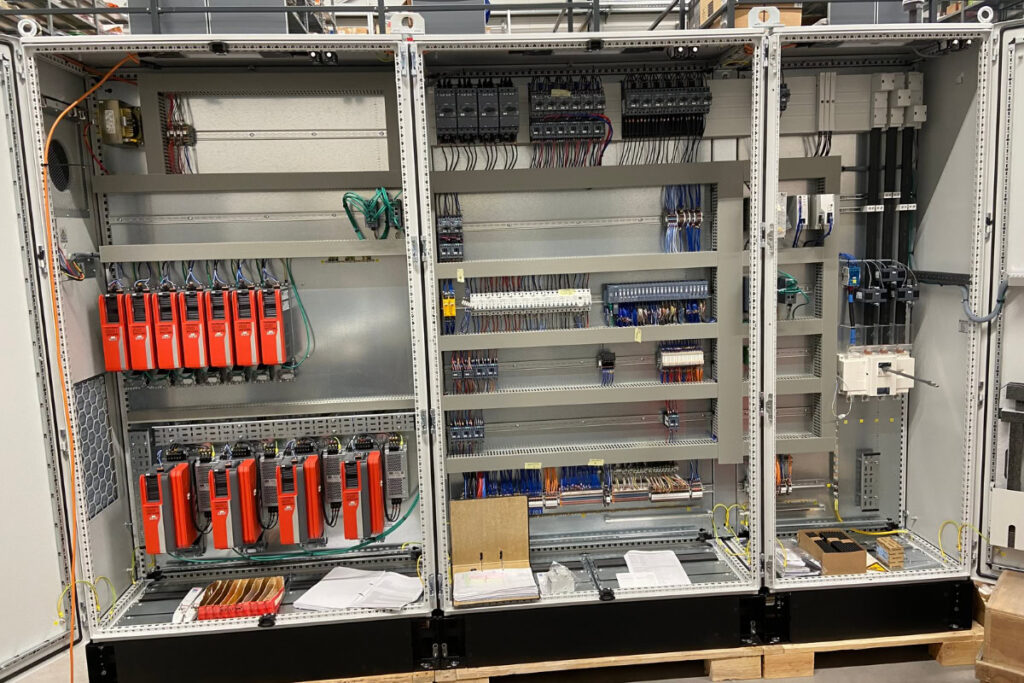
A safety relay is a reliably monitored switching element that provides a safety function of a machine: it receives the signal from an emergency stop, a safety door or a light curtain, for example, and safely switches off the machine when needed. The difference from an ordinary relay lies in its internal redundancy and self-monitoring; a safety relay detects its own faults and therefore remains in the safe state even in the event of a fault. At Kwadrant IA, safety relays are not supplied in isolation, but as part of a well-thought-out control design: selected, wired and tested in accordance with the Performance Level derived from the risk assessment follows.
How a safety relay works
A safety relay monitors an input signal and releases the machine only when all safety conditions are met. The input circuit receives the signal from, for example, an emergency stop or a safety door switch. That signal is read in via two separate, redundant channels, with cross-lock monitoring directly detecting a short circuit between the channels. Only when both channels give a valid signal do the enable paths switch: the make contacts that actually enable the machine. A feedback circuit then checks whether the actuated switching elements, such as contactors, have actually tripped; if that feedback is incorrect, the relay does not release again. The reset can be manual, so an operator deliberately confirms the restart, or automatic where it is safe to do so. In addition, for more complex machines with multiple safety functions, safety relays are cascadable so that different circuits are coordinated.
Safety functions realized with a safety relay
Depending on the risk, different safety functions are connected to a safety relay.
Emergency Stop
An emergency stop relay immediately and safely shuts down the machine when the emergency stop is actuated.
Security door monitoring
The machine cannot run until all protective covers and doors are closed.
Light curtains and safety sensors
Interruption of the light curtain stops the dangerous movement.
Safety mats and rails
Detect presence in a danger zone.
Standstill and speed monitoring
Releases access only when the machine is safely stopped.
Start your project with a technical consultation
We like to think with you from the initial design phase to realization and commissioning.
The right safety relay at the required Performance Level
The choice of a safety relay is not determined by the component itself, but by the safety function it is intended to perform. From the risk assessment, a required Performance Level (PL) according to EN-ISO 13849-1 or a Safety Integrity Level (SIL) according to IEC 62061. That level determines the required category, redundancy and fault detection, and thus which relay or safe control is suitable. For simple functions, a single safety relay is sufficient; for more complex machines with many functions, a safety PLC is often the better choice. Kwadrant IA makes this assessment on the basis of technology and costs, with open calculation and a quotation within five working days.
Safety relays correctly applied and wired
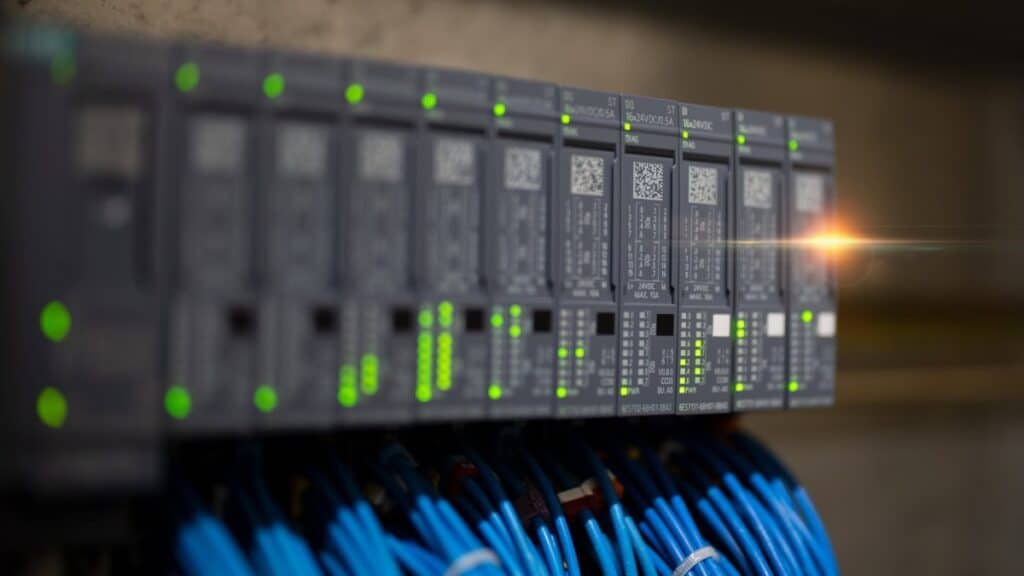
A safety relay is only as reliable as the way it is applied. Wrong wiring, a missing feedback circuit or an incorrect reset setting can imperceptibly undermine the safety function. That is why at Kwadrant IA safety relays are engineered, wired and tested according to NEN-EN 60204-1, and validated upon delivery via a Factory Acceptance Test and Site Acceptance Test. Because engineering, panel building and software are in-house, the implementation fits seamlessly with the safety design.
Years of experience in the field of industrial automation
Industrial automation with international standards
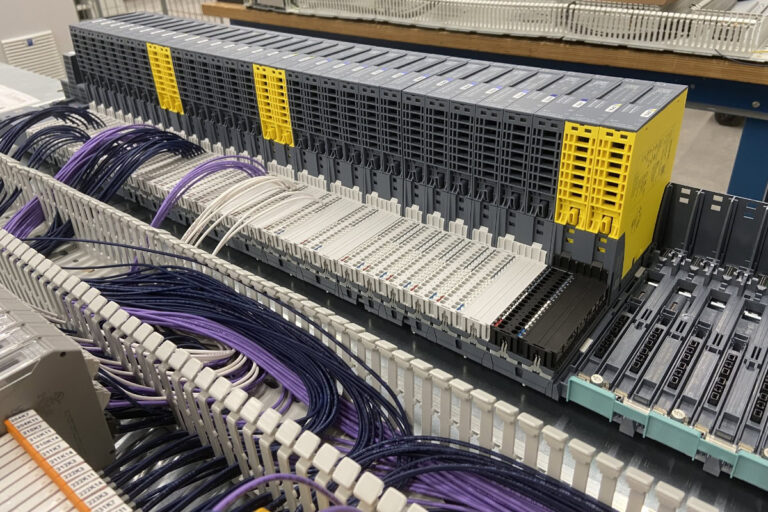
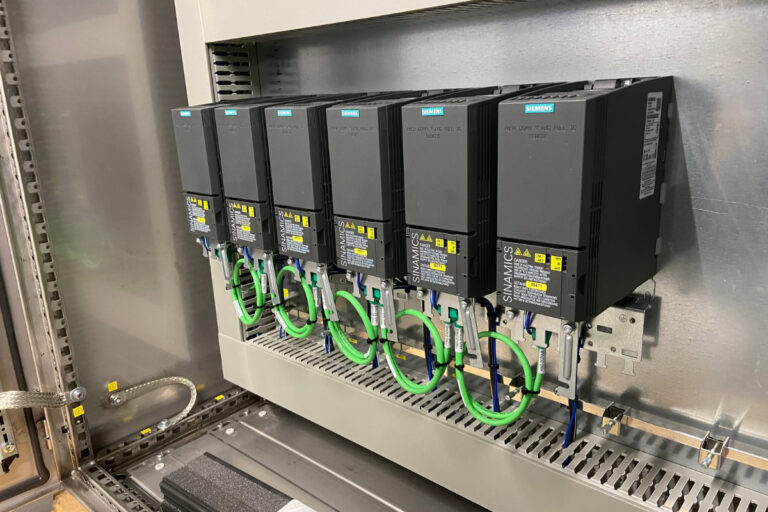
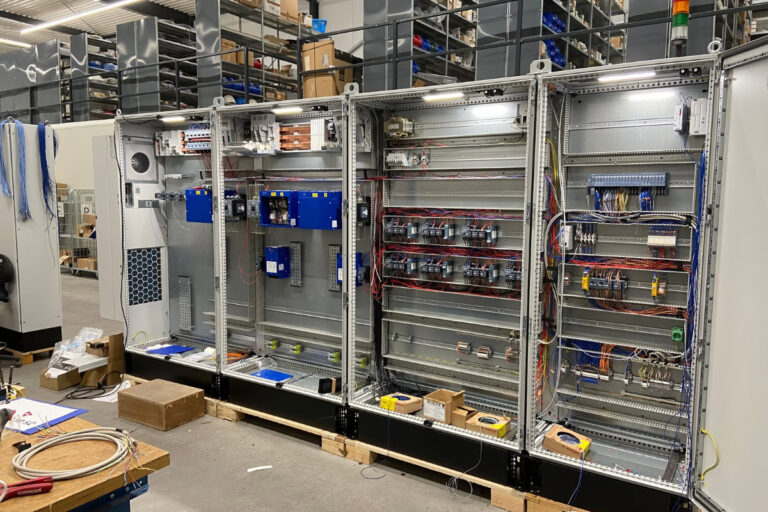
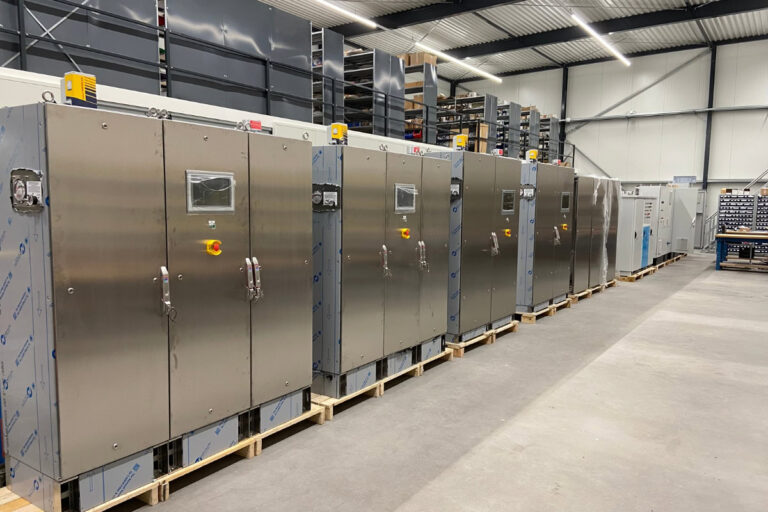
Industrial automation requires more than just a correctly constructed panel. We start with the architecture of the system and make conscious choices in component selection, standardization and scalability. By fully mastering engineering, panel construction and integration, we realize control systems that perform reliably in demanding industrial environments. From modular construction to international compliance, every detail is focused on quality, longevity and manageable Total Cost of Ownership.
We do not build standard solutions, but technically sound systems that match the complexity of modern mechanical engineering.
Frequently asked questions about safety relays
What is a safety relay?
A safety relay is a monitored switching element that performs a safety function of a machine, such as shutting down in the event of an emergency stop or an opened safety door. Due to internal redundancy and self-monitoring, it remains in the safe state even in the event of a fault.
What is the difference between a safety relay and an ordinary relay?
An ordinary relay only switches; a safety relay monitors itself and the connected chain. It operates with redundant channels, cross-locking monitoring and a feedback circuit so that an internal fault does not go unnoticed.
What is the difference between a safety relay and a safety PLC?
A safety relay is suitable for a limited number of fixed safety functions. A safety PLC is programmable and therefore the better choice for machines with many or complex safety functions. The choice follows from the required Performance Level and the number of functions.
What standard applies to safety relays?
The application of safety relays is covered by EN-ISO 13849-1 (Performance Level) and IEC 62061 (Safety Integrity Level), while electrical installation complies with NEN-EN 60204-1. Together, these standards define the required reliability and wiring.
How do I know which safety relay I need?
This follows from the risk assessment: a required Performance Level is determined for each safety function, and that level determines the required category and implementation of the relay or safe control.
