
Machinery directive and CE marking of machinery
- In accordance with Machine Directive 2006/42/EC and Machine Regulation 2023/1230
- From risk assessment to technical dossier
- Safe control as the basis for demonstrable compliance
OPEN CALCULATION
Transparent cost structure and control of your project.
OFFER IN 5 DAYS
Quick technical assessment and clear planning.
DURABLE CONSTRUCTION
Lower Total Cost of Ownership.
UL/CSA IN-HOUSE
Directly compliant for international markets.
The Machinery Directive as the basis for CE marking
The Machinery Directive (2006/42/EC) is the European legislation that determines which health and safety requirements a machine must meet before it can be placed on the market in the European Union. The manufacturer demonstrates with the CE mark that the machine meets those requirements. CE marking on a machine is thus not a seal of approval, but a declaration by the manufacturer himself, substantiated by a risk assessment, a technical file and an EC declaration of conformity. From 2027, the Machinery Directive will be replaced by the new Machinery Regulation (2023/1230), with tightened requirements around digital documentation and cybersecurity, among other things.
From Machinery Directive to Machinery Regulation
The transition from the current directive to the new regulation is the most important development for manufacturers at the moment.
Machinery Directive 2006/42/EC (current)
The current Machinery Directive has been in force since 2009 and is implemented in the Netherlands through the Commodities Act Decree on Machinery. It sets the essential health and safety requirements and describes the conformity procedure leading to CE marking.
Machinery Ordinance 2023/1230 (as of 2027)
The new Machinery Regulation replaces the directive and applies directly in all member states, without national transposition. Major changes include tightened requirements around risk assessment, digital documentation, cybersecurity and the handling of major modifications. Manufacturers would do well to prepare new machinery for these now.
Roadmap to CE marking of a machine
The path to a properly affixed CE mark follows a set sequence.
Step 1 - Determine the applicable guidelines
In addition to the Machinery Directive, other directives may apply, such as those for electromagnetic compatibility or low voltage. Determine which ones apply to the machine.
Step 2 - Conduct a risk assessment
A risk assessment according to NEN-EN-ISO 12100 identifies the hazards and determines the necessary safety measures. This is the core of conformity.
Step 3 - Apply the harmonized standards.
Applying harmonized standards (such as NEN-EN-ISO 12100, EN-ISO 13849-1 and NEN-EN-IEC 60204-1) creates a presumption of conformity with the requirements.
Step 4 - Compile the technical file
The technical file includes the risk assessment, drawings, standards used and the user manual. It demonstrates that the machine meets the requirements.
Step 5 - Prepare the EC declaration of conformity and affix the CE mark
When the machine demonstrates compliance, the manufacturer signs the EC declaration of conformity and affixes the CE mark. For certain high-risk categories of machinery, involvement of a notified body is first required.
Start your project with a technical consultation
We like to think with you from the initial design phase to realization and commissioning.
Who is responsible, and what applies to existing machines?
CE marking and the associated obligations lie with the manufacturer who places the machine on the market. Anyone who assembles several machines into one installation, or substantially modifies an existing machine substantially modifies, often becomes the manufacturer himself by law and must then go through a conformity process again. The employer is also subject to the Work Equipment Directive, which requires that machines remain safe during use. Kwadrant IA assesses which obligations apply in the event of modification, assembly or modernization.
CE marking on the máchine is separate from the CE marking on the control cabinet (low voltage and EMC). For the conformity of the control box itself, see the separate page.

Conformal control as the foundation of CE marking
CE marking is a machine builder’s responsibility, but much of compliance is determined by the control system. Kwadrant IA provides control systems that meet the relevant harmonized standards, from a reasoned risk assessment and safe control functions to wiring in accordance with NEN-EN-IEC 60204-1 and validation through a Factory Acceptance Test and Site Acceptance Test. We thus provide the control engineering building blocks and documentation that the machine builder needs for his technical file, with open calculation and a quotation within five working days.
Years of experience in the field of industrial automation
Industrial automation with international standards
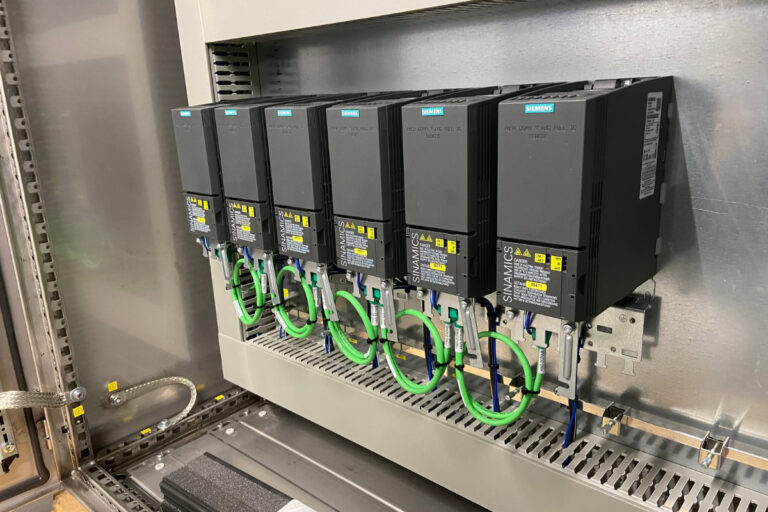
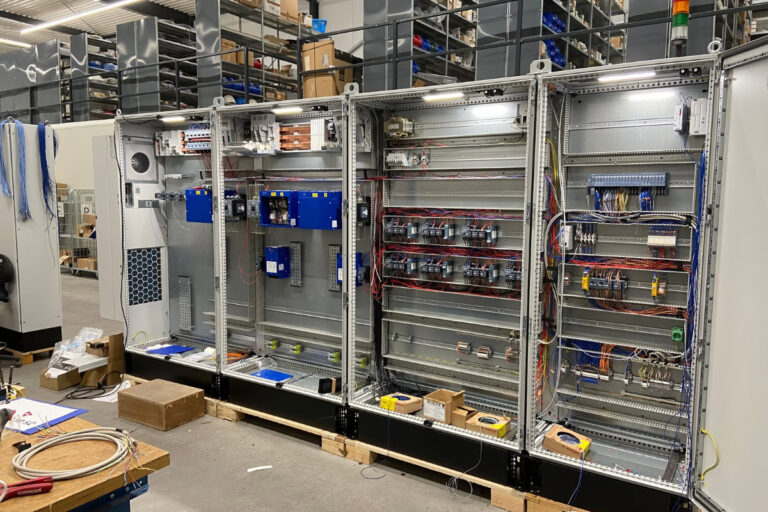
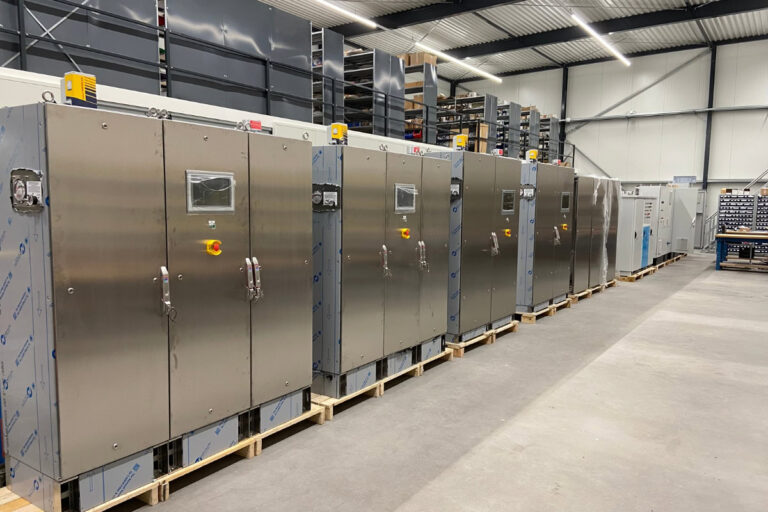
Industrial automation requires more than just a correctly constructed panel. We start with the architecture of the system and make conscious choices in component selection, standardization and scalability. By fully mastering engineering, panel construction and integration, we realize control systems that perform reliably in demanding industrial environments. From modular construction to international compliance, every detail is focused on quality, longevity and manageable Total Cost of Ownership.
We do not build standard solutions, but technically sound systems that match the complexity of modern mechanical engineering.

Frequently asked questions about the Machinery Directive and CE marking
What is the Machinery Directive?
The Machinery Directive (2006/42/EC) is the European legislation that defines the safety and health requirements for machinery. A machine may only be placed on the EU market if it meets those requirements and be CE marked.
What will change with the new Machinery Ordinance?
The Machinery Regulation (EU) 2023/1230 replaces the Machinery Directive and is fully applicable from 2027. It applies directly in all member states and tightens requirements around risk assessment, digital documentation, cybersecurity and major modifications.
Who is responsible for the CE marking of a machine?
The manufacturer who places the machine on the market is responsible. Those who assemble machines into one installation or substantially modify an existing machine often become manufacturers themselves for the purposes of the law and must then go through their own conformity process.
What is the difference between CE marking on a machine and on a control cabinet?
CE marking on the machine falls under the Machinery Directive and concerns the entire machine. CE marking on a control cabinet concerns the low-voltage and EMC compliance of the cabinet itself. They are different pathways with different requirements.
Do I need a notified body for CE marking?
For most machinery, the manufacturer may assess conformity himself. Only for certain high-risk categories of machinery listed in the directive is involvement of a designated body (notified body) mandatory.
