
SIL2/SIL3 safety PLC for process industry
- Manageable security
- Clear security structure
- Reliable control
SIL2 and SIL3 safety PLCs as the core of functional safety in process environments
SIL2/SIL3 safety PLC for process industry is an important part of functional safety in critical process plants. In environments where risks to people, plant and environment are present, control of safety functions is explicitly designed and implemented according to established safety levels. Safety PLCs play a central role in this by reliably performing safety instrumented functions.
Within the process industry, this requires a clear separation between standard control and safety, with attention to design, engineering and testing. Including safety early on in the design process creates a manageable and reproducible safety architecture that meets the requirements of modern process environments.

Panel Building Pioneers for Mechanical Engineering
With the precision of a watchmaker and the agility of an acrobat, Kwadrant IA is committed to creating custom electrical panels for mechanical engineering. As a resilient player in panel building, we move quickly without sacrificing quality or durability. Step into our world of innovation and discover how we can take your mechanical engineering projects to the next level.
What are SIL2/SIL3 safety PLC for process industry
SIL2/SIL3 safety PLC for process industry are control systems specifically designed to perform safety functions with an established safety level. SIL stands for Safety Integrity Level and indicates how reliably a safety instrumented function must function to reduce risk. A safety PLC differs from a standard PLC in that both hardware and software are set up for fault detection, diagnosis and safe handling of faults.
In process environments, safety PLCs are used for functions such as emergency stops, process shutdown and protection against exceeding critical limit values. The safety logic is separate from the regular control, providing a clear separation between process control and process safety.
Important standards and guidelines
IEC 61508
IEC 61508 is the basic standard for functional safety of electrical, electronic and programmable electronic systems. This standard describes the lifecycle of safety functions, from risk analysis and design to testing and maintenance. Within process plants, IEC 61508 is used as a guide for determining and realizing SIL2 and SIL3 safety functions.
IEC 62061
IEC 62061 follows on from IEC 61508 and focuses on the application of SIL within machinery and industrial systems. The standard helps structure safety functions and define requirements for hardware, software and validation. In combined environments where process and machine safety come together, IEC 62061 is often used additionally.
CONTACT US
Applications in the process industry
SIL2/SIL3 safety PLCs are used in industries where process safety is essential. Think of petrochemistry, energy, marine and offshore and industrial utilities. In these environments, safety functions protect people, installations and the environment from undesirable situations.
Examples of applications include:
- Safely shutting down processes in the event of anomalies
- Monitoring of pressure, temperature and level
- Emergency shutdown and shutdown systems
- Securing critical process steps
In ATEX environments, controls are matched to explosion-proof installations, where safety functions are part of an overall design in accordance with ATEX 114.
Advantages of SIL2/SIL3 safety PLC for process industry
Applying SIL2 and SIL3 safety PLCs offers distinct advantages:
- Better control of process risks
- High reliability of safety functions
- Clear documentation of safety logic
- Unambiguous separation between control and safety
Structuring safety instrumented functions makes it easier to make changes and manage installations safely.
The process from design to commissioning
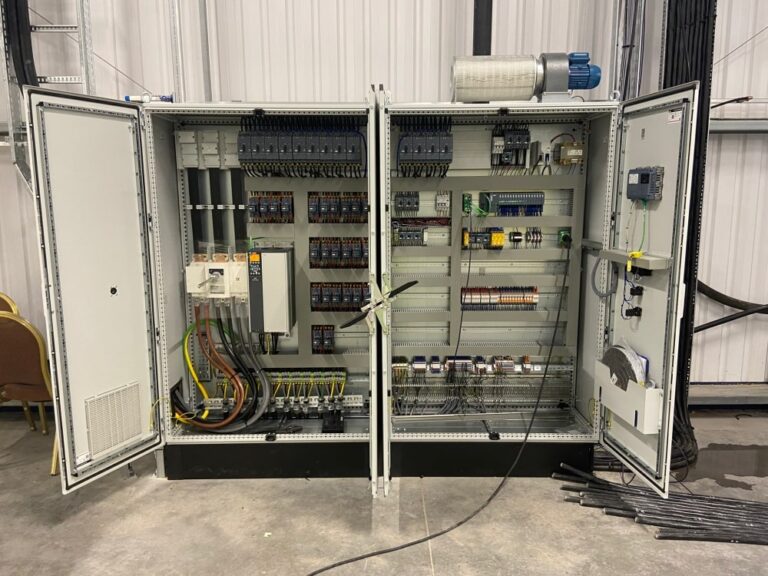
Applying SIL2/SIL3 safety PLCs starts with a risk analysis and determining the required safety levels. Based on this, safety functions are designed and elaborated in hardware and software. During the engineering phase, schematics and panels are worked out, often with the support of EPLAN.
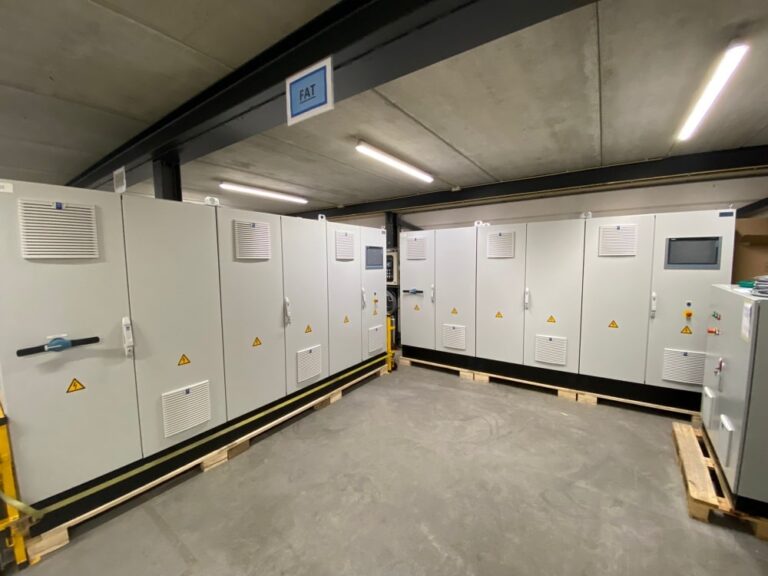
In the test phase, safety functions are checked during FAT and SAT. This involves checking correct operation, error handling and documentation. After commissioning, the safety PLC forms a stable basis for safe and reliable process operation.
Years of experience in the field of industrial automation
Industrial automation with international standards
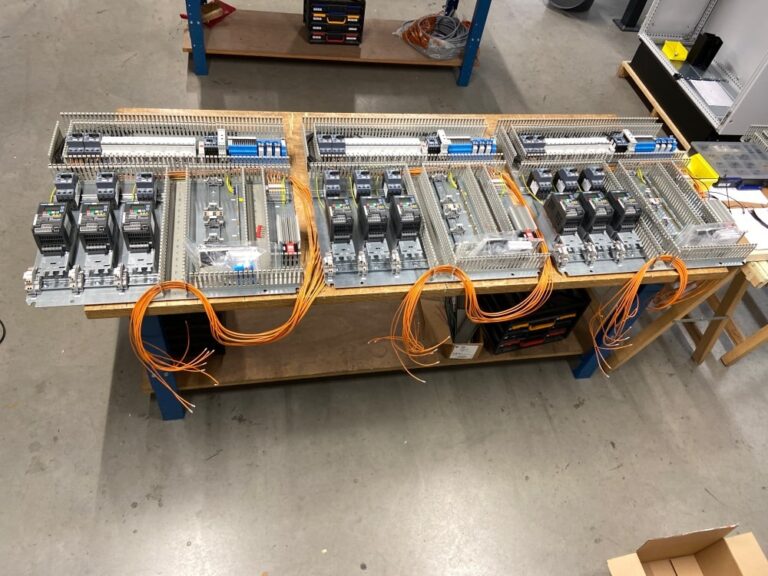
Industrial automation requires more than just a correctly constructed panel. We start with the architecture of the system and make conscious choices in component selection, standardization and scalability. By fully mastering engineering, panel construction and integration, we realize control systems that perform reliably in demanding industrial environments. From modular construction to international compliance, every detail is focused on quality, longevity and manageable Total Cost of Ownership.
We do not build standard solutions, but technically sound systems that match the complexity of modern mechanical engineering.
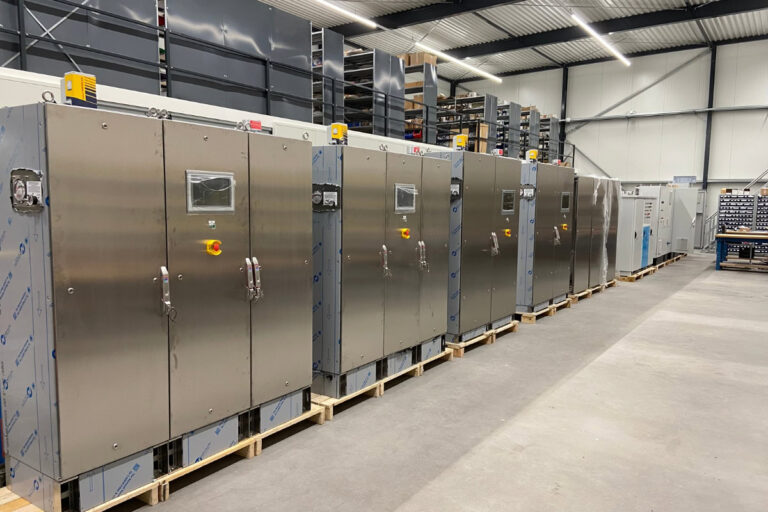

Kwadrant IA as a partner for SIL2/SIL3 safety PLCs
Kwadrant IA supports companies in applying SIL2/SIL3 safety PLCs within process environments where functional safety is central. From their expertise in panel building, hardware engineering and software engineering, they help design and realize clear and reliable safety control solutions. Thereby the SIL methodology is used as part of the total control concept, without stepping outside the applicable standards.
With experience in sectors such as petrochemical, marine and offshore and infra and water management, the approach suits a variety of process installations. Panel construction according to NEN-EN 61439 and UL 508A, combined with careful engineering and commissioning, provides a solid basis. Would you like to know how SIL2 or SIL3 safety PLCs can be applied in your installation? Then contact Kwadrant IA for advice or a technical introduction.
Frequently asked questions about SIL2/SIL3 safety PLC for process industry
When do you need SIL2 or SIL3 and what does that mean for control?
SIL2 or SIL3 is required when a risk analysis shows that standard control offers insufficient risk reduction. The required SIL level determines how reliable a safety function must be. For control this means that safety functions are performed by a safety PLC with specific hardware, software and test procedures, separate from regular process control.
What is the difference between SIL2 and SIL3?
The difference between SIL2 and SIL3 is in the required reliability of the safety function. SIL3 requires a higher degree of risk reduction than SIL2 and has more stringent requirements for design, redundancy and testing. The choice of SIL2 or SIL3 is always determined based on a risk analysis and the possible consequences of a failure.
What is a safety instrumented function (SIF)?
A safety instrumented function is a specific safety function designed to prevent or mitigate a hazardous situation. A SIF consists of sensors, logic in the safety PLC and actuators that intervene when a limit is exceeded. Each SIF has an established SIL level that indicates the reliability of the function.
How is a safety PLC different from a standard PLC?
A safety PLC is designed to perform safety functions and features comprehensive diagnostics, error detection and safe error handling. Standard PLCs are designed for process control and not for realizing SIL-classified safety functions. In many installations, both PLC types work side by side with a clear separation of duties.
How are safety functions tested during FAT and SAT?
During FAT and SAT, safety functions are extensively tested for correct operation and error handling. This involves checking whether sensors, logic and actuators work together as designed and whether the safety systems respond correctly to faults. These tests are an important part of demonstrating that the safety functions meet the established requirements.
