
CE marking on control cabinets
- In compliance with EU directives
- CE documentation included
- Tested & certified
CE marking switchgear cabinets in panel building
A control cabinet with CE marking is mandatory for all electrical control cabinets marketed in Europe. This marking shows that the cabinet complies with the relevant EU directives and that design, construction and testing have been carried out in accordance with the applicable standards. In panel building, CE marking is thus not optional, but an essential part of delivery. Engineers, buyers and project managers in sectors such as mechanical engineering, food and infrastructure are looking for panel builders who can provide complete CE documentation and test reports in addition to a technically reliable control cabinet.
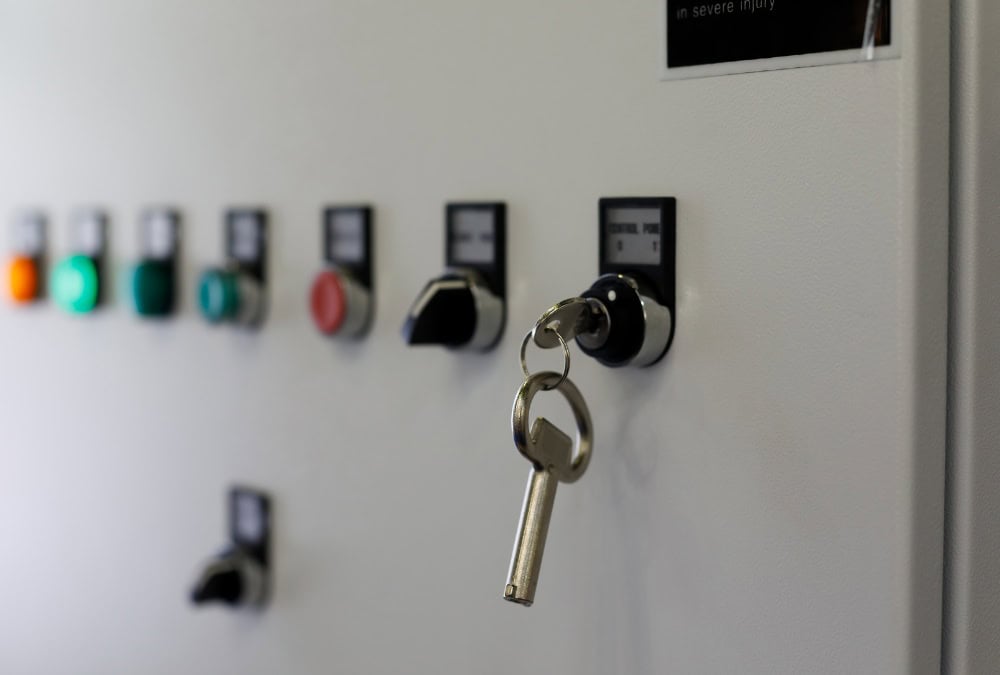
Panel Building Pioneers for Mechanical Engineering
With the precision of a watchmaker and the agility of an acrobat, Kwadrant IA is committed to creating custom electrical panels for mechanical engineering. As a resilient player in panel building, we move quickly without sacrificing quality or durability. Step into our world of innovation and discover how we can take your mechanical engineering projects to the next level.
What are switchgear cabinets with CE marking?
A control cabinet with CE marking is a control or distribution cabinet that meets the essential requirements of European directives, such as the Low Voltage Directive (LVD) and the EMC Directive. This marking shows that the product is safe to use within the EU and that the manufacturer takes responsibility for conformity. In panel building, this means that design, component selection, assembly and testing have been demonstrably carried out in accordance with the standards. Without CE marking, a control cabinet may not be officially put into use or traded within the European market.
Important standards and guidelines
NEN-EN-IEC 61439 - low voltage distributors
The NEN-EN-IEC 61439 standard sets requirements for the construction, safety and verification of low-voltage switchgear. For switchgear cabinets, this includes type verification and routine testing. Issues such as heat generation, short-circuit resistance and electrical insulation are part of the requirements. This standard provides the technical basis on which CE marking can be issued.
NEN-EN 60204-1 - machine wiring.
For control cabinets that are part of machinery, the following applies NEN-EN 60204-1. This standard describes the safety aspects of electrical equipment of machines. Important aspects include cable coding, protections against electric shock and emergency stop devices. Together with the Machinery Directive, this standard provides an important framework for CE marking of machine control cabinets.
CONTACT US
Applications in industry
Control cabinets with CE marking are mandatory in almost all industries where electrical installations are used. Examples include:
- Machine Building: to comply with the Machinery Directive and pass inspections smoothly.
- Food and food industry: where hygiene and safety come together with electrical reliability.
- Infrastructure & water management: where CE marking gives confidence in safety and continuity.
- Logistics and robotics: where European safety regulations are strictly controlled.
In all of these environments, CE marking ensures that switchgear meets legal requirements and is directly approved by inspection bodies.
Benefits of control cabinets with CE marking
Having a CE mark on a switchgear cabinet provides distinct advantages:
- Legal compliance: mandatory for the European market.
- Safety: shows that the cabinet has been tested and built in accordance with standards.
- Efficiency: on deliveries and audits, approval is faster.
- Transparency: associated documentation provides insight into design and test results.
- International Usability: CE is recognized throughout the European Economic Area.
The process from design to commissioning
A CE mark does not arise by itself. The process consists of several phases:
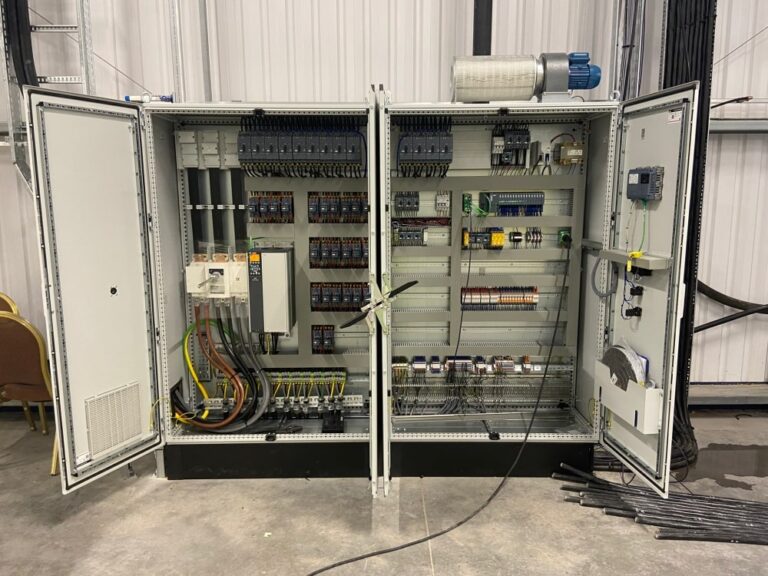
- Design and engineering – With tools such as EPLAN P8/Pro Panel the control cabinet is designed in accordance with NEN-EN-IEC 61439 and NEN-EN 60204-1.
- Risk assessment – Analysis of potential hazards such as electric shock, overload and short circuit.
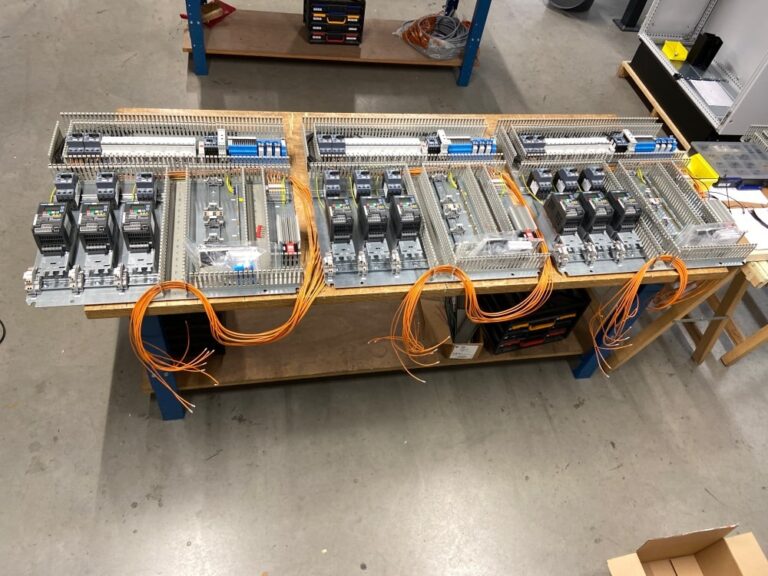
- Assembly and wiring – performed according to applicable standards, including cable coding and protection measures.
- Type verification & routine testing. – Thermal calculations, short-circuit resistance and insulation tests, among others.
- Documentation & declaration of conformity – Providing test reports and CE documents as proof of conformity.
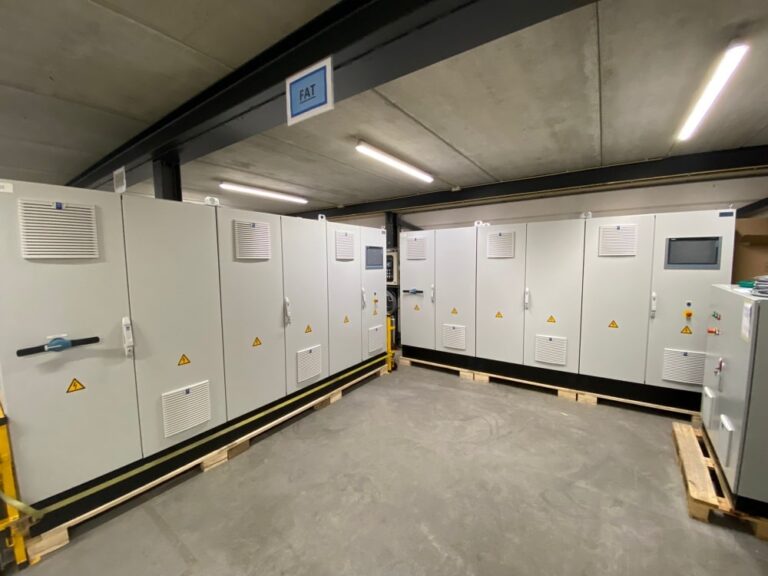
- FAT and SAT – practical tests to demonstrate that the switchgear is functioning correctly in both factory and final location.
Going through this process creates a switchgear cabinet that fully complies with European directives and can be used immediately in industry.

Years of experience in the field of industrial automation
Industrial automation with international standards
Industrial automation requires more than just a correctly constructed panel. We start with the architecture of the system and make conscious choices in component selection, standardization and scalability. By fully mastering engineering, panel construction and integration, we realize control systems that perform reliably in demanding industrial environments. From modular construction to international compliance, every detail is focused on quality, longevity and manageable Total Cost of Ownership.
We do not build standard solutions, but technically sound systems that match the complexity of modern mechanical engineering.

Kwadrant IA as your partner for CE marking switchgear cabinets
Realizing a control cabinet with CE marking requires more than just technical knowledge. It involves a complete process of design, testing and documentation, in which all relevant standards are carefully applied. For many companies, this poses a challenge: how do you ensure that a switch cabinet not only functions well technically, but also demonstrably complies with European directives?
Kwadrant IA combines in-depth expertise in panel building with practical experience in diverse sectors, including mechanical engineering, food and infrastructure. Our engineers design control and distribution cabinets in EPLAN Pro Panel, build according to NEN-EN-IEC 61439 and NEN-EN 60204-1, and provide complete documentation including declaration of conformity. During the FAT and SAT, each control cabinet is checked, so you are assured of a solution that directly complies with inspections and audits.
With Kwadrant IA, you choose a partner who puts quality and safety first. Our CE-compliant switchgear cabinets offer certainty on delivery, contribute to business continuity and support you in complying with European legislation. Would you like advice or a customized quote? Then contact us today.
Frequently asked questions about control cabinets with CE marking
How is CE marking demonstrated on switchgear cabinets?
CE marking is demonstrated by means of a declaration of conformity which is prepared by the manufacturer or panel builder. This states that the switchgear meets the relevant EU directives, such as the Low Voltage Directive and EMC Directive. This is supported by test reports, type verification and routine tests according to NEN-EN-IEC 61439.
What role does NEN-EN-IEC 61439 play in CE conformity?
The NEN-EN-IEC 61439 standard defines how low-voltage switchgear should be designed, tested and verified. By defining type verification and routine testing, this standard provides the technical basis by which a panel builder can demonstrate that a switchboard is safe and CE compliant.
Is a declaration of conformity required for every switchgear cabinet?
Yes, any switchgear placed on the market or put into service in the EU must be accompanied by a declaration of conformity. This document confirms that the control cabinet complies with the relevant directives and standards. Without this proof, the control cabinet cannot officially be put into service.
What is the difference between CE marking and UL 508A?
CE marking applies to the European market and is based on EU directives and standards such as NEN-EN-IEC 61439 and NEN-EN 60204-1. UL 508A, on the other hand, is an American standard specifically aimed at industrial control panels for the US and Canada. Both markings demonstrate conformity, but are linked to different markets and regulations.
What documentation must a panel builder produce for CE?
In addition to the compliance statement, a panel builder must provide documentation such as:
- Design data (schematics, component selection, calculations).
- Test results (type verification, heat calculation, short-circuit resistance).
- Routine tests performed on the cabinet itself.
Together, these documents constitute the file that demonstrates that the control cabinet is CE compliant.
