
Weighing & dosing control with batch traceability
- Accurate dosing
- Batch traceability
- PLC integration
Weighing and dosing automation with Siemens Siwarex
A weighing and dosing automation system ensures accurate control of raw materials and semi-finished products in production processes. With Siemens Siwarex modules integrated into TIA Portal, engineers and operators can count on a reliable solution that enables recipe-driven weighing, batch dosing and traceability. This is essential in sectors such as food, chemical and bulk handling, where quality and efficiency are directly linked to accuracy. For buyers and managers, it means that installations comply with laws and regulations faster, and audits run smoothly thanks to complete documentation and batch recording.
Panel Building Pioneers for Mechanical Engineering
With the precision of a watchmaker and the agility of an acrobat, Kwadrant IA is committed to creating custom electrical panels for mechanical engineering. As a resilient player in panel building, we move quickly without sacrificing quality or durability. Step into our world of innovation and discover how we can take your mechanical engineering projects to the next level.
What is weighing and dosing automation?
Weighing and dosing automation focuses on the accurate weighing and dosing of raw materials in industrial processes. This can include solids such as powders and granules or liquids such as oils and chemicals. The goal is to add the right amount in the right batch or recipe. Automation with PLCs and Siwarex modules makes the process more reliable, faster and more consistent than manual dosing. This is especially important in industries where quality and safety depend directly on correct dosing.
Important standards and guidelines
NEN-EN 60204-1 - electrical safety of machinery.
When integrating weighing systems into machines, the following applies NEN-EN 60204-1 applies as the standard. Among other things, this guideline describes electrical safety, cable coding and protection devices. It ensures that automation is applied not only accurately, but also safely.
IEC 61131-3 and ISA-88 - software and batch control
The international standard IEC 61131-3 defines how PLC programming is constructed, while ISA-88 provides guidelines for batch control and recipe control. Together, they provide a solid foundation for standardizing and making weighing and dosing processes traceable. These standards help companies meet quality and traceability requirements without requiring additional manual steps.
CONTACT US
Applications in industry
Weighing and dosing automation is widely used in industries where precision and efficiency are crucial:
- Food & beverage: recipe-driven weighing of ingredients for consistency and food safety.
- Chemistry: dosing of chemicals in production processes with high safety risks.
- Bulk handling: handling of powders and granules in silos, packaging lines or conveyors.
- Pharmacy: accurate weighing of raw materials for drug production (within European guidelines).
In all of these applications, traceability plays an increasingly important role. Being able to retrieve batch data is essential for audits and quality control.
Advantages of weighing and dosing automation
The integration of Siemens Siwarex modules into TIA Portal offers several advantages:
- Accuracy: minimizes errors and ensures consistent quality.
- Efficiency: Faster production and less waste due to consistent dosing.
- Traceability: batch data can be easily stored and linked to ERP or MES systems.
- Flexibility: easy prescription changes without major software modifications.
- Reliability: direct integration with Siemens PLCs and HMIs for a robust solution.
The process from design to commissioning
The realization of a weighing and dosing automation system involves several stages:
- Design – engineers work with EPLAN Pro Panel and TIA Portal to create an engineering design that complies with applicable standards.
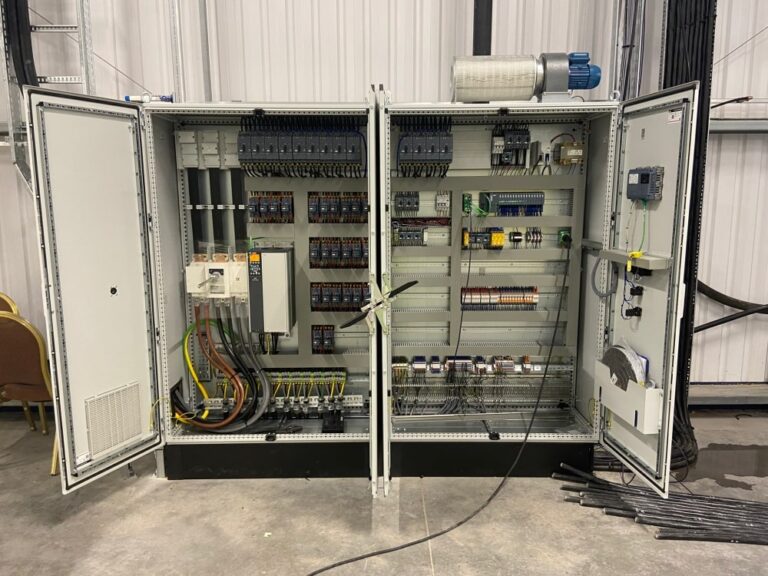
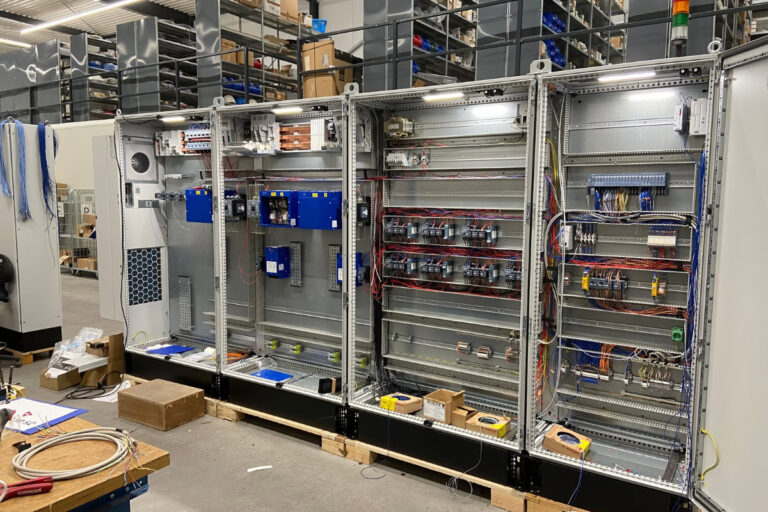
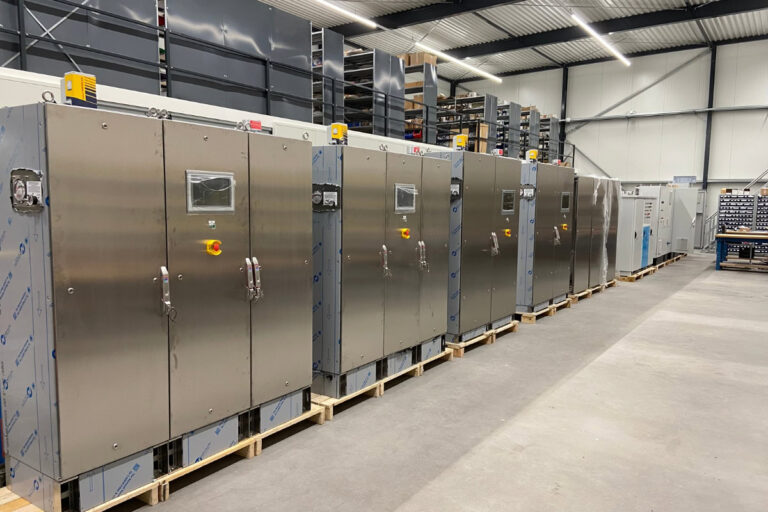
- Panel building & integration – Switchboards are built in accordance with NEN-EN 61439 and equipped with Siwarex modules and PLCs.
- Software development – recipe-driven processes and batch control are configured in TIA Portal.
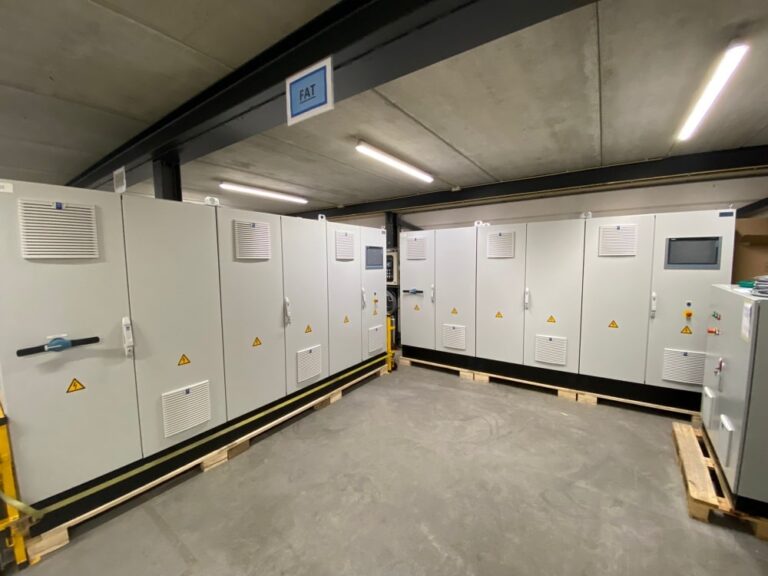
- Test phase (FAT) – weighing systems are extensively tested in the workshop to ensure accuracy and reliability.
- Commissioning (SAT) – On-site validation, including batch registration and interfacing with SCADA or MES.
- Delivery & documentation – Including CE Declaration of Conformity and manuals to ensure hassle-free audits.
This structured process creates a solution that is secure, reliable and future-proof.
Years of experience in the field of industrial automation
Industrial automation with international standards
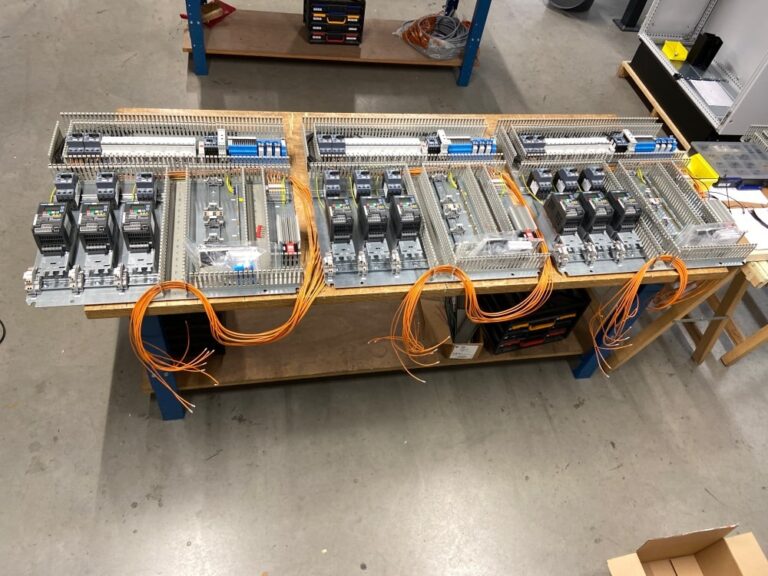
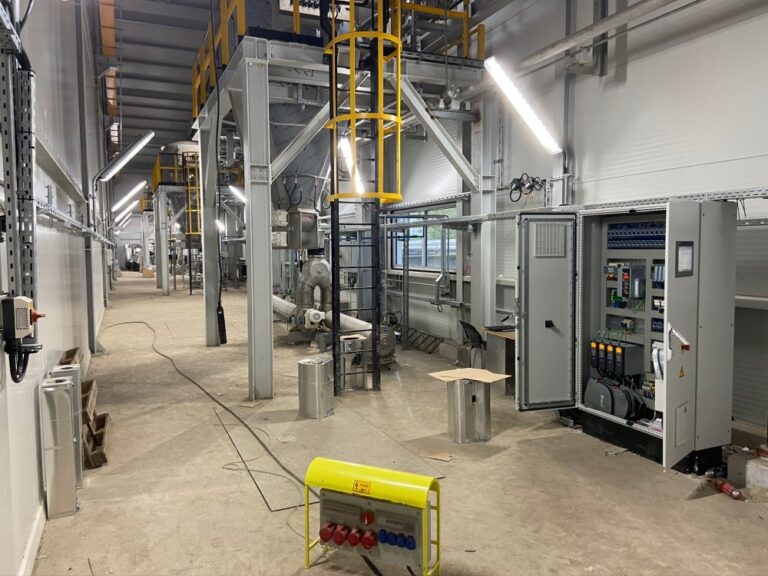
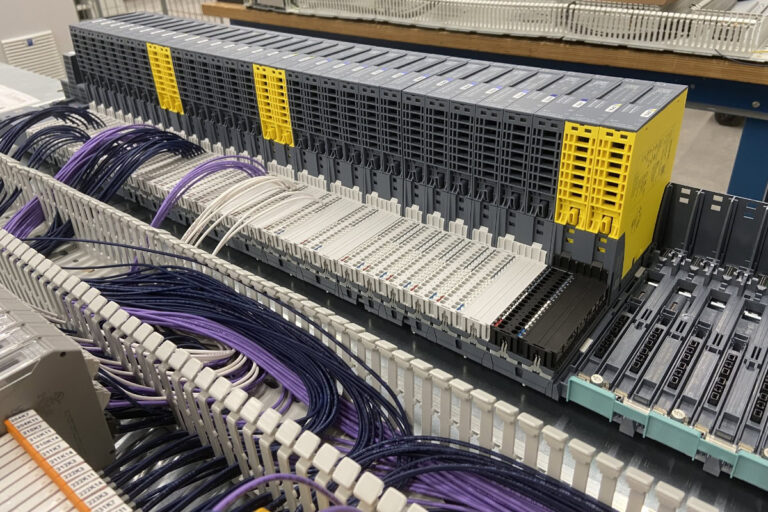
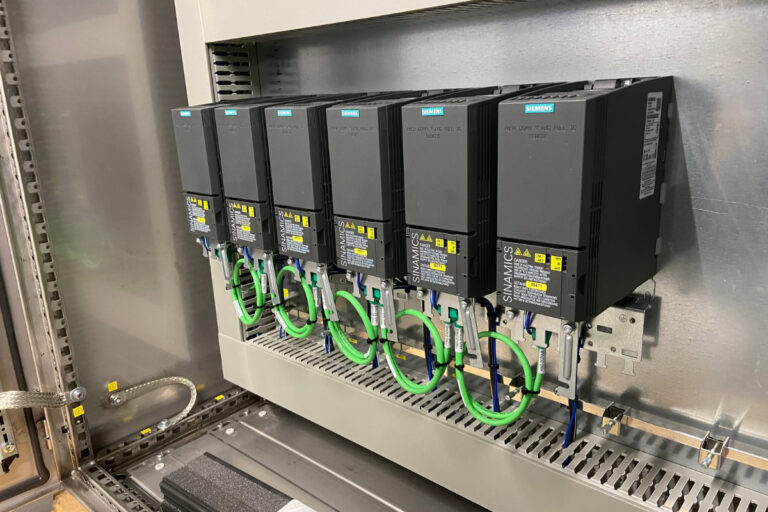
Industrial automation requires more than just a correctly constructed panel. We start with the architecture of the system and make conscious choices in component selection, standardization and scalability. By fully mastering engineering, panel construction and integration, we realize control systems that perform reliably in demanding industrial environments. From modular construction to international compliance, every detail is focused on quality, longevity and manageable Total Cost of Ownership.
We do not build standard solutions, but technically sound systems that match the complexity of modern mechanical engineering.

Kwadrant IA as your partner for weighing and dosing automation
Implementing weighing and dosing automation requires in-depth knowledge of both hardware and software. It’s not just about the right Siemens Siwarex modules or programming in TIA Portal, but a total solution where accuracy, traceability and reliability are key. This is a challenge for many organizations: how do you ensure that recipes are executed exactly and that batches are fully traceable?
Kwadrant IA combines years of experience in panel construction, hardware engineering and PLC/SCADA software development. Our experts design switchboards according to NEN-EN 61439, ensure safe wiring according to NEN-EN 60204-1, and realize integration into TIA Portal for recipe-driven weighing and batch-dosing. With FAT and SAT, we guarantee that systems perform accurately, both in the workshop and on site.
By choosing Kwadrant IA, you get a partner that combines technical depth with practical experience in sectors such as food, chemical and bulk handling. Our solutions help you optimize production, simplify quality control and pass audits without a hitch. Contact us today for advice or a no-obligation quotation.
Frequently asked questions about weighing and dosing automation
How do you guarantee accuracy in weighing systems?
Accuracy is achieved by using calibrated load cells in combination with Siemens Siwarex modules that integrate directly into TIA Portal. In addition, software-based corrections, error detection and periodic validation during FAT and SAT ensure that deviations remain minimal.
What is the advantage of Siemens Siwarex in TIA Portal?
The integration of Siwarex modules into TIA Portal provides one central environment for both PLC programming, HMI configuration and weighing functionality. This reduces complexity, simplifies maintenance and provides direct interfacing with recipe-driven processes and batch recording.
How does batch dosing work in a PLC controller?
Batch dosing means that a PLC controls dosing based on preset recipes. The Siwarex module measures the weight and controls the valves or conveyors until the set amount is reached. The PLC records all batch data, so traceability and audit trails are available.
What industries use weighing and dosing automation?
Weighing and dosing automation is widely used in sectors such as food & beverage, bulk handling, chemicals and pharmaceuticals. In each of these sectors, accuracy, traceability and efficiency are of great importance, for example for meeting quality standards and regulations.
How are weighing systems tested and validated (FAT/SAT)?
During the Factory Acceptance Test (FAT), the systems are tested in the workshop for accuracy, error detection and communication with the PLC. In the Site Acceptance Test (SAT), this is done on site in the field environment. This ensures that the system functions reliably under real-world conditions.
