
OPC UA coupling between PLC and SCADA
- Standardized communication
- Clear data modeling
- Supplier independent
OPC UA as a standard for structured data integration between PLC and SCADA
The OPC UA link between PLC and SCADA is a widely used solution for standardized data exchange within industrial automation. By connecting machines, controls and visualization systems in a uniform manner, a reliable basis for monitoring, control and analysis is created. OPC UA enables structured and semantic data exchange, regardless of brand or platform.
In modern industrial environments, the need for clear machine data integration is growing. With OPC UA, PLCs and SCADA systems can communicate securely and transparently, contributing to better plant management, maintenance and expansion.

Panel Building Pioneers for Mechanical Engineering
With the precision of a watchmaker and the agility of an acrobat, Kwadrant IA is committed to creating custom electrical panels for mechanical engineering. As a resilient player in panel building, we move quickly without sacrificing quality or durability. Step into our world of innovation and discover how we can take your mechanical engineering projects to the next level.
What is an OPC UA link between PLC and SCADA
An OPC UA link between PLC and SCADA provides standardized communication between control systems and visualization or supervision systems. OPC UA is an open industry standard that not only transfers data, but also adds structure and meaning through data modeling. This allows systems to understand not only values, but also what those values represent within a process or machine.
Within industrial automation, OPC UA is often used to make PLC data available to SCADA, MES or other superordinate systems. The link can be set up via a client-server model or via publish-subscribe, depending on the application and desired scalability.
Important standards and guidelines
OPC UA as an industry standard
OPC UA was developed as a platform-independent standard for industrial communications. The standard supports security mechanisms such as authentication and encryption and fits well with modern OT architectures. In projects, OPC UA is applied as a communication and integration layer between different systems.
Relationship to PLC and SCADA standards
OPC UA is often combined with existing standards and practices:
- IEC 61131-3 for PLC software structures.
- ISA-88 for process- and batch-oriented automation
- Industrial networks such as Profinet and Modbus TCP for real-time communication
OPC UA does not replace these protocols, but complements them in terms of data exchange and integration.
CONTACT US
Applications in industry
The OPC UA link between PLC and SCADA is used in a variety of industrial sectors. In mechanical engineering, OPC UA is used to make machine data unambiguously available to SCADA systems. In process industry and infrastructure and water management, the link plays a role in central monitoring and reporting.
Typical applications are:
- Transfer of process and status data from PLC to SCADA
- Integration of multiple machines into one SCADA environment
- Machine data integration for analysis and optimization
- Use of Companion Specifications for industry-specific data models
Advantages of OPC UA coupling between PLC and SCADA
Applying OPC UA offers several advantages within industrial automation:
- Unambiguous and structured data exchange
- Less customization of interfaces between systems
- Improved scalability when expanding installations
- Vendor independence of PLC and SCADA
Data modeling and Companion Specifications create a consistent structure that simplifies reuse and maintenance.
The process from design to commissioning
An OPC UA link is integrated into the overall engineering process. During the design phase, it is determined what data should be available and how it will be modeled. In the engineering phase, PLC and SCADA systems are configured and defined, often supported by documentation and schematics from EPLAN.
During FAT and SAT, it is verified that the data link functions correctly, that all relevant tags are available and that communication is stable. After commissioning, the OPC UA link forms a robust basis for further digitization and expansion of the system.
Years of experience in the field of industrial automation
Industrial automation with international standards
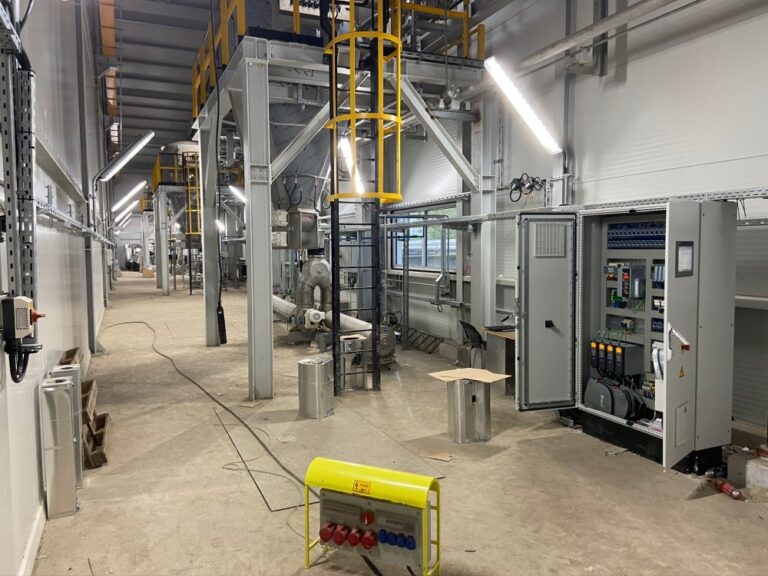
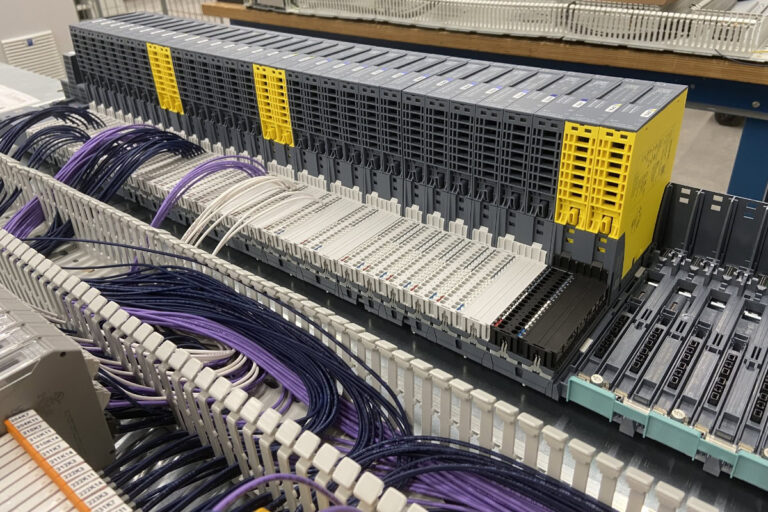
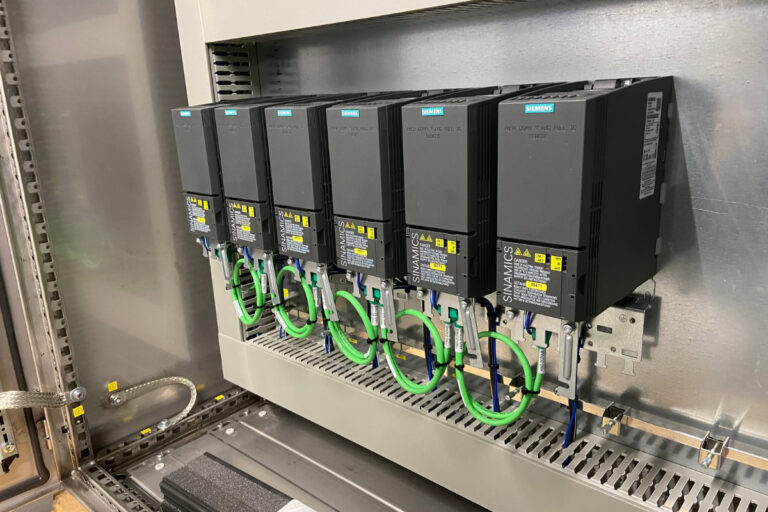
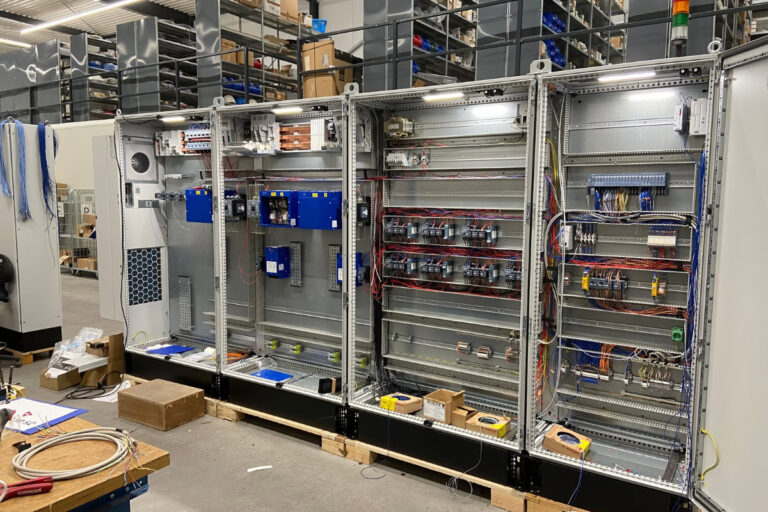
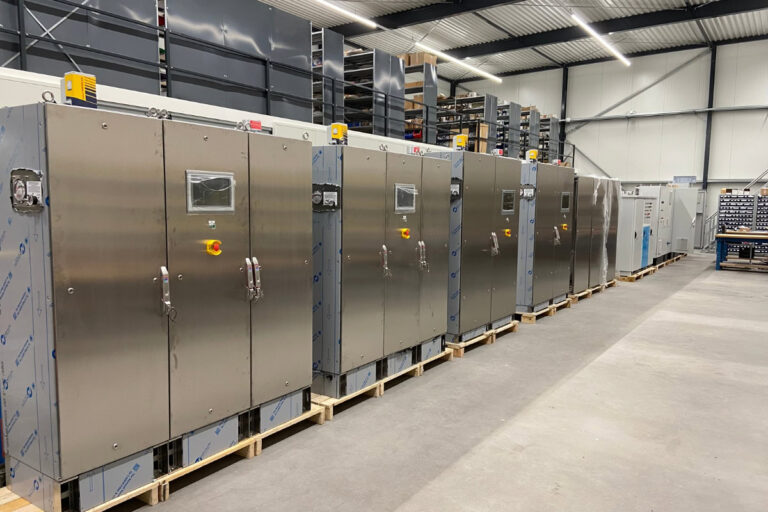
Industrial automation requires more than just a correctly constructed panel. We start with the architecture of the system and make conscious choices in component selection, standardization and scalability. By fully mastering engineering, panel construction and integration, we realize control systems that perform reliably in demanding industrial environments. From modular construction to international compliance, every detail is focused on quality, longevity and manageable Total Cost of Ownership.
We do not build standard solutions, but technically sound systems that match the complexity of modern mechanical engineering.

Kwadrant IA as partner for OPC UA integration
Kwadrant IA supports companies in the design and realization of an OPC UA link between PLC and SCADA within industrial automation. From their expertise in software engineering, panel building and hardware engineering, they help to set up clear and future-proof data architectures. Here OPC UA is integrated as part of the total control concept, tailored to the application and environment.
With experience in sectors such as mechanical engineering, food and infra and water management, the approach fits a variety of industrial processes. Panel construction according to NEN-EN 61439 and UL 508A, combined with careful engineering and commissioning, ensures a reliable implementation. Want to know how OPC UA can enhance your PLC and SCADA environment? Then contact Kwadrant IA for advice or a technical introduction.
Frequently asked questions about OPC UA coupling between PLC and SCADA
When do you choose OPC UA instead of (only) Modbus/Profinet?
OPC UA is chosen when structured data exchange and system integration are more important than pure real-time communication. Modbus and Profinet are suitable for fast and deterministic control, while OPC UA is used to unlock machine and process data towards SCADA, MES or other systems. In practice, these protocols are often combined within a single installation.
What is the difference between OPC UA and classic OPC?
Classic OPC is based on Microsoft COM and DCOM, making it platform-dependent. OPC UA is platform independent and supports modern security mechanisms such as encryption and authentication. In addition, OPC UA provides extensive data modeling capabilities, allowing data not only to be exchanged but also to be described semantically.
What are Companion Specifications within OPC UA?
Companion Specifications are industry-specific data models that describe how data is structured within a particular application. They ensure that different machines and systems use the same data definitions. This makes integration easier and reduces customization when linking PLCs and SCADA systems.
Is OPC UA suitable for real-time control?
OPC UA is primarily intended for data exchange and integration, not for hard real-time control. For real-time communication, protocols such as Profinet or other fieldbuses remain necessary. OPC UA is typically used alongside these protocols for monitoring, analysis and exchange of process information.
How do you test an OPC UA coupling during FAT and SAT?
During FAT and SAT, it is verified that the OPC UA communication is stable and that all required data is transmitted correctly. This involves looking at tag availability, proper data modeling and integration with SCADA. This establishes that the link functions as designed before the installation is delivered.
