
IO-Link integration in control cabinets
- Smart sensor data
- Central parameterization
- Quick diagnosis
IO-Link as a smart link between sensors and control cabinets
IO-Link integration in control cabinets is increasingly being used to make smarter use of sensor data and simplify maintenance. Including IO-Link directly in panel construction creates a transparent and configurable I/O architecture that is better suited to modern industrial automation. Smart sensors provide not only process values, but also parameters and diagnostic information.
In combination with IO-Link master integration and networks such as Profinet, parameterization becomes centrally controllable from PLC or HMI. This shortens commissioning, improves fault diagnosis and increases machine and plant availability.
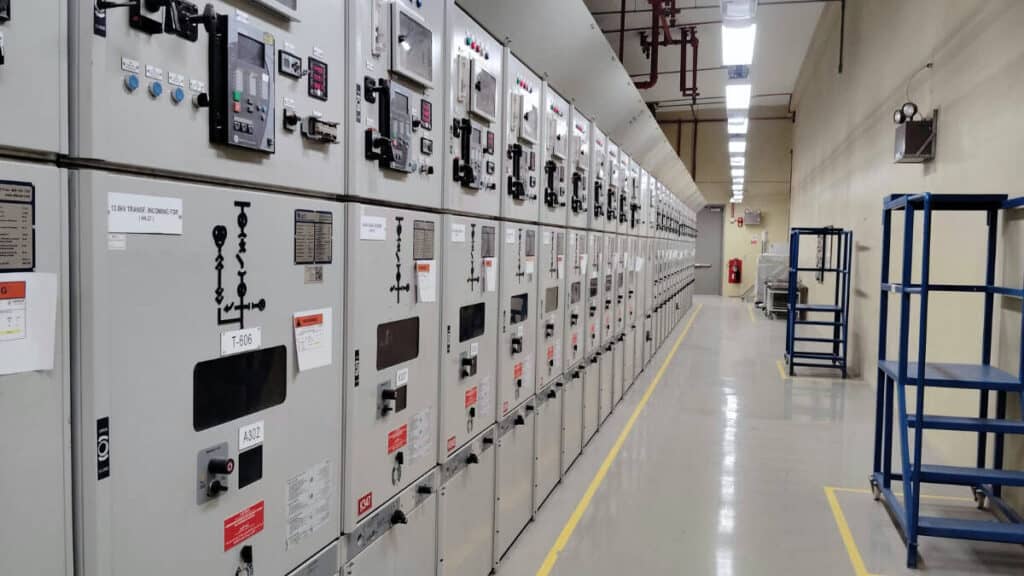
Panel Building Pioneers for Mechanical Engineering
With the precision of a watchmaker and the agility of an acrobat, Kwadrant IA is committed to creating custom electrical panels for mechanical engineering. As a resilient player in panel building, we move quickly without sacrificing quality or durability. Step into our world of innovation and discover how we can take your mechanical engineering projects to the next level.
What is IO-Link integration in control cabinets
IO-Link integration in control cabinets means that sensors and actuators are linked to the PLC via IO-Link masters. Instead of just digital or analog signals, IO-Link enables the exchange of comprehensive process data, parameters and diagnostic information. This is done via point-to-point communication between the IO-Link master and the field device.
Within panel building, IO-Link provides a clear I/O structure. Smart sensors can be configured and read centrally, simplifying machine management and maintenance. Coupling to the PLC is often via Profinet IO-Link, allowing IO-Link to integrate seamlessly into existing industrial networks.
Important standards and guidelines
IO-Link according to IEC 61131-9
IO-Link is defined in IEC 61131-9 and describes a standardized communication interface for sensors and actuators. This standard ensures compatibility between IO-Link masters and field devices from different vendors, without claims about certification of the overall system.
Relationship to PLC and industrial networks
IO-Link works with existing automation standards and networks:
- IEC 61131-3 for PLC programming
- Profinet for communication between PLC and IO-Link master
- Modbus TCP in mixed network environments
IO-Link does not replace these networks, but adds additional functionality at the sensor level.
CONTACT US
Applications in industrial environments
IO-Link integration in control cabinets is used in a variety of industrial sectors. In mechanical engineering, IO-Link provides better diagnostics and faster machine rebuilds. In food, logistics and robotics and refrigeration and climate control applications, IO-Link provides insight into the status of sensors and actuators.
Common applications include:
- Parameterization of sensors from PLC or HMI
- Comprehensive fault and status diagnostics
- Rapid replacement of field equipment
- Better documentation of settings
In environments with higher protection classes, such as IP65 or IP67, IO-Link remains suitable for field components outside the control cabinet.
Benefits of IO-Link integration in control cabinets
Applying IO-Link offers distinct advantages:
- Less cabling and easy installation
- Central and reproducible parameterization
- Faster fault analysis in case of failures
- Higher availability of machines
Making diagnostic information readily available makes maintenance more predictable and efficient.
The process from design to commissioning
With IO-Link integration, the process begins with designing the I/O architecture. This involves determining which sensors are suitable for IO-Link and how IO-Link master integration takes place in the control cabinet. During the engineering phase, schematics are worked out in EPLAN and PLC and HMI configurations are prepared.
During FAT and SAT, it is checked that all IO-Link connections function correctly, that parameterization is adopted correctly and that diagnostic information is available. After commissioning, IO-Link provides a stable basis for maintenance and optimization of industrial plants.
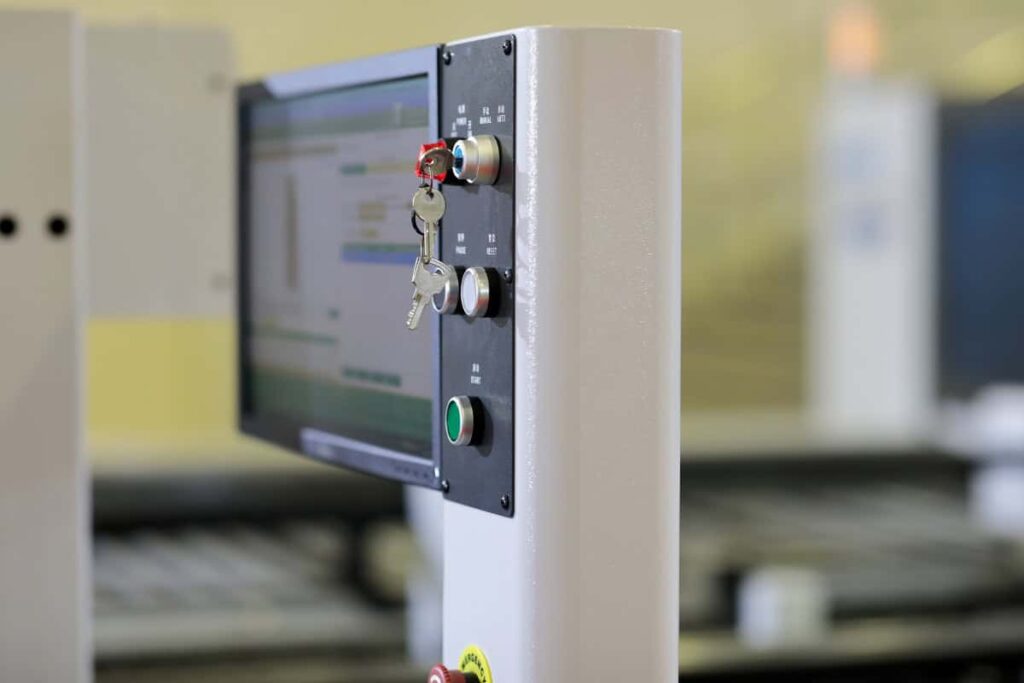
Years of experience in the field of industrial automation
Industrial automation with international standards
Industrial automation requires more than just a correctly constructed panel. We start with the architecture of the system and make conscious choices in component selection, standardization and scalability. By fully mastering engineering, panel construction and integration, we realize control systems that perform reliably in demanding industrial environments. From modular construction to international compliance, every detail is focused on quality, longevity and manageable Total Cost of Ownership.
We do not build standard solutions, but technically sound systems that match the complexity of modern mechanical engineering.
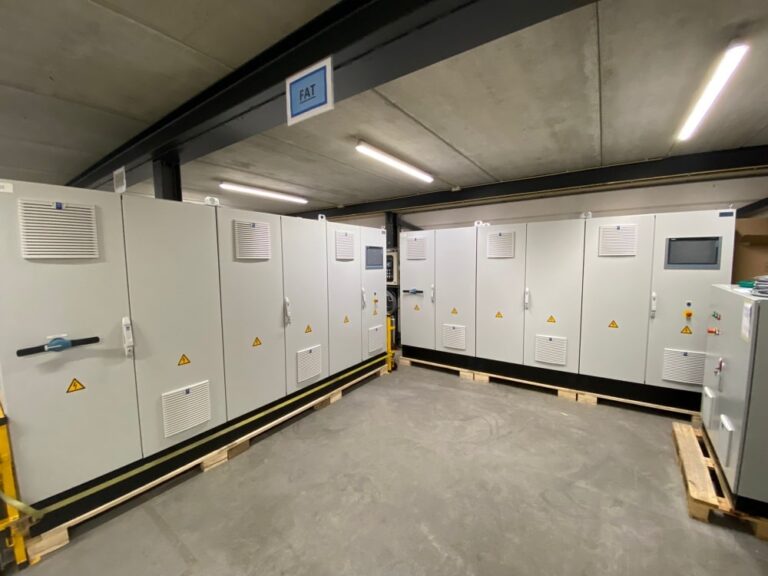
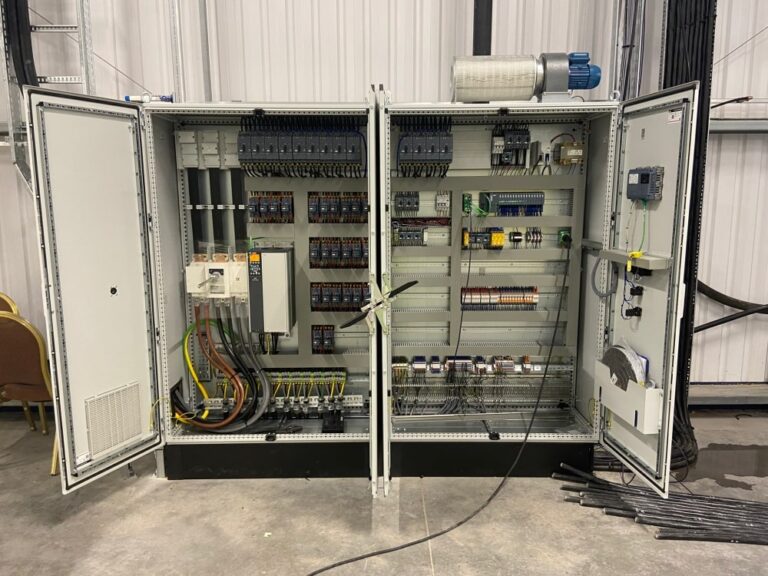
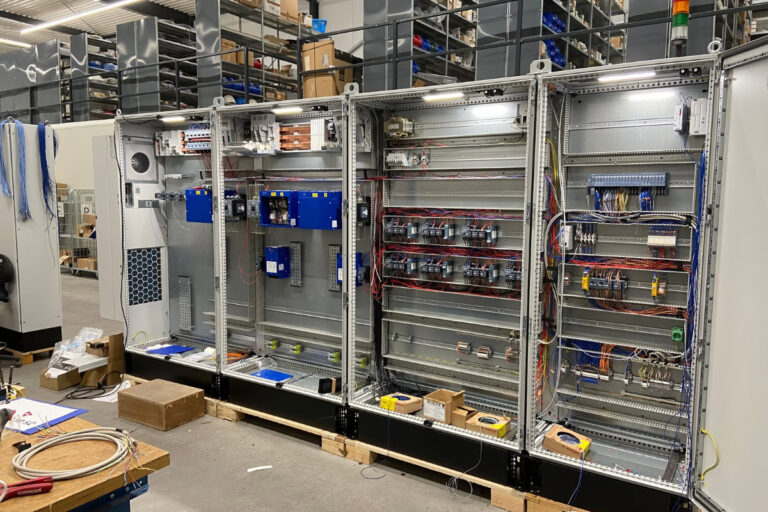
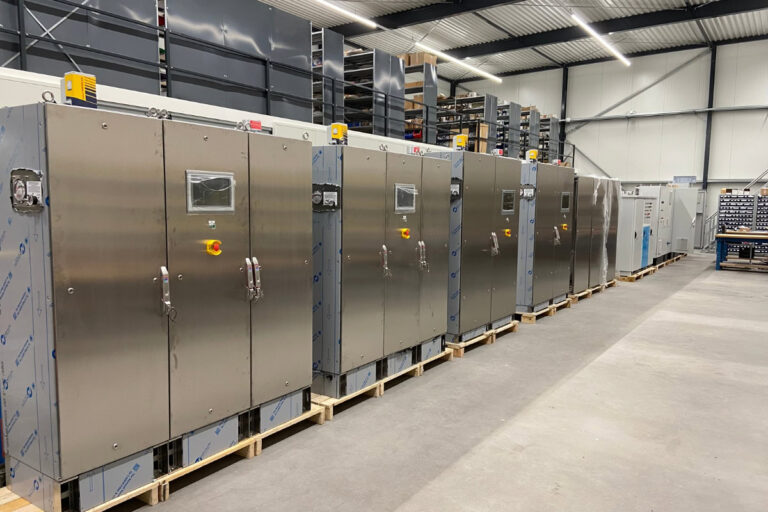
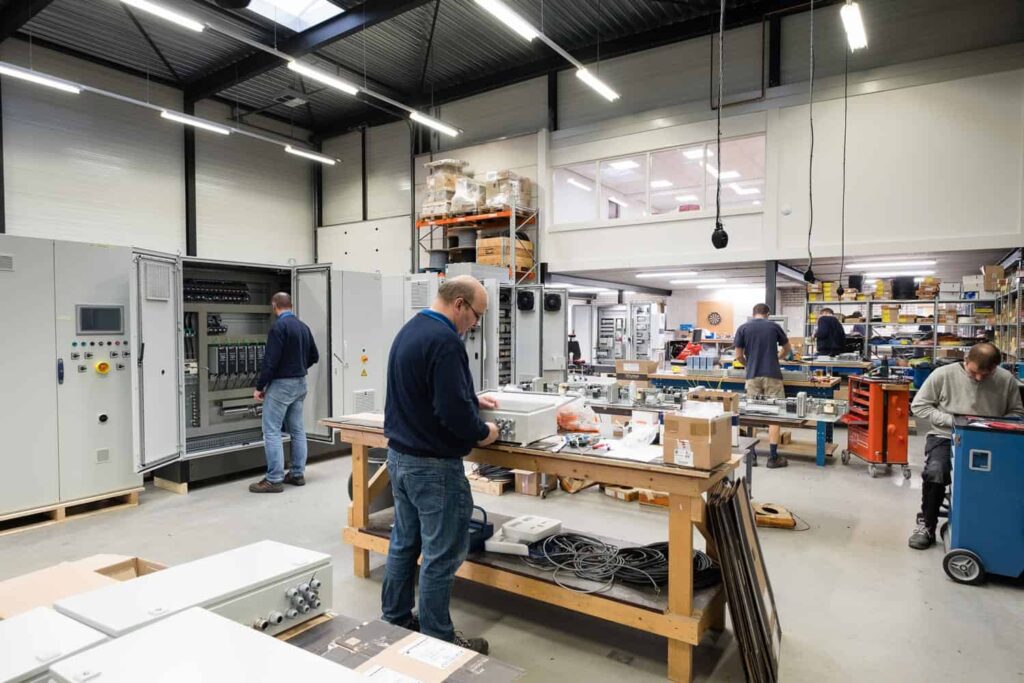
Kwadrant IA as a partner for IO-Link integration
Kwadrant IA supports companies in applying IO-Link integration in control cabinets within industrial automation. From their expertise in panel building, hardware engineering and software engineering, they help design and realize clear and reliable IO-Link solutions. Hereby IO-Link is included as part of the total control concept, tailored to the application and environment.
With experience in sectors such as mechanical engineering, food and logistics & robotics, the approach caters to diverse industrial processes. Panel construction according to NEN-EN 61439 and UL 508A, combined with careful engineering and commissioning, ensures a future-proof solution. Want to know how IO-Link can improve your maintenance and diagnostics? Then contact Kwadrant IA for advice or a technical introduction.
Frequently asked questions about IO-Link integration in control cabinets
What does IO-Link provide for maintenance and fault diagnosis in machines?
IO-Link makes comprehensive diagnostic information from sensors and actuators available in the PLC or HMI. This makes it faster to see where a fault occurs and what the cause is. Parameters can be read out and adjusted centrally, allowing maintenance to take place in a more focused way and reducing downtime.
What is the difference between IO-Link and traditional digital or analog I/O?
With traditional I/O, only an on or off signal or an analog value is transmitted. IO-Link communicates digitally and provides parameters, status information and error messages in addition to process values. This provides greater insight into the operation of field devices and enables central parameterization.
How does IO-Link master integration in a control cabinet work?
An IO-Link master is placed in the control cabinet and connected to the PLC via Profinet, for example. The master acts as an interface between the PLC and the connected sensors. Each IO-Link port communicates point-to-point with a field device, ensuring stable and clear communication.
Is IO-Link suitable for existing machines and plants?
IO-Link can often be added to existing machines, provided sensors and actuators are replaced or supported by IO-Link. In hybrid situations, IO-Link can be used alongside traditional I/O. This enables phased modernization without a complete rebuild of the plant.
How do you test an IO-Link installation during FAT and SAT?
During FAT and SAT, it is verified that all IO-Link devices communicate correctly with the PLC. This involves looking at parameterization, availability of diagnostic information and correct operation of signals. This establishes that the IO-Link integration functions as designed before the installation is delivered.
