
Harmonics and filters in frequency converters
- Better power quality
- Fewer EMC failures
- Longer lifespan
Power quality and EMC as design factors in AC drives
Harmonics and filters in AC drives play an important role in the reliability and EMC performance of industrial plants. The use of frequency converters creates harmonics and fast voltage ramps that affect motors, motor cables and the supply network. Without proper measures, this can lead to failures, accelerated wear and EMC problems.
With solutions such as du/dt filters and sine filters, power quality is improved and motor and system are better protected. Taking this into account as early as the design phase creates a stable and future-proof drive solution within industrial automation.
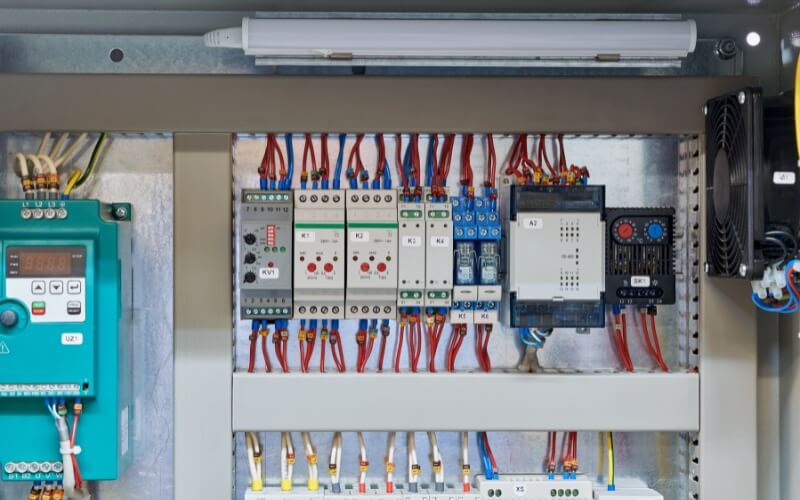
Panel Building Pioneers for Mechanical Engineering
With the precision of a watchmaker and the agility of an acrobat, Kwadrant IA is committed to creating custom electrical panels for mechanical engineering. As a resilient player in panel building, we move quickly without sacrificing quality or durability. Step into our world of innovation and discover how we can take your mechanical engineering projects to the next level.
What are harmonics and filters in variable speed drives
Harmonics and filters in AC drives relate to the electrical contamination and voltage distortions created by the use of VFDs. An AC drive converts mains voltage via rectification and pulse width modulation. This process causes harmonics on the mains side and steep voltage slopes on the motor side. These effects affect both power quality and reliability of motors and equipment.
On the motor side, high du/dt values can cause additional stress on motor insulation and motor cables. On the mains side, harmonics can cause disturbances in other equipment. Filters are applied to reduce these effects and make the installation more robust.
Important standards and guidelines
NEN-EN 60204-1
NEN-EN 60204-1 describes the requirements for electrical equipment of machinery. Within this standard, attention is paid to EMC, protection of components and safe electrical installations. When designing drive cabinets with frequency converters, this standard is used as a framework for correct integration of filters and cabling.
EMC directive and power quality
The EMC Directive provides the legal framework for electromagnetic compatibility. In industrial installations, this is implemented through attention to shielding, cabling and filtering. Power quality plays an important role here, because harmonics and disturbances through the mains can affect other systems.
Types of filters in variable speed drives
du/dt filters
A du/dt filter limits the rise rate of the variable speed drive output voltage. This reduces the load on motor isolation and is especially relevant with longer motor cables or older motors not specifically designed for VFD operation.
Sine filters
A sine filter converts the pulse-shaped output voltage of the AC drive into a nearly sinusoidal voltage. This reduces motor losses, noise and electromagnetic interference. Sine filters are used when maximum motor protection and EMC performance are desired.
Mains filters and chokes
On the grid side, grid filters and chokes are used to reduce harmonics and improve grid loading. These components contribute to a more stable power supply and reduce feedbacks to the grid.
CONTACT US
Applications in industrial environments
Harmonics and filters at variable speed drives play a role in sectors such as mechanical engineering, petrochemicals, infra and water management and logistics. They are particularly relevant in:
- Long motor cables
- Multiple drives on one grid
- Sensitive measurement or communication systems
- Installations with stringent EMC requirements
In ATEX environments, filtration is included in the overall design of the installation, matched to explosion-proof components in accordance with ATEX 114.
Benefits of harmonics and filters in AC drives
Applying the right filters offers distinct advantages:
- Reduction of harmonics and EMC interference
- Better protection of motor and cables
- Longer life of drives
- More stable operation of the overall plant
Including power quality as a design aspect reduces unwanted downtime and maintenance costs.
The process from design to commissioning
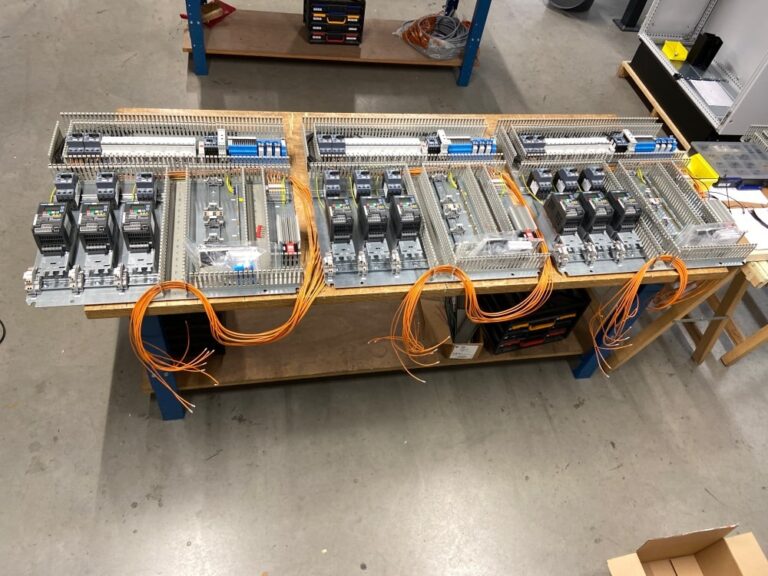
The process starts with an analysis of the drive, motor cables and environment. Based on this, the type of filter required is determined. During the engineering phase, drive units and filters are worked out in EPLAN and correctly integrated into the control cabinet.
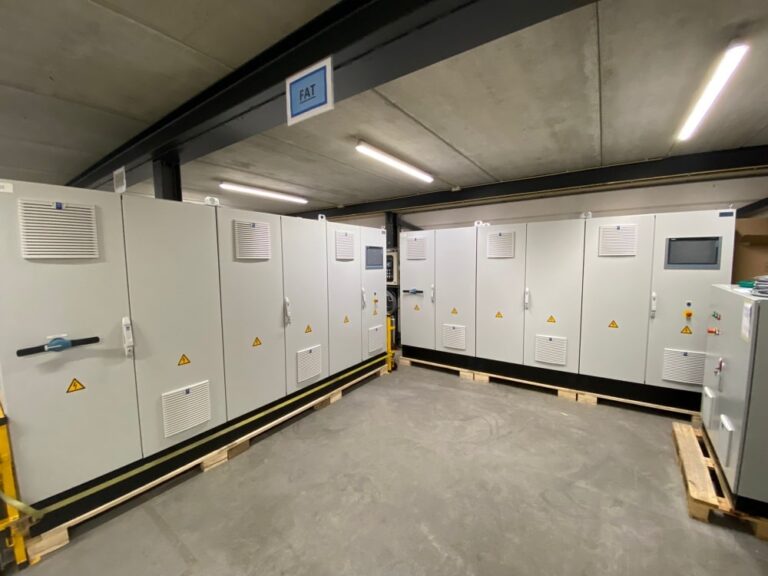
During FAT and SAT, it is verified that the drive operates without failure, that EMC problems are absent and that motor and controller work together correctly. This establishes that harmonics and filters contribute to a reliable and durable installation.

Years of experience in the field of industrial automation
Industrial automation with international standards
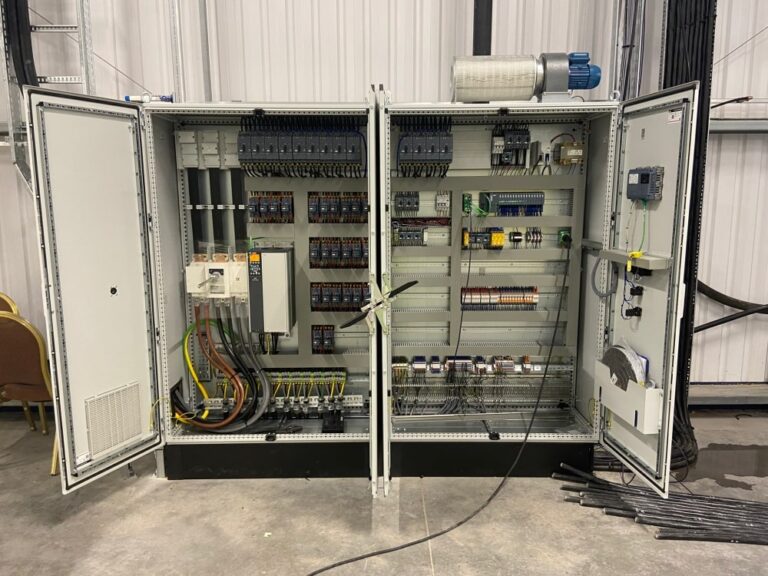
Industrial automation requires more than just a correctly constructed panel. We start with the architecture of the system and make conscious choices in component selection, standardization and scalability. By fully mastering engineering, panel construction and integration, we realize control systems that perform reliably in demanding industrial environments. From modular construction to international compliance, every detail is focused on quality, longevity and manageable Total Cost of Ownership.
We do not build standard solutions, but technically sound systems that match the complexity of modern mechanical engineering.
Kwadrant IA as a partner for filters and power quality
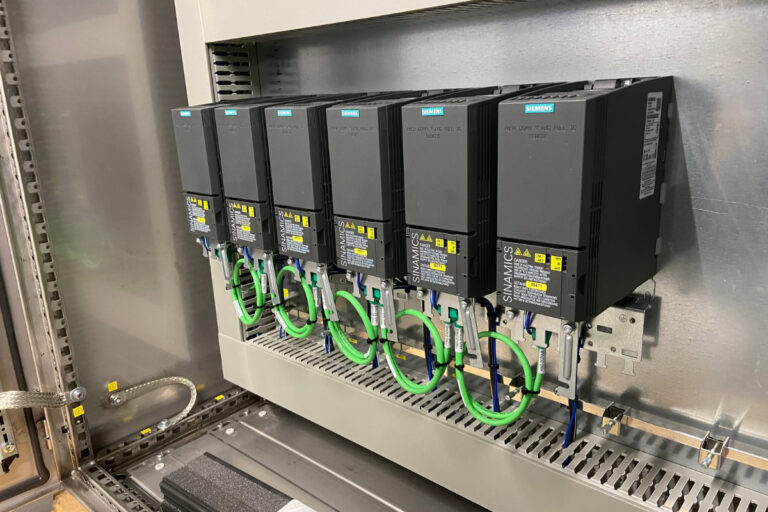
Kwadrant IA supports companies in the application of harmonics and filters in variable speed drives within industrial automation. From their expertise in panel building and hardware engineering, they help think about a reliable drive solution in which power quality, EMC and motor protection are in balance. Filters such as du/dt filters, sine filters and mains components are included as an integral part of the control cabinet design.
With experience in sectors such as mechanical engineering, petrochemical and infra and water management, the approach fits a variety of industrial environments. Panel construction according to NEN-EN 61439 and UL 508A, combined with careful engineering and testing, forms a solid basis. Would you like to know which filtration is appropriate for your frequency converter and installation? Then contact Kwadrant IA for advice or a technical coordination.
Frequently asked questions about harmonics and filters in AC drives
When do you choose a du/dt filter or sine filter in AC drives?
A du/dt filter is used when the motor cable is relatively long or when the motor is sensitive to high voltage ramps. The filter reduces the voltage rise rate and protects the motor insulation. A sine filter is chosen when maximum motor protection and low EMC emissions are desired, for example, in very long cables, sensitive environments or continuous operation applications.
What are harmonics and why do they arise in AC drives?
Harmonics are distortions of the sinusoidal mains voltage created by nonlinear loads such as variable speed drives. The rectifier and inverter in a VFD do not draw pure sinusoidal current, leading to contamination of the power grid. This can affect other equipment and the overall power quality of the system.
What is the difference between a du/dt filter and a sine filter?
A du/dt filter focuses on lowering the voltage slopes on the motor side and limits peak voltages. A sine filter goes further and transforms the output voltage of the inverter into a nearly pure sine wave. This further reduces motor losses, noise and electromagnetic interference.
When do long motor cables become a problem with VFDs?
Long motor cables increase the risk of reflections and voltage spikes on the motor side. This can lead to accelerated motor insulation aging and faults. From certain cable lengths, depending on drive and motor type, du/dt filters or sine filters are recommended to reduce these effects.
How are AC drives and filters tested during FAT and SAT?
During FAT and SAT, the frequency inverter and filters are checked for correct operation. This involves looking at fault-free operation, correct motor currents and the absence of EMC problems. It is also assessed whether the selected filtering matches the design requirements and the application in the final installation.
