
EMC guidelines panel construction grounding and shielding
- Low fault design
- Optimal grounding
- Professional shielding
Professional EMC guidelines for panel construction
EMC guidelines in panel construction are essential to prevent failures and keep control systems functioning reliably. When applying EMC guidelines panel building grounding and shielding, attention is paid to correct cabinet construction, proper cable routing and a solid grounding structure. This ensures less interference and more stable communication between components. Especially in environments with variable speed drives, motors or sensitive sensor networks, an EMC friendly control cabinet is important. Kwadrant IA designs and builds panels according to relevant standards and delivers solutions ready for industrial environments.
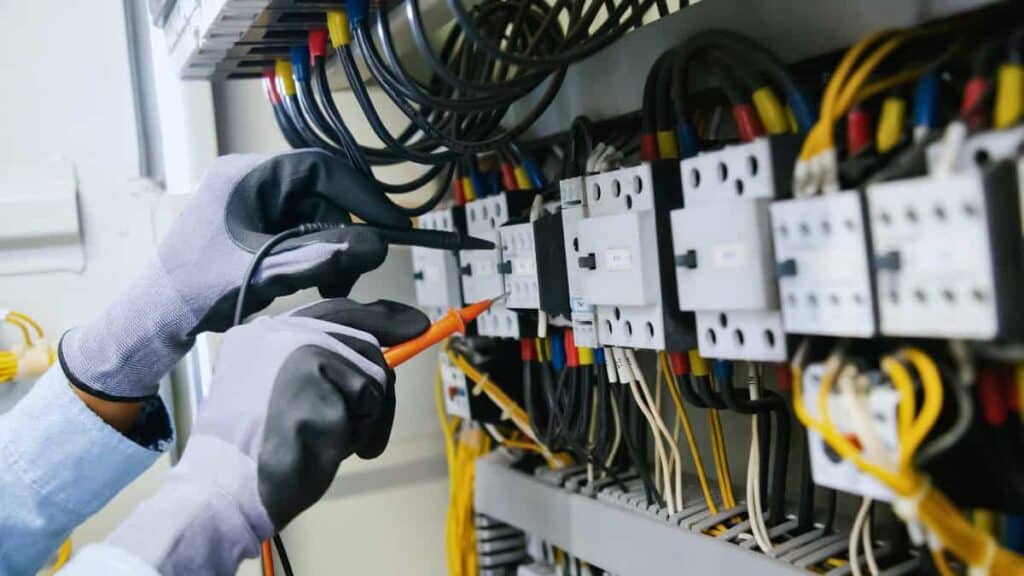
Panel Building Pioneers for Mechanical Engineering
With the precision of a watchmaker and the agility of an acrobat, Kwadrant IA is committed to creating custom electrical panels for mechanical engineering. As a resilient player in panel building, we move quickly without sacrificing quality or durability. Step into our world of innovation and discover how we can take your mechanical engineering projects to the next level.
What are EMC guidelines in panel building
EMC guidelines in panel construction aim to reduce electromagnetic interference and increase the reliability of control systems. EMC panel building is all about a combination of good cabinet construction, carefully placed components, correct switch cabinet grounding and effective cable shielding. These measures prevent frequency converters, motors and digital communication channels from affecting each other. A panel built according to these guidelines maintains a stable signal level and prevents unwanted interference with PLCs, HMIs and protocols such as Profinet or Modbus TCP.
Important standards and guidelines
NEN-EN 61439
This standard provides the basis for safe design and construction of distribution devices. For EMC, cabinet layout, separation of circuits and correct mounting are particularly relevant. It helps limit EMI sources within the switchgear cabinet.
NEN EN 60204 1
This standard focuses on electrical equipment in machinery and covers topics such as grounding, cable shielding and protection against electromagnetic interference. For machine builders, this is an important frame of reference for EMC-friendly design.
NEN 1010
This standard applies to low-voltage installations and includes provisions on grounding and protective conductors. This contributes to a safe and trouble-free construction of the installation outside and inside the cabinet.
ATEX compliant ATEX 114
When a panel is placed in a hazardous area, the enclosure must conform to ATEX 114. EMC measures remain necessary, but are coordinated with the explosion-proof enclosure and grounding method.
CONTACT US
Applications in industry
EMC guidelines are important in all kinds of industries where a lot of electromagnetic noise occurs. Consider mechanical engineering where motors and variable speed drives can cause interference. In logistics and robotics, reliable communication is essential for accurate control. In water management, pumps, valves and sensors provide a mix of signal and power circuits. In food, climate control, bulk handling and vacuum systems, a low-fault control cabinet is also important for a stable process.
Benefits of EMC guidelines in panel building
Applying EMC guidelines offers several advantages. Interference is reduced, making the system operate more reliably. Communication over Profinet, Modbus TCP and OPC UA remains stable. Components have a longer service life because they are less affected by noise. Other benefits include:
- Fewer unexplained error messages
- Better signal quality in sensor networks
- Less downtime and downtime
- More stable machine performance
The process from design to commissioning
The process of EMC friendly panel building starts at the design stage. Engineers work in EPLAN P8 and determine cabinet layout, separation of control and power circuits and position of EMC sensitive components. During construction, grounding, cable shielding and metal contact surfaces are correctly applied. EMC terminals, shielded glands and bonding are applied where necessary. IP values and thermal management are also considered in the design.
During the FAT, functions and cable shielding are checked, including the stability of communication protocols. During the SAT and commissioning, the complete installation is tested in the real environment. This ensures reliable delivery with test report and declaration of conformity.

Years of experience in the field of industrial automation
Industrial automation with international standards
Industrial automation requires more than just a correctly constructed panel. We start with the architecture of the system and make conscious choices in component selection, standardization and scalability. By fully mastering engineering, panel construction and integration, we realize control systems that perform reliably in demanding industrial environments. From modular construction to international compliance, every detail is focused on quality, longevity and manageable Total Cost of Ownership.
We do not build standard solutions, but technically sound systems that match the complexity of modern mechanical engineering.
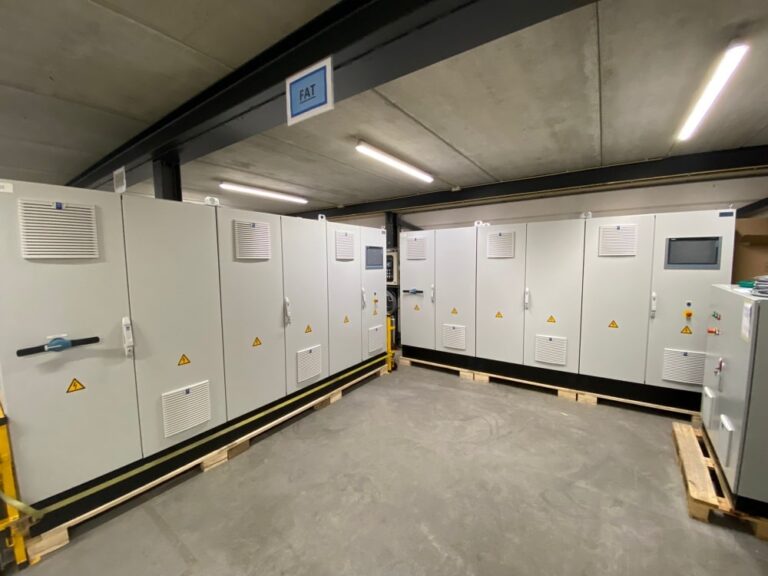
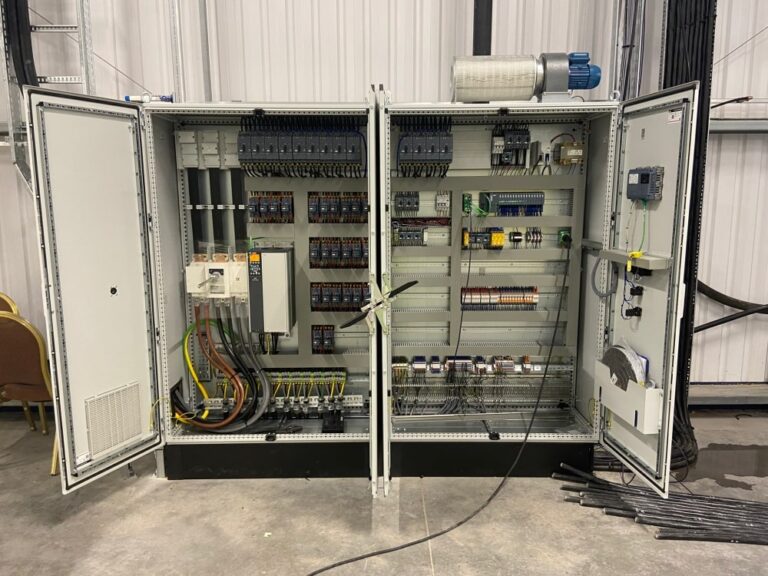
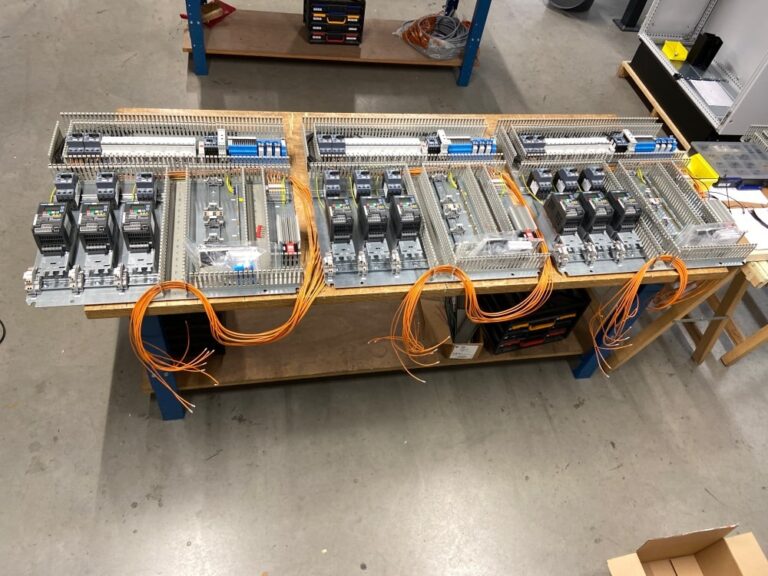
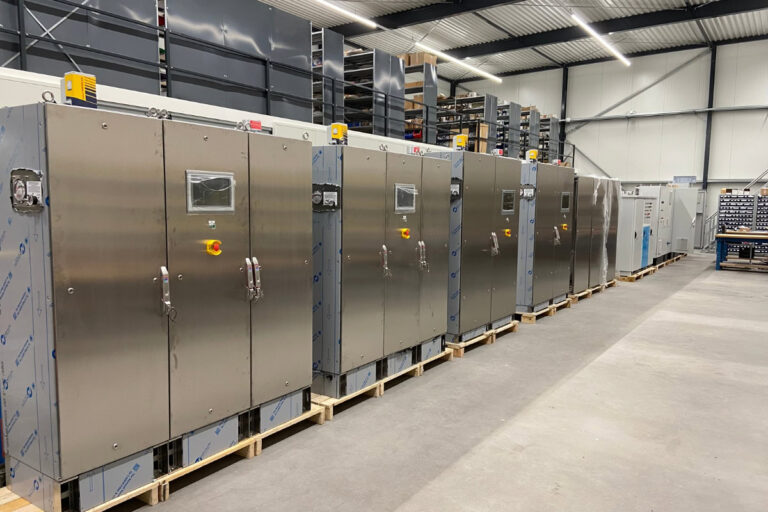

Kwadrant IA as your partner for EMC focused panel construction
Kwadrant IA supports companies in the design and construction of switchgear cabinets that comply with EMC guidelines for grounding and shielding. Thanks to our expertise in panel construction, hardware engineering and execution according to NEN EN 61439, we provide low-fault and reliable solutions for diverse sectors such as mechanical engineering, logistics, water management and climate installations. For international projects, we can build panels according to UL 508A and provide a professional test report and declaration of conformity. Want to know how we can support your project, or do you have specific EMC challenges? Contact us for technical advice or a no-obligation consultation.
Frequently asked questions about EMC guidelines panel construction grounding and shielding
How to ensure EMC compliant panel construction.
EMC compliant panel construction starts with good design. The control cabinet should be logically laid out, with separation between control and power circuits. Grounding should be low impedance and cable shielding should be connected 360 degrees with EMC terminals or metal glands. In addition, it helps to place interference sources such as AC drives away from sensitive signals. During FAT and SAT, communications and components are checked for stable operation.
What does EMC mean in a control cabinet
EMC stands for electromagnetic compatibility. This means that a control cabinet must not cause interference and must itself be immune to external interference. In practice, this comes down to good shielding, proper cable routing, solid grounding and careful cabinet construction. Protocols such as Profinet and Modbus especially benefit from an EMC-friendly installation because they are sensitive to noise at the signal level.
What is the difference between grounding and shielding
Grounding ensures safe discharge of fault currents and a stable electrical reference level. Shielding protects against electromagnetic interference by blocking or conducting interfering fields. Shielding is usually applied through shielded cables, metal glands and contact surfaces. Both systems work together but have different purposes. Good panel construction requires that grounding and shielding be done correctly.
What errors are common in EMC unfriendly panel construction
Common errors include poor cable routing, missing shielding, incomplete ground connections, too tight cabinet layout and combination of signal and power wires in the same duct. Insufficient bonding between metal parts, improperly placed filters and poor feedthroughs are also common. These errors lead to failures, noise on communications and failure of sensors or PLCs.
When do you need EMC measures in panel building
EMC measures are necessary when an installation operates in an environment with a lot of electromagnetic noise or when the system contains sensitive electronics. Think of motors, variable speed drives, switches, sensors and communication networks. In sectors such as mechanical engineering, logistics, robotics and climate installations, EMC measures are standard requirements to guarantee reliable performance. EMC measures also play an important role in CE processes.
