
Control cabinet for energy storage systems (BESS).
- Standards-compliant design
- Reliable control
- Scalable customization
Control and safety at the core of energy storage systems
A control cabinet for energy storage systems (BESS) forms the technical heart demonstrate of modern energy storage systems. These cabinets bring together control, protection and monitoring of battery systems. A well-designed energy storage control cabinet ensures safe operation, reliable communication and optimal performance of the overall BESS system. This is essential for applications in industry, infrastructure and renewable energy projects where continuity and safety are key. Using industrial components and standards-compliant engineering creates a solution that is scalable and compatible with a variety of environments and power levels.
Panel Building Pioneers for Mechanical Engineering
With the precision of a watchmaker and the agility of an acrobat, Kwadrant IA is committed to creating custom electrical panels for mechanical engineering. As a resilient player in panel building, we move quickly without sacrificing quality or durability. Step into our world of innovation and discover how we can take your mechanical engineering projects to the next level.
What are control cabinets for energy storage systems (BESS)
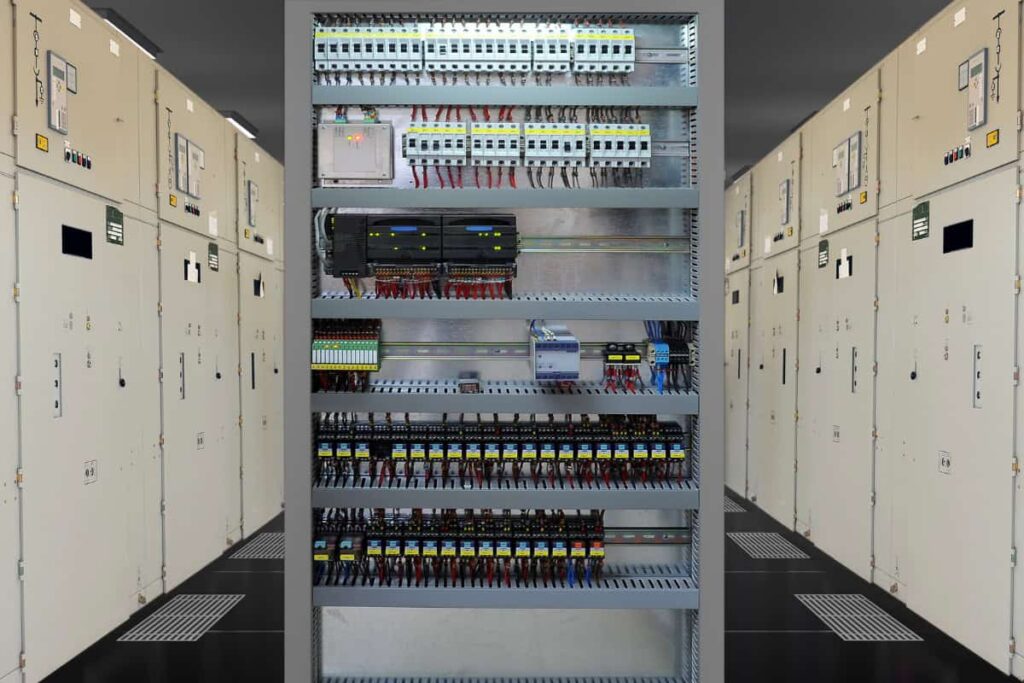
A control cabinet for energy storage systems is responsible for controlling, monitoring and securing battery storage systems. Within a BESS installation, the control cabinet processes signals from batteries, inverters, sensors and external systems. Based on these, the system controls charging, discharging and protection functions. The control cabinet thus forms the link between the energy storage, the power grid and higher-level energy management systems.
Depending on the application, an energy storage control cabinet can be used for grid stabilization, peak shaving, emergency power supply or integration of renewable energy sources. The architecture is typically modular, so expansion of battery capacity or functionality remains possible.
Important standards and guidelines
NEN-EN 61439 and NEN-EN 60204-1
For the construction of control cabinets for energy storage, NEN-EN 61439 and NEN-EN 60204-1 are leading. NEN-EN 61439 describes the requirements for low-voltage switching and distribution devices, including aspects such as thermal load, short-circuit resistance and mechanical construction. NEN-EN 60204-1 focuses on electrical equipment and test procedures, which is relevant for control reliability and safety.
NEN 1010 and international guidelines
In addition, NEN 1010 plays a role in the connection and installation of the control cabinet within the electrical system. For projects outside Europe, UL 508A can also be taken into account, for example when exporting to the United States or Canada. In environments with a risk of explosion, work is carried out in accordance with ATEX 114, always considering the specific zone classification and risks.
CONTACT US
Applications in industry
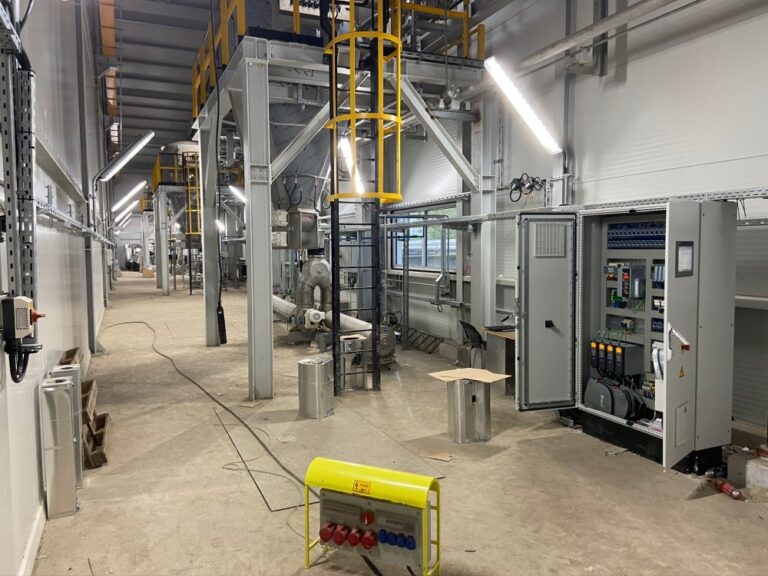
BESS automation is found in a variety of industries. In industrial environments, control cabinets support energy buffering and peak load absorption. In infrastructure and smart infrastructure applications, they contribute to grid stability and energy management. Battery monitoring is also playing an increasing role within water management, logistics and renewable energy projects.
Here, the control cabinet is often integrated with existing PLC and SCADA systems, giving operators real-time visibility into status, performance and faults.
Benefits of control cabinets for energy storage
- Safe and reliable control of battery systems
- Insightful battery monitoring and diagnosis
- Scalable structure for future expansion
- Integration with industrial communication protocols such as Profinet, Modbus TCP, OPC UA and MQTT
Using industrial components and thoughtful design creates a solution suitable for continuous operation in demanding environments.
The process from design to commissioning
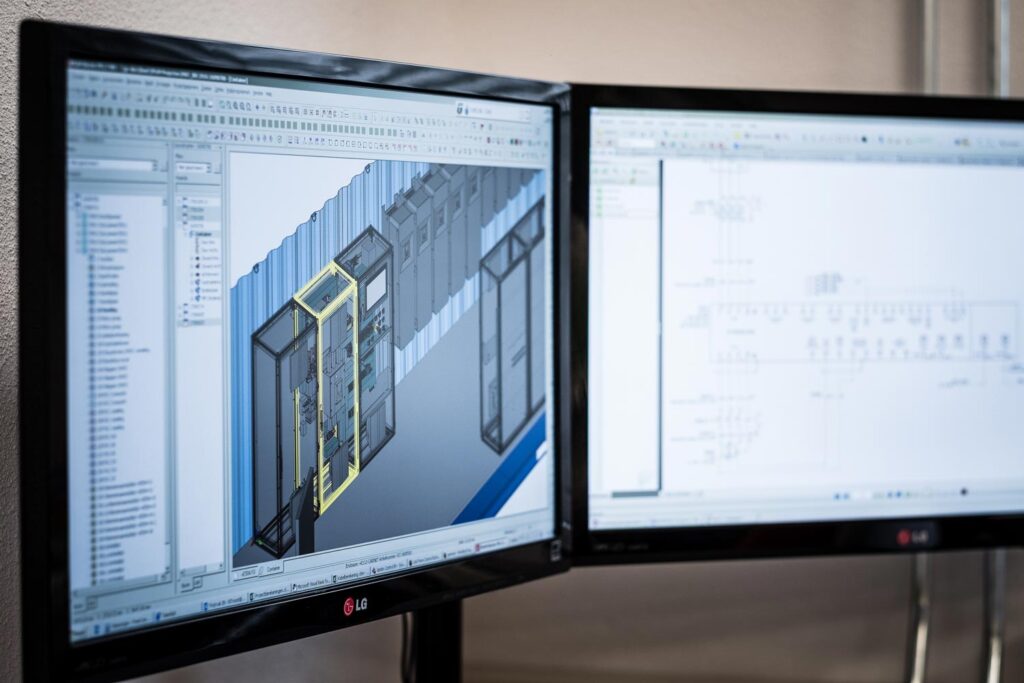
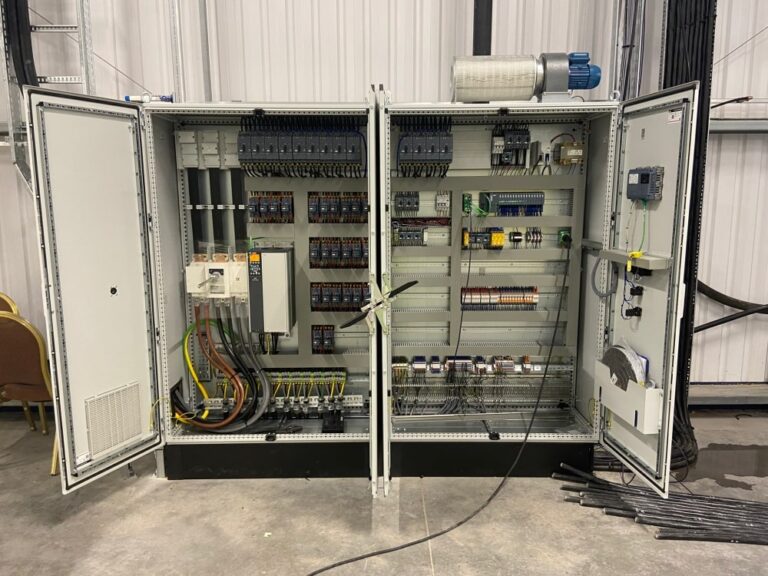
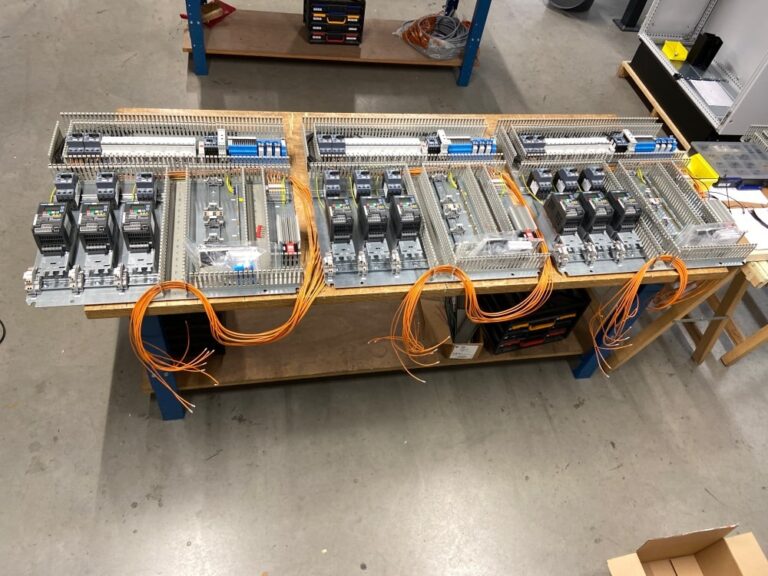
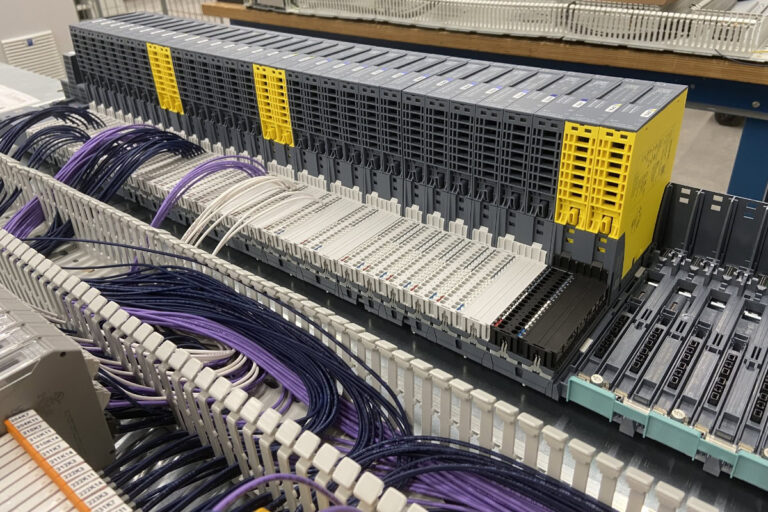
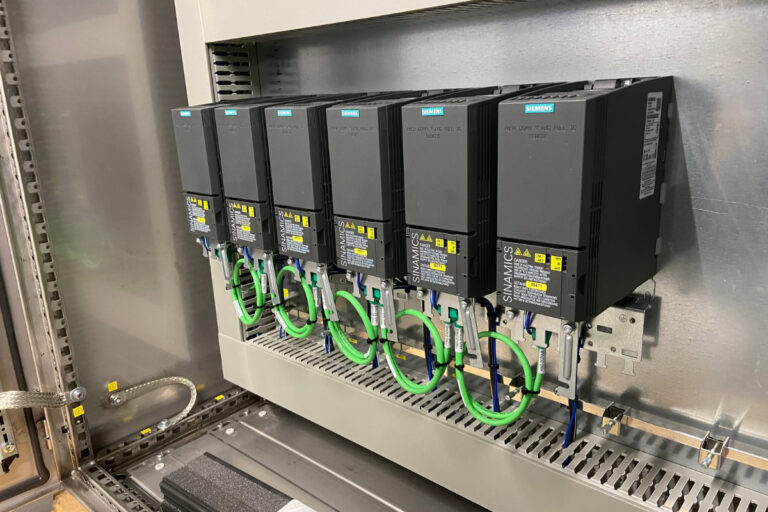
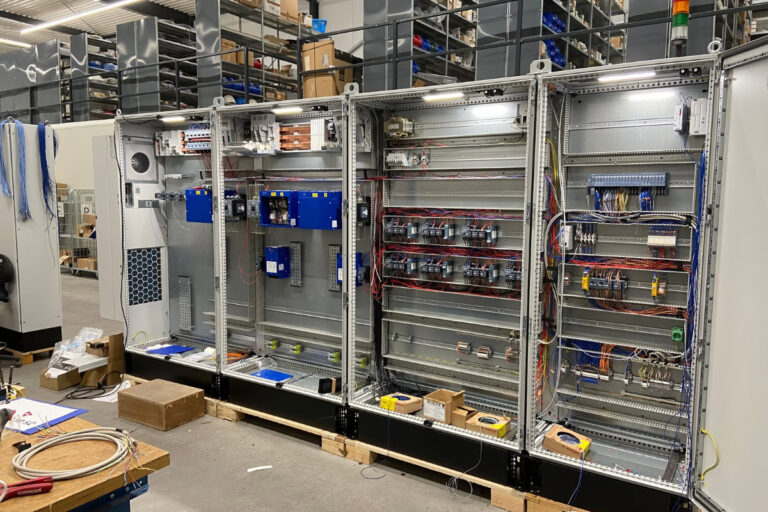
Realizing a control cabinet for energy storage systems starts with engineering. In this phase, the design is worked out in EPLAN, including schematics, component selection and safety functions. Panel construction then takes place, where the cabinet is assembled and wired according to the design.
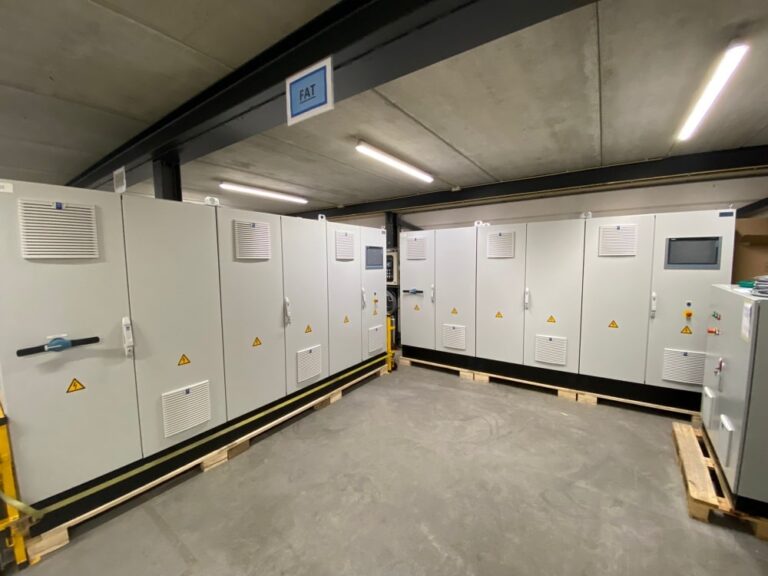
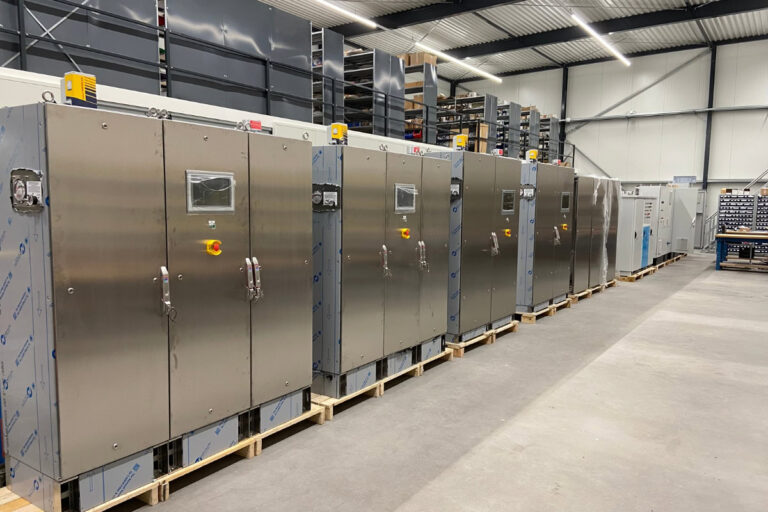
After assembly, tests are performed, such as functional checks and a Factory Acceptance Test. During on-site commissioning, a Site Acceptance Test often follows to verify operation within the complete BESS system. This ensures that the control box functions reliably within the intended application.
Years of experience in the field of industrial automation
Industrial automation with international standards
Industrial automation requires more than just a correctly constructed panel. We start with the architecture of the system and make conscious choices in component selection, standardization and scalability. By fully mastering engineering, panel construction and integration, we realize control systems that perform reliably in demanding industrial environments. From modular construction to international compliance, every detail is focused on quality, longevity and manageable Total Cost of Ownership.
We do not build standard solutions, but technically sound systems that match the complexity of modern mechanical engineering.

Kwadrant IA as partner for energy storage control cabinets
Kwadrant IA supports companies in the design and realization of control cabinets for energy storage systems that meet their technical and operational requirements. With expertise in panel construction, hardware and software engineering, energy storage control cabinets are developed in accordance with applicable standards such as NEN-EN 61439 and NEN-EN 60204-1. For international projects, construction can also be done according to UL 508A.
Thanks to experience in sectors such as industry, infrastructure and smart infrastructure, Kwadrant IA delivers solutions that function reliably in diverse environments. From engineering and construction to testing and commissioning, the entire electrical engineering process is taken care of. Contact us for technical advice or to discuss options for your BESS project.
Frequently asked questions about control cabinets for energy storage systems
What are the requirements for control cabinets in energy storage?
Control cabinets for energy storage must comply with relevant standards such as NEN-EN 61439 for low-voltage distributors and NEN-EN 60204-1 for electrical equipment. In addition, NEN 1010 and, depending on the application, ATEX 114 play a role. Important concerns are electrical safety, thermal management, short-circuit resistance and reliable monitoring of batteries.
What is the role of battery monitoring in a BESS control cabinet?
Battery monitoring provides insight into voltage, current, temperature and status of battery modules. This information is used to safely control the charging and discharging process and identify abnormalities in a timely manner. Good monitoring helps extend the life of the energy storage system and prevents unwanted downtime.
What is the difference between a standard control box and a BESS control box?
An energy storage control cabinet is specifically designed to control and protect battery systems. In addition to standard control components, it often includes additional protections, measurement functions and communication with energy management systems. The cabinet is tailored to varying power ratings, thermal loads and integration with grid or inverter systems.
When is custom energy storage control needed?
Customization is almost always required when tailoring a BESS installation to a specific location, capacity or application. Factors such as environment, power level, communication requirements and safety features determine the design. A custom energy storage control cabinet better matches these variables than a generic solution.
How does the testing and delivery of a BESS control cabinet proceed?
After construction of the control cabinet, functional tests are performed to verify operation of controls and protection. Often a Factory Acceptance Test is done before the cabinet is delivered. During on-site commissioning, a Site Acceptance Test follows, testing the control cabinet within the complete energy storage system.
