
The right solution for temperature, pollution and operating reliability
Switchboard cooling vs overpressure
In industrial environments, protecting a control cabinet is rarely a matter of one solution. Heat, dust and moisture often play a role simultaneously. The wrong choice leads to malfunctions, condensation or overheating of components.
OPEN CALCULATION
Transparent cost structure and control of your project.
OFFER IN 5 DAYS
Quick technical assessment and clear planning.
DURABLE CONSTRUCTION
Lower Total Cost of Ownership.
UL/CSA IN-HOUSE
Directly compliant for international markets.
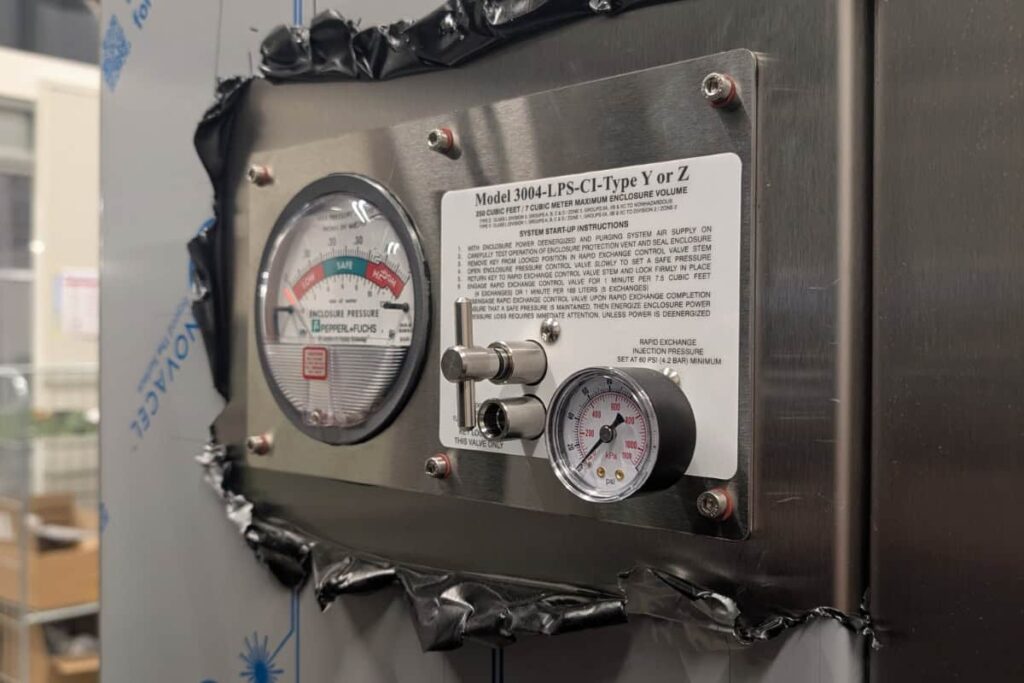
Cooling and overpressure in control cabinets
Cooling and overpressure are often confused in practice, even though they have fundamentally different purposes.
Cooling is intended to remove heat generated by electrical components such as PLCs, power supplies and variable speed drives. Overpressure is intended to keep contaminated or moist air out of the cabinet.
Problems arise when the two are mixed up. A cabinet can be perfectly cooled, but still become contaminated by dust or moisture. Conversely, a cabinet can remain clean due to overpressure, but overheat due to insufficient cooling.
Kwadrant IA always determines the right solution based on the combination of environment, load and installation requirements. Not based on standard solutions.
Complete automation solutions
We realize control systems from design to delivery. By integrating engineering, panel construction, cabling and commissioning, we ensure quality, efficiency and international deployment.
When do you choose cooling or overpressure?
The choice between cooling and overpressure is directly related to the conditions in which the control cabinet is used.
When is control cabinet cooling required?
Cooling is needed when the internal temperature of the control cabinet becomes too high due to heat generation from components.
This plays out particularly with:
- high powers in PLCs and variable speed drives
- closed cabinets without natural ventilation
- high ambient temperatures
In these situations, heat must be actively dissipated to prevent failure or accelerated wear.
Importantly, ventilation is not the same as cooling. Fans move air but do not lower the temperature when the ambient air is already warm.
When is overpressure the right choice?
Overpressure is used when contamination or moisture is the biggest risk factor.
This is the case with:
- dusty production environments
- moist or corrosive air
- outdoors
An overpressure system ensures that filtered air enters the cabinet and polluted air stays outside.
Overpressure does not solve a temperature problem. It prevents fouling but does not dissipate heat. Moreover, in explosive environments, overpressure is not sufficient and an ATEX purge system (Ex p) is required.
When do you need both?
In many industrial applications, there is not a choice but a combination.
For example:
- hot and dusty production environments
- high power installations in contaminated areas
- outdoor installations with solar load and moisture
In these situations, both heat must be dissipated and pollution must be stopped.
This requires an integrated solution where airflow, filtration and cooling are matched.
Common mistakes in choosing
In practice, we see that wrong choices often lead to problems.
Common errors are:
- only apply cooling while pollution is the problem
- only apply positive pressure while heat generation is too high
- confusing ventilation with active cooling
- underestimate condensation
As a result, systems work technically but are not suited to real-world conditions.
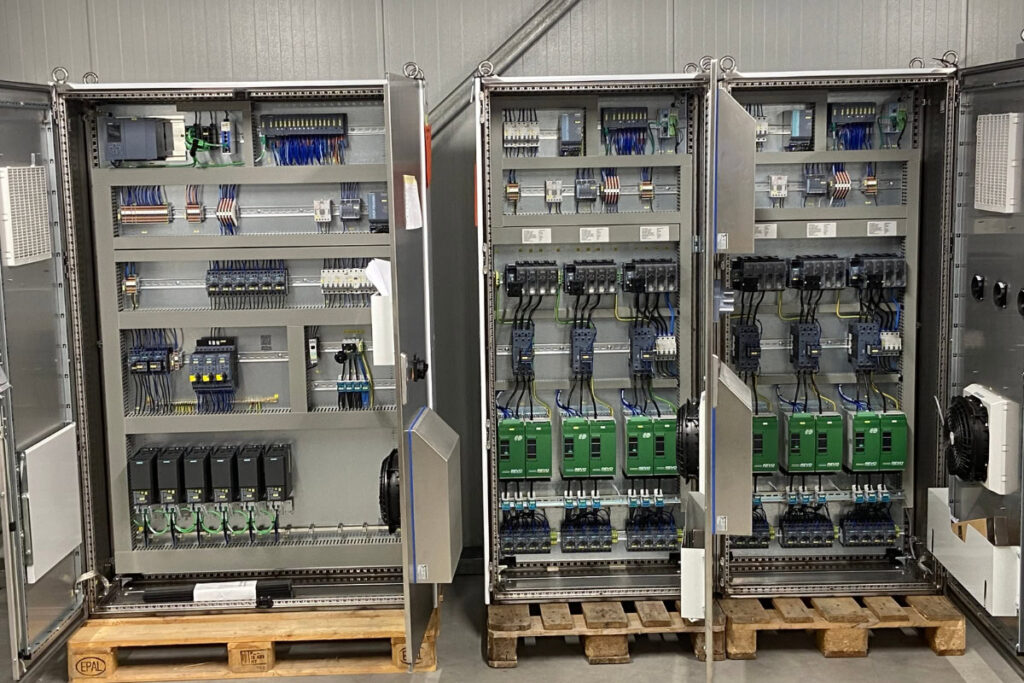
Technical comparison: cooling vs overpressure in control cabinets
Heat generation in switchgear cabinets
Electrical components in a control cabinet continuously produce heat. PLCs, power supplies, variable speed drives and other electronic systems convert some of the power consumed directly into heat.
This heat accumulates inside the cabinet, especially with closed enclosures or limited ventilation. Without effective exhaust, the internal temperature rises rapidly, with immediate consequences:
- accelerated aging of components
- anomalous behavior of controls and regulators
- increased chance of malfunction or failure
In practice, heat generation is often underestimated, especially with expansions or higher loads. What worked well at first can suddenly become a thermal problem after modifications.
Types of cooling for control cabinets
There are several methods for cooling a control cabinet, each with its own scope and limitations.
- Fans -. Move air inside or through the cabinet. Effective only when the ambient air is cooler than the cabinet. Offer no protection from dust or moisture.
- Air conditioning units -. Active closed-circuit cooling. Suitable for high thermal load and stable temperature control. Disadvantage is energy consumption and maintenance.
- Vortex cooling (compressed air / Wirbelrohr) -. Compact system without moving parts that generates cold air from compressed air. Very responsive, but energy intensive and dependent on compressed air supply.
- Peltier cooling -. Compact and low maintenance, but limited in cooling capacity. Suitable for smaller control cabinets or low power applications.
- Water cooling -. Applied in high power or specific industrial applications where air cooling is not sufficient.
Overpressure and air currents
Overpressure is all about controlled airflow. The goal is not cooling, but keeping polluted or humid air out.
Filtered air is actively introduced into the cabinet, creating a slight overpressure. This prevents unfiltered air from being drawn in through seams, doors or cable passages.
The operation of an overpressure system depends entirely on:
- correct positioning of air inlet and outlet
- sufficient and stable air flow rate
- filtering matched to the environment
In practice, we see systems fail because ventilation is applied without control. A fan without thoughtful airflow is not a positive pressure solution.
Condensation and relative humidity
Condensation is one of the most underestimated problems in switchgear cabinets. It occurs when warm, moist air comes into contact with colder surfaces.
Typical situations are:
- outdoor setups with day and night differences
- plants that cool down when stationary
- poorly controlled airflow
The effects are immediate:
- corrosion of components
- leakage currents
- malfunctions and outages
Improperly applied cooling can amplify this problem. When a cabinet is actively cooled without moisture control, condensation forms more quickly.
A well-designed positive pressure system prevents moist air from entering and therefore plays an important role in controlling condensation problems.
IP classification and degree of protection
The degree of protection of a control cabinet is defined by IP ratings. These indicate the extent to which the cabinet is protected against dust and moisture.
Common classifications are:
- IP54 → protection against dust and splash water
- IP55 → better protection against water jets
- IP66 → dustproof and protected against powerful water jets
In addition, NEMA ratings are often used in industrial applications, such as NEMA 4, 4X and 12.
The cooling or overpressure solution chosen must match this degree of protection. For example, an open ventilation system does not fit a cabinet that must remain dust- or waterproof.
Choice of materials and environment
The environment in which a switchgear cabinet is placed also determines the choice of materials.
In aggressive or humid environments, the choice of:
- Stainless steel 304 (1.4301) → standard industrial applications
- Stainless steel 316 (1.4401) → higher corrosion resistance, for example in chemistry or offshore
Material choice directly affects service life and reliability, especially when combined with airflow, moisture and temperature differences.
Energy consumption and efficiency
Refrigeration and overpressure differ greatly in energy use and operational costs.
- Air conditioning units continuously consume energy
- Vortex systems use compressed air, which is relatively expensive
- Overpressure systems are more energy efficient, but do not solve heat problem
So the right choice is not only technical, but also economic. In many cases, a combination of systems is chosen to ensure both efficiency and reliability.
Integration and custom solutions
In practice, there is no standard solution for switchboard protection.
The right approach depends on:
- thermal load of components
- degree of contamination or moisture
- environment and location
- reliability and maintenance requirements
Kwadrant IA designs solutions that combine cooling and overpressure where appropriate. This involves looking at the entire installation and not just the control cabinet.
A good system is not created from individual components, but from a thoughtful design in which all factors are coordinated.
Start your project with a technical consultation
We like to think with you from the initial design phase to realization and commissioning.
Related articles
ATEX zone 1 vs. zone 2: what does it mean for your control cabinet?
Within industrial environments where explosion hazards are present, ATEX zones are often used. Yet in practice we see that the
Overpressure in control cabinets: 5 common mistakes
In many industrial facilities, overpressure is used in a control cabinet to prevent contamination, moisture and harmful external influences. Consider
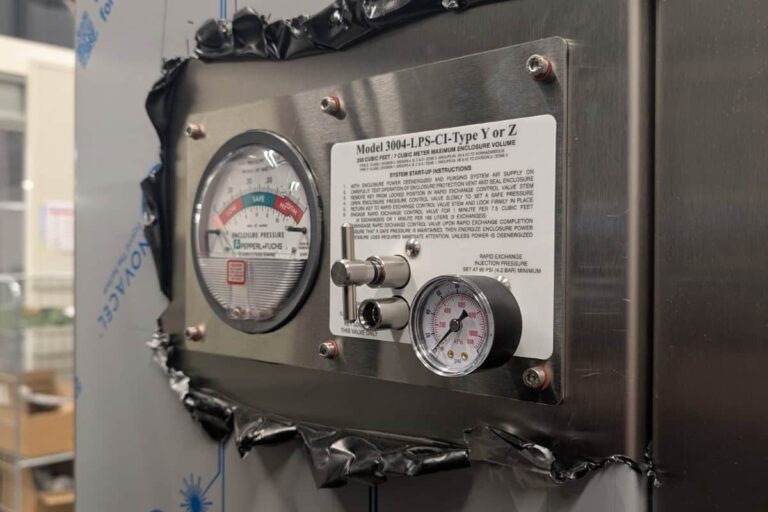
When is a purge system mandatory?
In industrial environments where explosion hazards are present, overpressure in switchboards is often discussed. In practice, confusion frequently arises here:
Frequently asked questions about Switchboard cooling vs overpressure
What is the difference between switchboard cooling and overpressure?
Cooling dissipates heat from the control cabinet. Overpressure prevents contaminated or humid air from entering. They are two different solutions to two different problems.
When do you choose an air conditioner in a control cabinet?
When the internal temperature becomes too high and ventilation or overpressure is insufficient to dissipate heat.
Can overpressure also cool?
No. Overpressure prevents contamination but does not lower the temperature. Active cooling is required for heat dissipation.
Which is better: ventilation or active cooling?
Ventilation is effective only if the ambient air is cool enough. At higher temperatures, active cooling is necessary.
How do you prevent condensation in a control cabinet?
By reducing temperature differences, designing airflows properly and preventing moist air from entering the cabinet. In many cases, a combination of positive pressure and proper cooling is required.
