
Safe and standards-compliant solutions for industrial and ATEX environments
ATEX purge system (Ex p) for zone 1 and 2
In industrial environments where a risk of explosion from gases, vapors or dust is present, a standard control cabinet is not enough. This requires solutions that go beyond ventilation or sealing alone and comply with strict ATEX guidelines.
OPEN CALCULATION
Transparent cost structure and control of your project.
OFFER IN 5 DAYS
Quick technical assessment and clear planning.
DURABLE CONSTRUCTION
Lower Total Cost of Ownership.
UL/CSA IN-HOUSE
Directly compliant for international markets.
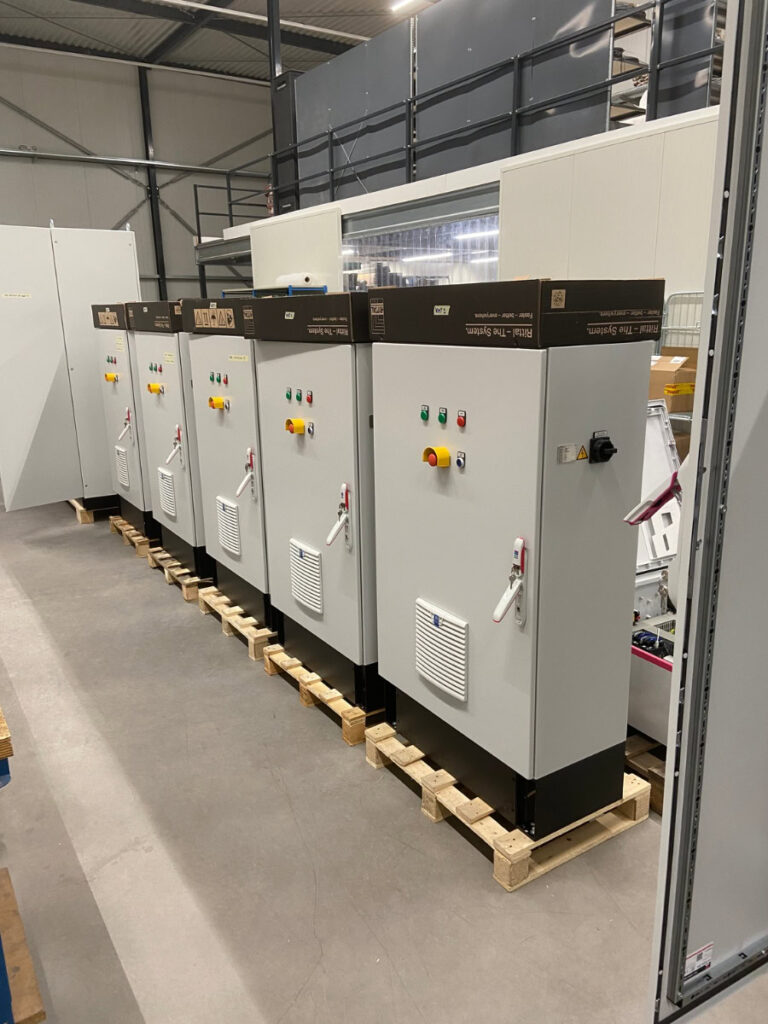
ATEX purge systems in industrial applications
An ATEX purge system (Ex p) is used to safely operate switchgear cabinets in explosive atmospheres. Instead of applying fully explosion-proof equipment, a purge system allows standard components to be used within a controlled and safe environment.
By actively purging the cabinet and keeping it under positive pressure, combustibles are prevented from entering and reaching an ignition source. This makes purge systems an efficient and widely used solution within ATEX Zone 1 and Zone 2 applications.
Kwadrant IA designs and builds these systems based on standards, practical experience and the specific requirements of the installation.
Complete automation solutions
We realize control systems from design to delivery. By integrating engineering, panel construction, cabling and commissioning, we ensure quality, efficiency and international deployment.
Operation and application of ATEX purge systems.
An ATEX purge system provides a safe environment within a switchgear cabinet in explosive situations. Purging, overpressurization and monitoring prevent flammable gases or vapors from coming into contact with electrical components.
The correct application depends on zoning, installation and standards. Below you can read about when a purge system is needed, how it works and where it often goes wrong in practice.
When is a purge system necessary?
A purge system is required as soon as you apply standard electrical components in an environment where explosive atmospheres may occur.
This is particularly prevalent in installations within ATEX Zone 1, where gases or vapors are regularly present, and in Zone 2, where they may arise under certain conditions. A purge solution is also often chosen in situations where a fully explosion-proof cabinet (Ex d or Ex e) is not desirable or practical.
In practice, this is where things often go wrong. Zone 2 is underestimated, leading to standard solutions that do not comply with ATEX guidelines. As soon as an explosive gas mixture enters the cabinet and no controlled protection is present, an ignition source immediately arises.
How does an ATEX purge system work?
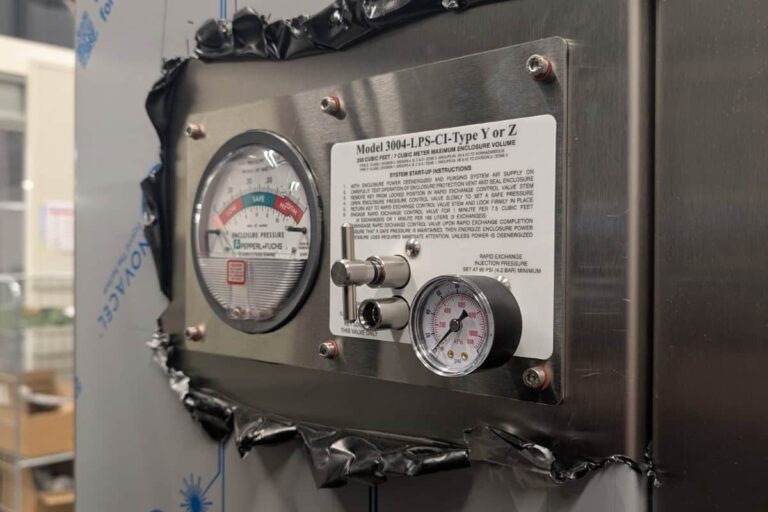
A purge system works in two steps: first the cabinet is actively purged to remove any gases or vapors present, then a constant overpressure is maintained so that no new explosive atmosphere can enter.
This process is controlled by components such as pressure regulators, pressure gauges, relief valves and valves. Together, these ensure a stable and controlled pressure build-up within the cabinet.
Operation hinges on stability and control. Without reliable pressure control, the system is not safe.
Requirements and standards
An ATEX purge system must demonstrate compliance with applicable directives and standards, including ATEX 2014/34/EU (ATEX 114), IEC 60079 and IECEx. In many cases, NFPA 496 is also used as a reference.
These standards define how the system should be designed, built and secured. Consider requirements around pressure monitoring, fail-safe operation, certification and documentation.
This is not a question of interpretation. Either a system meets the standard, or it does not.
Common mistakes and risks
In practice, we always see the same mistakes: systems are applied without complete sealing of the cabinet, pressure monitoring is missing or insufficient, or the wrong type of purge system is chosen.
In addition, Zone 2 is often underestimated, making assumptions that do not reflect actual risks.
The result is predictable: unsafe situations, inspection rejection and, in some cases, plant downtime or rebuilding.
A purge system should be designed integrally and be part of the overall safety concept, not something added after the fact.
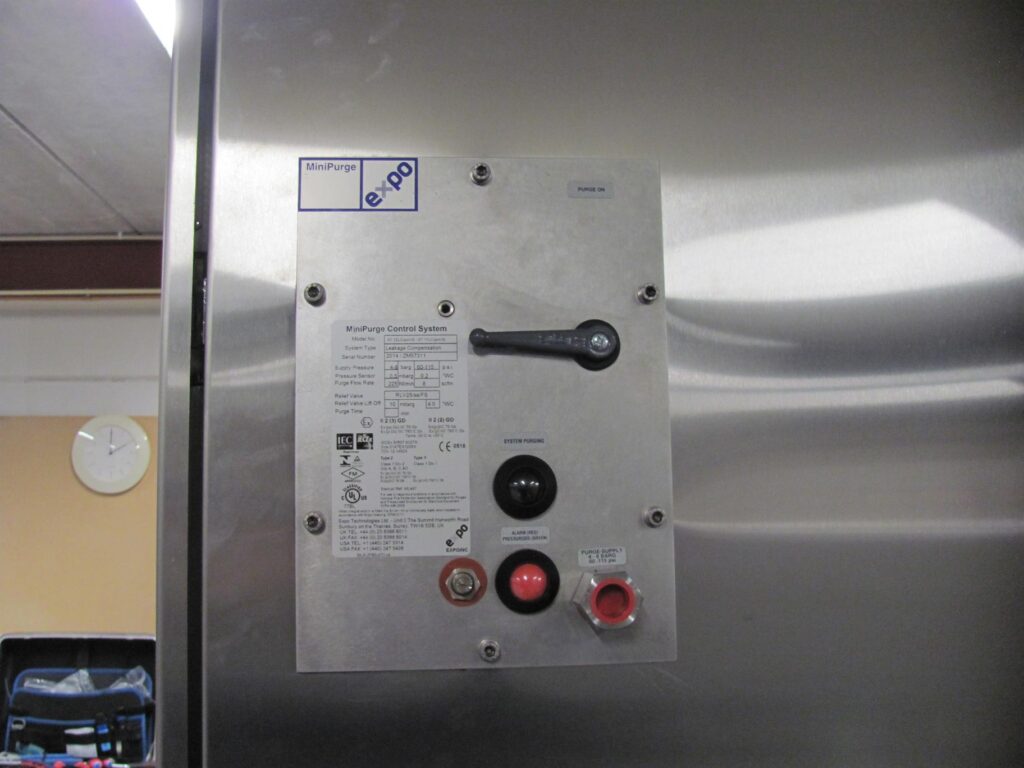
Technical deepening of ATEX purge systems
Pressure control and overpressure safety
The reliability of a purge system is determined by the stability of the overpressure. The internal pressure must be continuously higher than the environment to prevent an explosive atmosphere from entering the cabinet.
At the same time, the pressure must not become too high. Overpressure can lead to leaks through cable passages or mechanical stress on the housing, which will actually cause the system to lose its function.
Thus, the pressure must remain within a controlled range:
- high enough to prevent entry of gases or vapors
- Low enough to maintain the integrity of the cabinet
For this purpose, components such as:
- cylinder pressure regulators
- pressure gauges
- pressure relief valves
In practice, pressure instability is one of the biggest failure factors. Small leaks, poorly adjusted regulators or varying loads mean that overpressure is no longer guaranteed.
Type X, Y and Z purge systems
The choice of the right type of purge system is directly linked to zoning and the level of protection required.
- Type X → applied in ATEX zone 1, highest protection level
- Type Y → lowers the classification within the cabinet
- Type Z → applied in zone 2, less stringent but still controlled
This choice is often underestimated in practice. Systems are selected based on cost or availability, whereas zone classification should be leading.
A wrong choice means that the protection does not match the actual risk. The system then functions technically, but does not meet security requirements.
Application within ATEX zones
The zone classification determines the risk of explosive atmospheres and thus what measures are needed.
For gas:
- zone 0 → continuously present
- zone 1 → regularly present
- zone 2 → occasionally present
For fabric:
- zones 20, 21 and 22
Purge systems are primarily used in Zone 1 and Zone 2. In these zones it is possible to create a safe internal environment with overpressure without applying fully explosion-proof equipment.
Especially in Zone 2, we see that risks are underestimated. Installations are designed with minimal measures, while deviations such as leaks or process disturbances can still lead to an explosive atmosphere.
Integration into control cabinets
A purge system functions only if the entire control cabinet is designed accordingly. The system itself may be correct, but without a proper foundation, it loses its effectiveness.
Important areas of concern are housing sealing, quality of cable penetrations and internal airflow. These determine whether the overpressure is actually maintained.
In retrofit situations, things often go wrong. Existing cabinets are modified without the construction being suitable for overpressure. This creates a system that complies on paper but is not reliable in practice.
If the cabinet is not airtight, the purge system will not work.
Monitoring and safety systems
A purge system without monitoring is not a safe solution. Continuous monitoring is necessary to ensure that overpressure is maintained.
Minimum requirements are:
- continuous pressure monitoring
- pressure loss alarm
- automatic fault shutdown
In advanced installations, this is linked to the control system so that abnormalities are immediately visible and action is automatically initiated.
Monitoring is not an optional addition, but an essential part of the system. Without this monitoring, there is no guarantee of safety.
Practical considerations in design and application
Designing a purge system involves more than just selecting components. The application must match the actual conditions within the plant.
Consider:
- variations in temperature and pressure, with some situations also requiring cooling of control cabinets.
- risk of leaks in the system
- maintenance and accessibility
- interaction with other plant parts
In practice, many problems are caused by assumptions in the design phase. Therefore, a purge system should always be tailored to the specific application, not a standard solution.
Start your project with a technical consultation
We like to think with you from the initial design phase to realization and commissioning.
Related articles
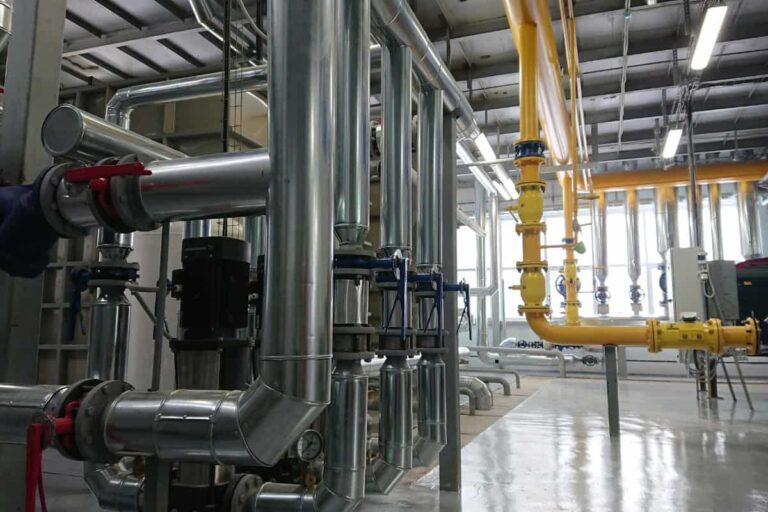
ATEX zone 1 vs. zone 2: what does it mean for your control cabinet?
Within industrial environments where explosion hazards are present, ATEX zones are often used. Yet in practice we see that the
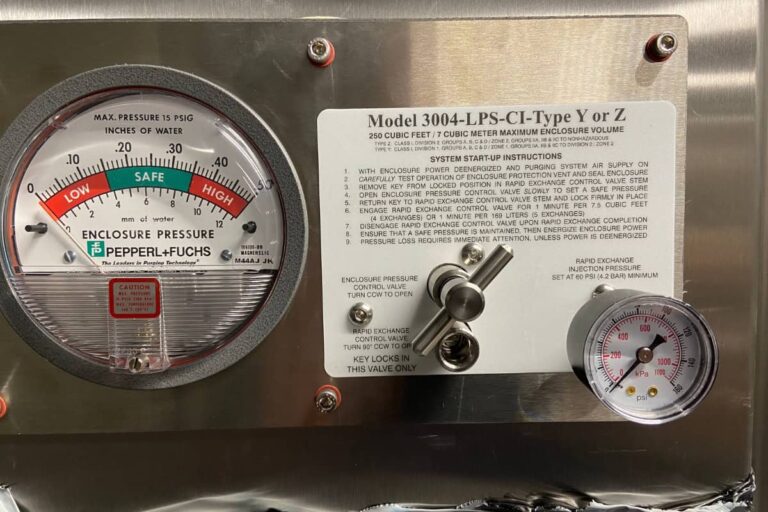
Overpressure in control cabinets: 5 common mistakes
In many industrial facilities, overpressure is used in a control cabinet to prevent contamination, moisture and harmful external influences. Consider
When is a purge system mandatory?
In industrial environments where explosion hazards are present, overpressure in switchboards is often discussed. In practice, confusion frequently arises here:
Frequently asked questions about ATEX purge system (Ex p) for zone 1 and 2
What is an ATEX purge system (Ex p)?
A purge system is a controlled overpressure solution that prevents an explosive atmosphere from entering a control cabinet, allowing standard components to be used safely.
When is a purge system mandatory?
When a switchgear cabinet with standard components is used in an ATEX zone where explosive atmospheres may occur, such as Zone 1 or Zone 2.
What is the difference between Type X, Y and Z?
Type X is used in Zone 1 with high safety requirements. Type Y and Z are used in less critical situations, depending on the risk analysis.
Can a purge system be applied in zone 2?
Yes, and this happens often. Especially in zone 2, the risk is frequently underestimated, making purge necessary to meet standards.
What happens if a purge system fails?
If the system loses pressure or fails, an explosive atmosphere can enter the cabinet. Therefore, monitoring, protection and fail-safe features are essential.
