Within industrial environments where explosion hazards are present, ATEX zones are often used. Yet in practice we see that the difference between zone 1 and zone 2 is regularly misinterpreted.
This may seem like a detail, but it has direct consequences for the design and implementation of a switchgear cabinet. A wrong assessment can lead to unsafe situations, rejection during inspections or the application of a solution that does not meet the standards.
In this article, we explain the difference between ATEX Zone 1 and Zone 2 and what this specifically means for the selection and design of a switchgear cabinet.
Table of Contents
What are ATEX zones (briefly explained).
ATEX zones are used to classify areas where explosive atmospheres may occur. This can include flammable gases, vapors or dust particles that mix with air and can ignite under certain conditions.
Classification is based on the probability and duration that such an explosive atmosphere is present. For gas, the following apply:
- Zone 0: continuous or prolonged presence
- Zone 1: regularly present during normal operation
- Zone 2: occasional and short-term only
Similar zones are used for dust (zone 20, 21 and 22).
This zone classification forms the basis for all further choices around equipment, installation and safety measures. The applicable ATEX guidelines and standards, such as IEC 60079 and NPR 7910, determine which solutions are and are not allowed within these zones.
OPEN CALCULATION
OFFER IN 5 DAYS
SUSTAINABLE INNOVATIONS
UL/CSA
IN HOUSE
The difference between zone 1 and zone 2
The main difference between Zone 1 and Zone 2 is in the probability that an explosive atmosphere is actually present.
In zone 1 this probability is real and structural: during normal operation, an explosive gas mixture can occur regularly. Consider processes where vapors or gases are continuously released.
In zone 2 the risk is more limited: an explosive atmosphere is not normally present there and occurs only in the event of anomalies, leaks or malfunctions. The time period is short and the probability smaller.
Why this difference matters in practice
While the difference may seem small on paper, in practice the impact is significant.
Zone 1 has more stringent requirements for:
- equipment and components
- protection methods
- monitoring and inspection
In Zone 2, there is more room, but that does not mean that “anything goes.” Here too, installations must comply with ATEX guidelines and safety must be demonstrably assured.
It is precisely this nuance that is often misinterpreted in projects.
What does zoning mean for your control cabinet?
Zone classification directly determines how a switchgear cabinet may be designed, constructed and applied. It affects the choice of components, the enclosure and the protection method required.
Switchgear cabinets in ATEX zone 1
In a Zone 1 environment, there is a real chance that an explosive atmosphere is present during normal operation. This means that standard components such as PLCs, relays and variable speed drives should not be used without additional measures.
In practice, there are three common solutions:
- Application of fully explosion-proof equipment (e.g. Ex d or Ex e)
- Working with intrinsically safe circuits (Ex i)
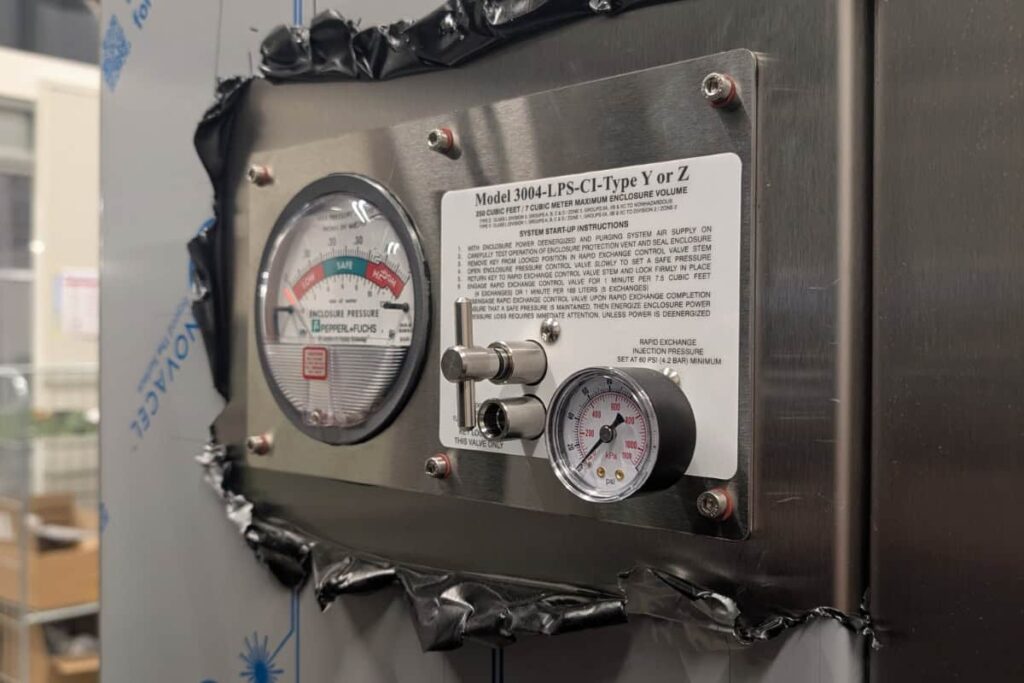
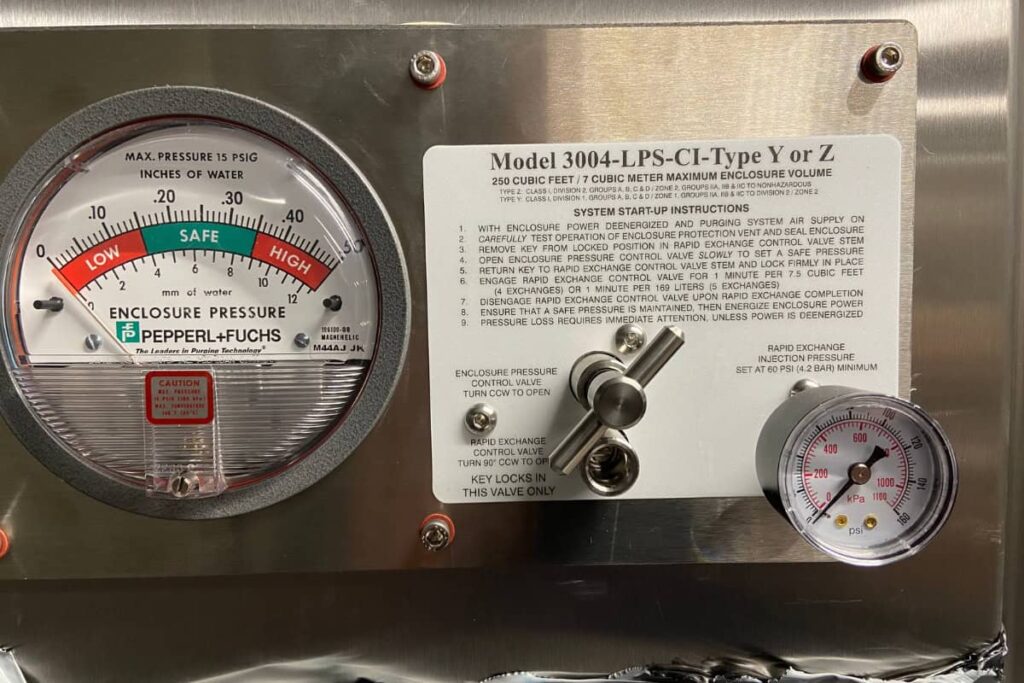
- Use of a purge system (Ex p), keeping the cabinet under controlled overpressure
A purge system allows standard components to be used safely within an explosive environment, provided the system complies with standards and has pressure monitoring and fail-safe features.
Switchgear cabinets in ATEX zone 2
In a Zone 2 environment, the risk of an explosive atmosphere is lower and of shorter duration. As a result, there is often more flexibility in the choice of solutions.
Depending on the risk analysis can:
- a lighter method of protection will suffice
- or in some cases a standard switchgear cabinet may be applied with additional measures
Yet this is where things often go wrong in practice. Zone 2 is regularly underestimated, resulting in solutions being chosen that do not sufficiently take into account possible gas emissions, leaks or deviant operating situations.
Key design choices for both zones
Regardless of the zone, there are a number of factors that should always be considered in the design of a switchgear cabinet:
- the degree of sealing of the housing
- the presence and direction of ventilation or air currents
- the possibility of the ingress of an explosive atmosphere
- The chosen method of protection and associated certification
The right solution is always a combination of zoning, application and technical implementation.
Contact our experienced innovator
Cees Brasser
With more than 26 years of experience at the helm of Kwadrant IA, Cees Brasser is your expert on panel construction for the mechanical engineering sector. Discover how his knowledge and insight can take your project to new heights. Get in touch now!
Common mistakes in zoning and application
In practice, we see a number of recurring errors when applying switchgear in ATEX zones. These often tie in with common mistakes of overpressure in control cabinets.
A common mistake is underestimating Zone 2. Because the probability of an explosive atmosphere is lower, it is sometimes assumed that standard solutions are sufficient. This can lead to situations where the installation is not ATEX compliant.
Also, the zone classification is not always properly translated into switchgear design. The classification is established, but then has no direct influence on component selection or protection method.
In addition, sometimes a solution is chosen based on cost or availability without a full risk assessment. This leads to suboptimal or even unsafe situations.
Finally, a good link between engineering, installation and inspection is regularly lacking. While precisely this connection is essential to meet standards and safety requirements.
How do you determine the right solution?
Determining the right solution for a switchgear cabinet in an ATEX environment always starts with a proper zone classification and risk assessment.
These include:
- the presence and properties of combustible substances
- the probability and duration of an explosive atmosphere
- the process conditions and possible deviations
- the requirements from ATEX directives and standards
On this basis, the method of protection required and the equipment that may be applied is determined.
In many cases, this requires customization and an integrated approach that brings together engineering, standards knowledge and practical experience.
If you want to look at this in more detail, read our page on overpressure and purge systems for control cabinets how these solutions are designed and applied in practice.
Conclusion
The difference between ATEX Zone 1 and Zone 2 is in the probability and duration of an explosive atmosphere, but the impact on switchgear design is significant.
Zone 1 requires more stringent measures and controlled solutions such as purge systems or explosion-proof equipment. In Zone 2, there is more flexibility, but correct application remains essential.
Misinterpretation of zoning in practice often leads to unsafe situations or installations that do not meet the standard.
By making the right choices from the beginning and taking zoning seriously, you will avoid problems during inspection and use.
If you are unsure about the right approach for your installation, it is wise to have an early technical assessment.